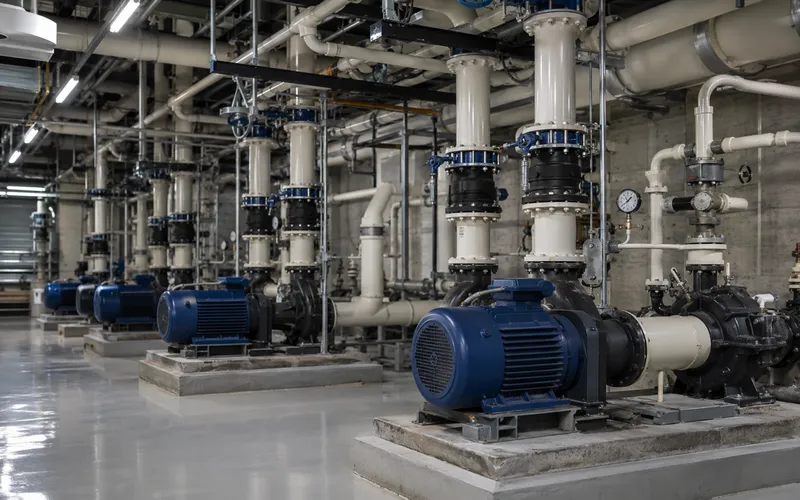
1. शीतलन टॉवर मोटर वातावरण
कूलिंग टावर फैन मोटरें कई तरह की पर्यावरणीय परिस्थितियों में काम करती हैं, जिससे अन्य लगभग सभी औद्योगिक अनुप्रयोगों की तुलना में मोटर का क्षरण तेजी से होता है। सही मोटर विनिर्देशन के लिए प्रत्येक स्थिति को समझना महत्वपूर्ण है।
कूलिंग टॉवर से गुजरने वाली हवा फैन इनलेट पर संतृप्त (100% RH) होती है। संतृप्त हवा के ओस बिंदु से नीचे के तापमान पर मोटर की कोई भी सतह लगातार संघनन जमा करती रहेगी। यह संघनन IP65 से कम रेटिंग वाले मोटर हाउसिंग में प्रवेश करता है, वाइंडिंग इन्सुलेशन को गीला करता है, और इन्सुलेशन प्रतिरोध में गिरावट और वाइंडिंग की समय से पहले विफलता का कारण बनता है।
पंखा न केवल संतृप्त हवा खींचता है, बल्कि फिल सेक्शन से हवा में मौजूद पानी की छोटी-छोटी बूंदों को भी खींचता है। ये बूंदें खनिजों से भरपूर होती हैं (कैल्शियम कार्बोनेट, सिलिका, घुले हुए लवण) और पानी के वाष्पीकरण के साथ मोटर की सतहों पर जमा हो जाती हैं, जिससे एक खनिज परत बन जाती है जो नमी को सोख लेती है और जंग लगने की प्रक्रिया को तेज कर देती है।
कूलिंग वॉटर को लेजिओनेला और शैवाल को नियंत्रित करने के लिए बायोसाइड्स (क्लोरीन, ब्रोमीन, क्वाटरनरी अमोनियम यौगिक) से उपचारित किया जाता है। ये रसायन मोटर तक पहुँचने वाली बूंदों में मौजूद होते हैं और समय के साथ मोटर पेंट कोटिंग्स और वाइंडिंग वार्निश को नुकसान पहुँचा सकते हैं। कूलिंग वॉटर में स्केल इनहिबिटर और कोरोजन इनहिबिटर अतिरिक्त रासायनिक जोखिम पैदा करते हैं।
कूलिंग टॉवर फैन मोटर्स तापमान में काफी बदलाव से गुजरती हैं: पूरी क्षमता से चलने के दौरान गर्म और नम हवा (फैन के पास का तापमान 40 से 50 डिग्री सेल्सियस), रात में या सर्दियों में बंद होने के दौरान ठंडा वातावरण (ठंडे मौसम में 0 डिग्री सेल्सियस से नीचे), और मोटर बंद होने पर तेजी से ठंडा होने का थर्मल शॉक। क्लास F इंसुलेशन वाइंडिंग इंसुलेशन पर थर्मल साइक्लिंग के प्रभावों का प्रतिरोध करता है, जबकि क्लास B इंसुलेशन वाली मोटर्स ऐसा नहीं कर पातीं।
2. कूलिंग टॉवर फैन की गति के लिए पोल का चयन
कूलिंग टॉवर पंखे बड़े व्यास वाले अक्षीय प्रवाह पंखे (1.5 से 10 मीटर व्यास) होते हैं जो शोर कम करने और पंखे के ब्लेड की दक्षता बढ़ाने के लिए पंखे की नोक की गति को कम रखने के लिए धीमी घूर्णन गति पर चलते हैं। पंखे की गति टॉवर के वायुगतिकीय डिजाइन द्वारा निर्धारित होती है, लेकिन आमतौर पर बड़े औद्योगिक कूलिंग टॉवरों के लिए 300 से 900 आरपीएम और पैकेज्ड कूलिंग टॉवरों के लिए 700 से 1,200 आरपीएम की सीमा में होती है।
छोटे पंखों (0.5 से 1.5 मीटर व्यास) वाले पैकेजबद्ध शीतलन टावर, जिनमें गियरबॉक्स या बेल्ट रिडक्शन द्वारा पंखे की अंतिम गति प्राप्त की जाती है। इनका उपयोग छोटे फोर्सड-ड्राफ्ट शीतलन टावरों में डायरेक्ट ड्राइव के लिए भी किया जाता है, जहां पंखे की डिज़ाइन गति 1,200 से 1,400 आरपीएम होती है।
कूलिंग टावर के डायरेक्ट-ड्राइव अनुप्रयोगों के लिए मानक। 960 आरपीएम अधिकांश बड़े व्यास वाले एफआरपी कूलिंग टावर फैन ब्लेड (2 से 6 मीटर व्यास) की परिचालन सीमा के भीतर है, जिसके लिए गियरबॉक्स की आवश्यकता नहीं होती है। औद्योगिक और एचवीएसी कूलिंग टावरों के लिए सबसे आम विशिष्टता।
5 मीटर से अधिक व्यास वाले पंखों के लिए अत्यंत विशाल शीतलन टावर, जहां 960 आरपीएम पर पंखे की अधिकतम गति डिजाइन सीमा से अधिक हो जाएगी। इसका उपयोग कम शोर वाले शीतलन टावरों के लिए भी किया जाता है, जहां समान वायु प्रवाह पर 960 आरपीएम की तुलना में 720 आरपीएम पर वायुगतिकीय शोर कम होता है।
कूलिंग टावरों के लिए दो गति वाला पोल-चेंजिंग मोटर, जिसमें दो पंखे की गति की आवश्यकता होती है (गर्मी के चरम मौसम में उच्च गति, हल्के मौसम में कम गति)। YD मोटर दो अलग-अलग मोटरों की जगह लेता है और बाहरी वाइंडिंग चेंजओवर रिले की जटिलता से बचाता है। नियंत्रण के लिए सेक्शन 5 देखें।
3. कूलिंग टॉवर सेवा के लिए IP55 रेटिंग और जंग से सुरक्षा
मोटर को फिल सेक्शन के ऊपर एयरस्ट्रीम में लगाया जाता है, जो सीधे गर्म, पानी से संतृप्त हवा और नीचे के स्प्रे हेडर से आने वाली पानी की बूंदों के संपर्क में आता है। कूलिंग टॉवर फैन मोटर इंस्टॉलेशन के लिए IP55 (धूल से सुरक्षित, किसी भी दिशा से आने वाले पानी के जेट से सुरक्षित) न्यूनतम आवश्यकता है। IP55 एयरस्ट्रीम में मौजूद पानी की बूंदों को सीधे प्रवेश करने से रोकता है और मोटर हाउसिंग में नमी वाली हवा के प्रवेश की दर को सीमित करता है। IP54 या उससे कम रेटिंग वाली मोटरें कूलिंग टॉवर में 2 से 4 साल के भीतर वाइंडिंग इंसुलेशन के खराब होने के कारण विफल हो जाती हैं, इसलिए विश्वसनीय दीर्घकालिक सेवा के लिए IP55 विनिर्देश आवश्यक है।
मानक मोटर पेंट और फ्रेम कोटिंग शुष्क औद्योगिक वातावरण के लिए डिज़ाइन किए गए हैं और नमीयुक्त, खनिज-युक्त कूलिंग टॉवर वातावरण में तेज़ी से खराब हो जाते हैं। कोरिया एवर-पावर Y2 सीरीज़ कूलिंग टॉवर विकल्प में शामिल हैं: नमी प्रतिरोधक क्षमता वाले एपॉक्सी-आधारित वाइंडिंग इम्प्रैग्नेशन; सभी बाहरी सतहों पर मरीन-ग्रेड एपॉक्सी प्राइमर और पॉलीयुरेथेन टॉपकोट; स्टेनलेस स्टील या हॉट-डिप गैल्वनाइज्ड टर्मिनल बॉक्स स्क्रू और नेमप्लेट फिक्सिंग; और शाफ्ट पेनेट्रेशन पर सिलिकॉन कार्बाइड वाइपर सील। ये संक्षारण-प्रतिरोधी उपचार सामान्य कूलिंग टॉवर मोटर के सेवा जीवन को 2 से 4 वर्ष (मानक मोटर) से बढ़ाकर 8 से 15 वर्ष (Y2 कूलिंग टॉवर स्पेसिफिकेशन) कर देते हैं।
स्पेस हीटर: ठंडे मौसम वाले कूलिंग टावरों के लिए, जहाँ मोटर लंबे समय तक बंद रहने के दौरान 5°C से नीचे के तापमान के संपर्क में आ सकती है, वाइंडिंग में मोटर-माउंटेड स्पेस हीटर (एंटी-कंडेंसेशन हीटर) लगाना आवश्यक है। ये 50 से 150 वाट के हीटर बंद रहने के दौरान वाइंडिंग को ओस बिंदु से ऊपर रखते हैं, जिससे वाइंडिंग कैविटी में संघनन जमा नहीं होता है। मोटर के चलने पर स्पेस हीटर को डी-एनर्जाइज़ किया जाना चाहिए और मोटर के बंद होने पर एनर्जाइज़ किया जाना चाहिए - मोटर कॉन्टैक्टर पर लगा एक साधारण इंटरलॉकिंग रिले इसे स्वचालित रूप से कर देता है।
4. कूलिंग टॉवर फैन मोटर पावर गणना
पंखे की गति: 6-पोल डायरेक्ट ड्राइव, 960 आरपीएम पर
पंखे की नोक की गति: π × 4.0 × 960/60 = 201 मीटर/सेकंड —
रुको—यह सीमा से अधिक है, इसलिए:
फैन टिप स्पीड: π × 4.0 × 960 ÷ 60 = 201 → जाँच:
वी-टिप = π × डी × एन/60 = π × 4.0 × 960/60 = 201 मीटर/मिनट = 33.5 मीटर/सेकंड
(35-45 मीटर/सेकंड की विशिष्ट एफआरपी फैन सीमा के भीतर)
पंखे का स्थैतिक दाब ΔP = 45 Pa (सामान्य कम प्रतिरोध वाले टावर के लिए)
पंखे की दक्षता η-fan = 0.72 (डिजाइन बिंदु पर अक्षीय प्रवाह)
शाफ़्ट पावर = Q × ΔP ÷ η-फैन = 41.7 × 45 ÷ 0.72 = 2,605 W
मोटर दक्षता IE3 6-पोल ≈ 0.90
मोटर की इनपुट पावर = 2,605 ÷ 0.90 = 2.9 किलोवाट
सेवा कारक 1.2 के साथ: Y2 4.0 kW, 6-पोल, IP55 चुनें
नोट: कूलिंग टावर के पंखे की मोटर की वास्तविक शक्ति की पुष्टि टावर निर्माता के पंखे के प्रदर्शन डेटा से की जानी चाहिए, जिसमें पंखे के ब्लेड के विशिष्ट डिज़ाइन, पिच कोण और टावर के वायु प्रवाह प्रतिरोध को ध्यान में रखा जाता है। ऊपर दी गई सरल गणना प्रारंभिक मोटर चयन के लिए एक अनुमानित मान प्रदान करती है। मौसम और कार्य चक्र में परिवर्तन के साथ पंखे के प्रदर्शन में होने वाले बदलाव को ध्यान में रखते हुए 1.15 से 1.25 का सेवा कारक लागू करें।
5. पंखे को चालू करने की विधि और दो-गति नियंत्रण
11 kW से कम क्षमता वाले कूलिंग टॉवर फैन मोटर्स को DOL (डेड ऑन-रोड) विधि से स्टार्ट किया जा सकता है। फैन का स्टार्टिंग इनर्शिया अधिक होता है (बड़े व्यास वाले फैन ब्लेड्स में रोटेशनल इनर्शिया काफी अधिक होता है), लेकिन स्टार्टिंग टॉर्क की आवश्यकता कम होती है क्योंकि फैन ब्लेड पिच कम होती है और स्थिर अवस्था में वायु प्रवाह प्रतिरोध न्यूनतम होता है। फैन के रेटेड स्पीड तक पहुंचने से पहले 3 से 6 सेकंड के लिए रेटेड करंट का 6 से 7 गुना स्टार्टिंग करंट देना सामान्य है। सिंगल-स्पीड छोटे कूलिंग टॉवर फैन के लिए DOL स्टार्टिंग सबसे सरल तरीका है।
11 kW से अधिक क्षमता वाले कूलिंग टावर फैन मोटर्स में स्टार्टिंग करंट के प्रभाव को कम करने के लिए स्टार-डेल्टा स्टार्टिंग या सॉफ्ट-स्टार्टर का उपयोग किया जाना चाहिए। फैन की उच्च जड़ता के कारण, स्टार-डेल्टा मोड में मोटर धीरे-धीरे गति पकड़ती है और स्टार कनेक्शन में लगने वाला समय लंबा होता है—4 से 6 मीटर के फैन को चलाने वाले 6-पोल मोटर के लिए यह आमतौर पर 8 से 15 सेकंड होता है। स्टार-डेल्टा ट्रांजिशन सुचारू होना चाहिए; बड़े फैनों के लिए डेल्टा कनेक्शन के समय करंट सर्ज से बचने के लिए रेसिस्टर-असिस्टेड ट्रांजिशन बेहतर होता है।
कूलिंग टावर के पंखे पर YD मल्टी-स्पीड पोल-चेंजिंग मोटर (4/6-पोल, जो 1,450/960 rpm देती है) का उपयोग करने से VFD के बिना दो निश्चित पंखे की गति मिलती है। गर्मियों में जब कूलिंग की सबसे अधिक मांग होती है, तो पंखा उच्च गति (1,450 rpm, अधिकतम वायु प्रवाह और कूलिंग क्षमता) पर चलता है। हल्के मौसम में, इसे धीमी गति (960 rpm) पर चलाने से पंखे की बिजली लगभग 70% (गति अनुपात का घन: (960/1,450)³ = 0.29) कम हो जाती है, जबकि पर्याप्त कूलिंग बनी रहती है। दो-गति नियंत्रण उन कूलिंग टावरों के लिए सबसे किफायती क्षमता नियंत्रण विधि है जिन्हें निरंतर मॉड्यूलेशन की आवश्यकता नहीं होती है।
6. कोरिया एवर-पावर वाई2 सीरीज़ कूलिंग टॉवर फैन ड्राइव्स के लिए
कोरिया एवर-पावर की Y2 सीरीज़ 6-पोल और 8-पोल कॉन्फ़िगरेशन में उपलब्ध है और डायरेक्ट-ड्राइव कूलिंग टॉवर फैन मोटर्स के लिए आवश्यक 0.75 से 45 kW पावर रेंज को कवर करती है। 960 rpm पर चलने वाला 6-पोल Y2 अधिकांश औद्योगिक और वाणिज्यिक कूलिंग टॉवर फैन अनुप्रयोगों के लिए मानक स्पेसिफिकेशन है। कोरिया एवर-पावर कूलिंग टॉवर पैकेज स्पेसिफिकेशन के रूप में उन्नत नमी-प्रतिरोधी वाइंडिंग इम्प्रग्नेशन, जंग-प्रतिरोधी बाहरी कोटिंग और स्टेनलेस स्टील टर्मिनल बॉक्स फिक्सिंग के साथ कूलिंग टॉवर सेवा के लिए Y2 की आपूर्ति करता है। Y2 की पूरी रेंज उपलब्ध है। तीन-चरण मोटर उत्पाद अनुभाग। संपर्क कोरिया एवर-पावर कूलिंग टॉवर पैकेज की विशिष्टताओं के लिए, जिसमें स्पेस हीटर, स्पेस हीटर कंट्रोल रिले और एंटी-कंडेंसेशन वाइंडिंग ट्रीटमेंट विकल्प शामिल हैं।
| डंडे | 6P (960 आरपीएम) मानक |
| शक्ति सीमा | 0.75–45 किलोवाट |
| आईपी रेटिंग | IP55 मानक |
| इन्सुलेशन | श्रेणी F, नमी प्रतिरोधी |
| क्षमता | IE3 (ऊर्जा वर्ग) |
| कर्तव्य | S1 निरंतर |
| स्पेस हीटर | वैकल्पिक (सीटी सेवा के लिए 100 वॉट) |
| दो-स्पीड विकल्प | YD 4/6-पोल उपलब्ध है |
7. कूलिंग टॉवर फैन ड्राइव के अनुप्रयोग
औद्योगिक प्रक्रियाओं (रासायनिक, पेट्रोकेमिकल, पावर प्लांट, विनिर्माण) को ठंडा करने के लिए काउंटरफ्लो और क्रॉसफ्लो कूलिंग टावर। फैन मोटर 7.5 से 45 किलोवाट, 6-पोल, IP55, क्लास F। टावर सेल के सामान्य विन्यास में 2 से 8 फैन सेल होते हैं, जिनमें से प्रत्येक में एक मोटर होती है। 2 से 5 मीटर फैन व्यास वाले सेल के लिए Y2 6-पोल डायरेक्ट ड्राइव मानक विनिर्देश है।
भवन के एयर कंडीशनिंग चिलर कंडेंसर के लिए पैकेज्ड और फील्ड-इरेक्टेड कूलिंग टावर। फैन मोटर 0.75 से 15 किलोवाट, 6-पोल या 4-पोल गियरबॉक्स के साथ छोटे टावरों के लिए उपलब्ध हैं। दो-स्पीड YD मोटर ऑफिस बिल्डिंग कूलिंग टावरों के लिए लोकप्रिय है जहां वार्षिक परिचालन का अधिकांश समय आंशिक लोड पर चलता है।
डेटा सेंटर चिलर प्लांट कंडेंसिंग के लिए कूलिंग टावर। बहुत उच्च वार्षिक परिचालन घंटे (8,760 घंटे/वर्ष निरंतर)। Y2 6-पोल 3.0 से 22 kW, IP55 रेटिंग, टावर बंद होने की अवधि के लिए स्पेस हीटर के साथ। डेटा सेंटर की निरंतरता में कूलिंग की महत्वपूर्ण भूमिका को देखते हुए, लंबी आयु विनिर्देश आवश्यक है।
प्रशीतन प्रणालियों (शीतित भंडार, खाद्य प्रसंस्करण, औद्योगिक प्रशीतन) के लिए वाष्पीकरण कंडेंसर प्रत्यक्ष वायु और वाष्पीकरण शीतलन तंत्र के संयोजन का उपयोग करते हैं। मोटर की आवश्यकताएं कूलिंग टॉवर फैन मोटरों के समान हैं — IP55, 6-पोल, नमी-प्रतिरोधी वाइंडिंग, जंग-प्रतिरोधी बाहरी भाग। Y2 0.75 से 7.5 kW अधिकांश वाष्पीकरण कंडेंसर फैन अनुप्रयोगों को कवर करता है।
8. अक्सर पूछे जाने वाले प्रश्न
Cxm द्वारा संपादित