2. Requisito de par de arranque
3. Por qué el control de velocidad VFD mejora el rectificado
4. Cálculo de la potencia del motor del molino
5. S1 Servicio continuo y reducción de potencia térmica
6. Especificaciones YVF2 para accionamientos de molinos
7. Aplicaciones de molinos de bolas y molinos de molienda
8. Preguntas frecuentes
1. Velocidad crítica y velocidad de operación del molino de bolas
La velocidad crítica de un molino de bolas es la velocidad de rotación a la que la fuerza centrífuga que actúa sobre el medio de molienda (bolas) se iguala a la fuerza gravitatoria, lo que provoca que las bolas giren con la carcasa del molino en lugar de caer en cascada y rodar sobre la carga. A la velocidad crítica, no hay molienda: las bolas quedan adheridas a la carcasa y la carga gira como un cuerpo sólido. Todos los molinos de bolas deben operar por debajo de la velocidad crítica.
donde D = diámetro interno del molino en metros
Ejemplo: molino de bolas de 1,2 m de diámetro:
Nc = 42,3 / √1,2 = 42,3 / 1,095 = 38,6 rpm
Ejemplo: molino de bolas de 3,0 m de diámetro:
Nc = 42,3 / √3,0 = 42,3 / 1,732 = 24,4 rpm
Molinos de bolas de molienda en seco: 70–80% de Nc
Molinos SAG: 75–85% de Nc
Molino de 1,2 m a 70% Nc: 38,6 × 0,70 = 27,0 rpm
Molino de 3,0 m a 72% Nc: 24,4 × 0,72 = 17,6 rpm
El variador de frecuencia permite ajustar la velocidad de funcionamiento en tiempo real desde 60% hasta 80% Nc para optimizarla en función de la dureza cambiante del mineral o del producto objetivo.
La velocidad del eje de salida del motor y la caja de engranajes del molino debe coincidir con las rpm de operación requeridas. Con un variador de frecuencia (VFD), la frecuencia del motor (y, por lo tanto, la velocidad del molino) es ajustable de forma continua, lo que permite al operador optimizar el porcentaje de velocidad crítica para el mineral que se está moliendo. Sin un VFD, el molino funciona a una fracción fija de la velocidad crítica determinada por la relación de transmisión fija, lo cual es aceptable para operaciones con un solo mineral, pero inflexible para plantas de procesamiento de minerales con mineral variable.
2. Requisito de par de arranque para accionamientos de molinos de bolas
Cuando se detiene un molino de bolas con la carga completa de bolas y mineral, las bolas se asientan y compactan en la parte más baja de la carcasa. La fricción estática entre las bolas y el revestimiento del molino, junto con la carga gravitacional de la carga compactada, genera un par de arranque muy elevado, generalmente de 2,0 a 2,5 veces el par de funcionamiento nominal. Este par de arranque debe suministrarse sin dañar el bobinado del motor mediante una corriente de arranque excesiva.
Cuando el motor YVF2 es accionado por un variador de frecuencia (VFD) con control vectorial o de aumento de par, el VFD puede proporcionar un par de arranque de 1,5 a 2,0 veces el par nominal a velocidad cero sin exceder la corriente nominal del motor. Esto se logra mediante el aumento del flujo magnético del motor (a través de una mayor relación V/Hz a baja frecuencia) para generar un par adicional durante la secuencia de arranque. El bobinado de clase H del YVF2 soporta este elevado flujo magnético a baja velocidad sin sobrecargar el aislamiento. El control vectorial sin sensores del VFD proporciona el control de par de arranque más preciso para aplicaciones en molinos de bolas.
3. ¿Por qué el control de velocidad mediante variador de frecuencia mejora la eficiencia del rectificado?
Los minerales más duros requieren que la carga de bolas caiga desde un ángulo mayor, lo que significa operar a un porcentaje mayor de la velocidad crítica (72 a 78% Nc para mineral duro). Los minerales más blandos se muelen de manera más eficiente a menor velocidad (62 a 68% Nc). Un molino de velocidad fija configurado para mineral duro funciona a una velocidad excesiva (y consume más energía) al procesar mineral más blando. El variador de frecuencia permite al operador reducir la velocidad del molino durante los períodos de mineral más blando, ahorrando de 10 a 20% de energía de accionamiento del molino.
Operar a una velocidad superior a la óptima para el tipo de mineral provoca que las bolas y los revestimientos impacten con mayor fuerza de la necesaria, acelerando el desgaste. Una reducción de 5% en la velocidad del molino con respecto a la óptima para un mineral determinado puede disminuir el consumo de bolas entre 8 y 12% y el desgaste de los revestimientos entre 5 y 8%, lo que prolonga los intervalos de mantenimiento y reduce los costos de consumibles. El ajuste del variador de frecuencia a la velocidad óptima proporciona esta reducción del desgaste sin sacrificar el rendimiento.
El arranque directo en línea de los grandes motores de molinos de bolas produce una alta corriente de irrupción (de 5 a 7 veces la nominal) y un fuerte impacto mecánico en la caja de engranajes y la carcasa del molino a medida que el motor alcanza su velocidad máxima. El arranque con variador de frecuencia (VFD) acelera el motor desde cero hasta la velocidad de funcionamiento en un lapso de 5 a 15 segundos, eliminando la corriente de irrupción y reduciendo el impacto de par en la caja de engranajes entre un 60 % y un 80 %. Esto prolonga la vida útil de la caja de engranajes y reduce la frecuencia de daños en los dientes y cojinetes de la caja de engranajes causados por arranques bruscos.
4. Cálculo de la potencia del motor del molino de bolas
Longitud del molino L = 1,5 m
Carga de bolas: 30% de volumen de molino
Densidad de la bola: 7.800 kg/m³ (acero)
Alimentación F80 = 6000 μm; Producto P80 = 150 μm
Índice de trabajo de Bond Wi = 14 kWh/t (dureza media)
Velocidad de alimentación: 2,0 t/h
W = 140 × 0,00775 = 1,085 kWh/t
Potencia del molino = 1,085 × 2,0 t/h = 2,17 kW en la carcasa del molino
Con una eficiencia de accionamiento de 0,92: potencia del motor = 2,17 ÷ 0,92 = 2,36 kW
Con un factor de par de arranque de 2,5: potencia máxima del motor = 5,9 kW
→ Seleccione el motor YVF2 de 4 polos y 3,0 kW IC416 (en funcionamiento) con aumento de par VFD a 2,5× para el arranque.
La fórmula de Bond proporciona una estimación de la energía específica de molienda para dimensionar el molino. Para una selección precisa del motor en molinos de bolas industriales de gran tamaño (superiores a 30 kW), utilice el cálculo completo de Bond con factores de corrección para el diámetro del molino, el tamaño de la alimentación, el tamaño del producto y el índice de trabajo del mineral. Korea Ever-Power recomienda aplicar un factor de servicio de 1,25 a la potencia calculada del motor para los variadores de frecuencia de los molinos, a fin de tener en cuenta la incertidumbre del modelo y la variabilidad del proceso.
5. S1 Servicio continuo y consideraciones térmicas
Los molinos de bolas industriales utilizados en la industria del cemento, la minería y el procesamiento de minerales suelen funcionar en servicio continuo S1 durante 20 a 24 horas diarias, deteniéndose únicamente para los intervalos de mantenimiento programados (generalmente semanales o quincenales) y las paradas para el cambio de revestimientos. El motor YVF2 debe estar clasificado para funcionamiento continuo S1 en el punto de operación, es decir, la potencia de funcionamiento del molino al porcentaje seleccionado de la velocidad crítica. El soplador IC416 garantiza que esta clasificación S1 se mantenga a cualquier velocidad entre 40% y 100% de la velocidad nominal.
Las aplicaciones mineras a gran altitud (muchas operaciones mineras en Sudamérica y África se encuentran entre 2000 y 4500 m) requieren una reducción de la potencia del motor debido a la menor densidad del aire de refrigeración. A 2500 m de altitud, la densidad del aire es aproximadamente 741 TP3T respecto al nivel del mar, lo que reduce la capacidad de refrigeración del motor. Reducción de potencia según la norma IEC: aplicar un factor de potencia de 0,92 por cada 1000 m por encima de los 1000 m. A 3000 m: reducir la potencia en 1 − (2 × 0,08) = 0,84 de la potencia nominal. Especificar un bastidor YVF2 de mayor tamaño para compensar la reducción de potencia por altitud, o especificar el motor con la potencia reducida como la potencia nominal continua S1 para la altitud de instalación.
6. Especificaciones del sistema de accionamiento para molinos Ever-Power YVF2 de Corea
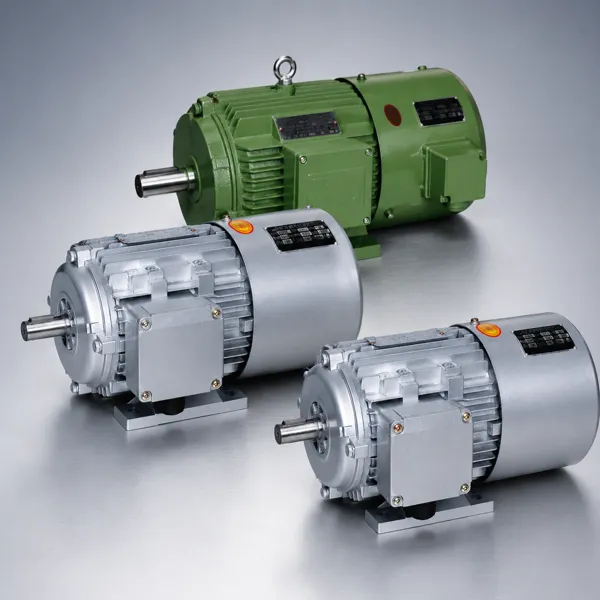
La serie Korea Ever-Power YVF2 proporciona la especificación completa del motor para variadores de frecuencia (VFD) para molinos de bolas, molinos de barras y molinos de molienda, desde pequeños molinos de laboratorio de 0,75 kW hasta molinos de procesamiento de cemento y minerales de tamaño mediano de 200 kW. El sistema de refrigeración forzada IC416, el bobinado de clase H para VFD, la compatibilidad con control vectorial sin sensores, la protección con termistor PTC y el marco métrico IEC 72-1 hacen del YVF2 el reemplazo correcto para los motores de molino de velocidad fija existentes que se están modernizando con sistemas de accionamiento VFD. La gama completa está disponible en Sección de motores VFDPara especificaciones de accionamiento de molinos grandes superiores a 200 kW o requisitos de motor síncrono, póngase en contacto con Corea Ever-Power.
| Rango de potencia | 0,75–200 kW |
| Rango de velocidad | 0–120 Hz |
| Enfriamiento | Ventilador forzado IC416 |
| Par de arranque | 2,5× con impulso VFD |
| Aislamiento | Servicio de variador de frecuencia de clase H |
| Deber | S1 continuo |
| Protección | Termistores PTC estándar |
| Altitud | Reducir la potencia por encima de 1.000 m |
7. Aplicaciones de molinos de bolas y molinos de molienda
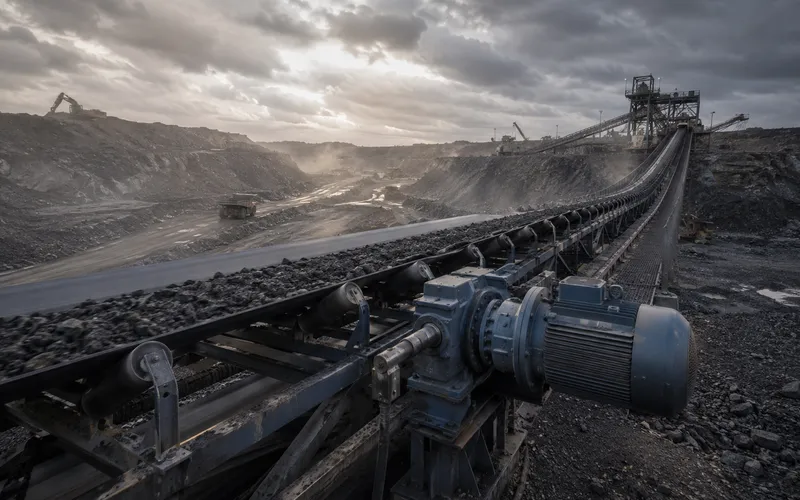
Molino de bolas para procesamiento de minerales
Molinos de bolas para el procesamiento de oro, cobre y mineral de hierro, con diámetros de 0,9 m a 3,0 m. Motor YVF2 de 4 polos, 7,5 a 132 kW IC416 con transmisión por engranajes de 10:1 a 30:1. Velocidad crítica de 65 a 75% mediante ajuste por variador de frecuencia (VFD). Operación continua S1 de 20 a 24 horas diarias. Termistores PTC obligatorios para operación continua sin supervisión. Reducción de potencia por altitud para minas situadas a más de 2000 m. |
Modernización de molino de bolas de cemento con variador de frecuencia
Molinos de cemento modernizados con variadores de frecuencia (VFD) para optimizar la velocidad y lograr un arranque suave. Motores estándar YVF2 IC416 de 4 polos y 45 a 200 kW en sustitución de los existentes. El VFD permite un ahorro energético de 5 a 121 TP3T al optimizar la velocidad del molino para diferentes mezclas de cemento. Se mantiene el sistema de engranajes y piñones existente; solo se modifican el motor y el panel de control. El VFD vectorial sin sensores se ajusta a la inercia del molino para obtener un par de arranque óptimo. |
Molinos de bolas pequeños para la industria farmacéutica y de investigación, destinados a la reducción del tamaño de partícula de principios activos farmacéuticos (API). Motor YVF2 de 4 polos, de 0,75 a 3,0 kW, IC416. Control preciso de velocidad de ± 0,5 rpm para una distribución reproducible del tamaño de partícula. Motor compatible con salas blancas (BXG SS316L para instalación en áreas farmacéuticas con certificación GMP).
Molinos húmedos para la molienda de porcelana, alúmina y cerámica, destinados a la producción de azulejos y sanitarios. Modelo YVF2 de 4 polos, de 5,5 a 55 kW. Molienda húmeda a 68 a 721 TP3T Nc. Control de velocidad para diferentes formulaciones de pasta cerámica que requieren distintos grados de finura de molienda. Protección IP55 para entornos industriales de molienda húmeda.
Molienda de pigmentos cerámicos, dióxido de titanio y óxido de hierro para la fabricación de pinturas y tintas. Molienda YVF2 de 4 polos, de 2,2 a 22 kW. Control preciso de velocidad para el tamaño de partícula deseado. Si se muelen pigmentos con base solvente, especifique YB2 Ex d IIB T4 para la clasificación Zona 2 en áreas de pigmentos solventes.
Molinos de barras para molienda gruesa en circuitos de procesamiento de minerales antes de la molienda secundaria en molinos de bolas. Requisitos de accionamiento similares a los de los molinos de bolas: YVF2 de 4 polos, 15 a 132 kW, IC416, control VFD a 60 a 701 TP3T Nc. Los molinos de barras suelen tener una velocidad de operación menor que los molinos de bolas del mismo diámetro debido al riesgo de enredo de las barras a alta velocidad.


8. Preguntas frecuentes
Editado por Cxm