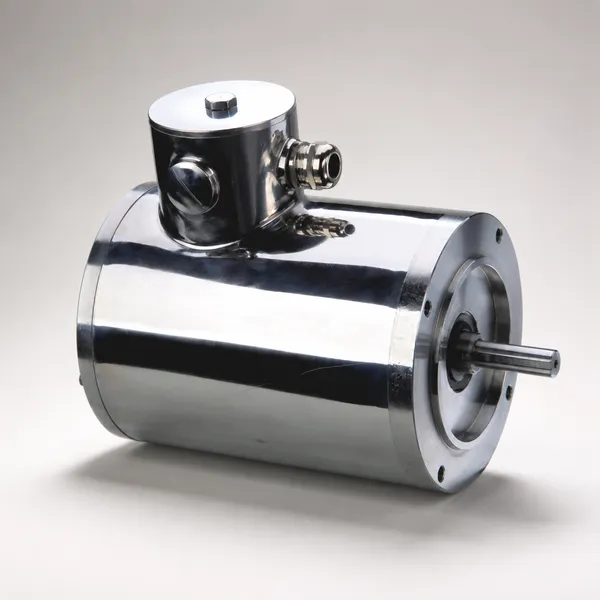
1. What IP69K Actually Means
The IP code (Ingress Protection) is defined by IEC 60529, which uses a two-digit number to classify the degree of protection an enclosure provides against solid particles (first digit) and against water ingress (second digit). The letter K at the end of IP69K is not from IEC 60529 — it was originally defined in DIN 40050-9 (German standard) for road vehicles, and later incorporated into ISO 20653 for road vehicle enclosures.
When the code IP69K is applied to electric motors for industrial use, it means the motor enclosure has been tested and certified to withstand high-pressure, high-temperature water jet spray from all angles at close range without any water entering the motor to a degree that could cause harm to the windings, bearings, or other internal components. The two digits in the code break down as:
“6” means dust-tight. No dust particles of any size can enter the enclosure. The motor can be used in environments with heavy airborne dust, grain flour, fine chemical powders, and similar particulate contaminants without any ingress that could cause electrical failure or abrasive wear on internal surfaces.
“9K” means protected against close-range high-pressure, high-temperature water jets. The K suffix specifies a much more severe test than standard digit “9” from IEC 60529 — it adds the elevated temperature requirement and the specific nozzle-distance specification that creates the extreme pressure and impact conditions typical of industrial CIP and washdown procedures.
2. IP69K vs IP65, IP67, and IP68
A common misunderstanding is that a higher IP number automatically implies better overall protection. In the IEC 60529 system, the second digit water protection levels from 5 through 8 test progressively more severe water exposure conditions, but they are not cumulative. An IP68-rated motor is tested for continuous submersion but may not be rated for high-pressure jet spray. The IP69K test addresses a completely different threat: the high kinetic energy impact of a concentrated water stream rather than the static pressure of submersion.
| IP Rating | Water Test Condition | Test Pressure / Temp | Suitable For | Food Washdown |
|---|---|---|---|---|
| IP55 | Water jets any direction | 12.5 L/min, 0.3 bar, ambient | Outdoor installations, occasional spray | ❌ No |
| IP65 | Water jets (higher pressure) | 12.5 L/min, 0.3 bar, ambient | Washdown with low-pressure hose | ⚠ Marginal |
| IP66 | Powerful water jets | 100 L/min, 1 bar, ambient | More aggressive hose washing, outdoor | ⚠ Partial |
| IP67 | Temporary immersion | 1 m depth, 30 min | Flooding risk; not high-pressure spray | ❌ No |
| IP68 | Continuous immersion | Manufacturer-defined depth & time | Submersible pumps; NOT for spray | ❌ No |
| IP69K ★ | High-pressure, high-temp jet | 80 bar, 80°C, 10–15 cm range | CIP, daily hot caustic washdown | ✅ Yes |
An IP67 or IP68 motor should never be used in a food processing washdown application. These ratings test static water pressure from immersion, not the dynamic impact of a high-pressure cleaning jet. A motor that passes IP68 at 1 metre submersion depth may fail immediately when subjected to an 80 bar hot water jet at 0.15 metres distance, because the seal system is not designed for the combination of impact force, temperature shock, and chemical exposure that a CIP wash cycle delivers.
3. How the IP69K Test Is Conducted
The IP69K washdown test is documented in DIN 40050-9 and incorporated into ISO 20653. The test simulates the conditions of high-pressure hot water cleaning equipment used in food processing, dairy, and pharmaceutical CIP (clean-in-place) procedures, which typically operate at 60 to 120 bar water pressure with cleaning solutions at 70 to 90°C.
The test sample (motor) is placed stationary at a defined test position. A specialised nozzle is positioned 100 to 150 mm from the surface to be tested.
Water temperature is maintained at 80 ± 5°C. Water flow rate is 14 to 16 L/min, delivered at 80 ± 5 bar nozzle inlet pressure through a 6.3 mm diameter nozzle.
The nozzle sweeps across the entire motor surface, directed at 0°, 30°, 60°, and 90° spray angles relative to the horizontal plane. Each position is held for 30 seconds, giving a total spray time per complete cycle of approximately 120 seconds.
After the spray test, the motor is inspected internally. No water may have entered in quantities sufficient to interfere with satisfactory operation of the equipment or impair safety. In practice, for motor applications, this means no water ingress reaching the winding, bearing cavities, or terminal connections.
The 80 bar pressure in this test is roughly equivalent to the pressure in a typical food plant CIP high-pressure cleaning circuit. The 80°C water temperature reflects the sanitation temperature used for protein and fat removal from conveyor surfaces, cutting equipment, and other food contact surfaces, including the motors and drives in those areas.
4. What Food Industry Actually Needs Beyond the IP Code
IP69K is a necessary condition for a food-grade motor but not a sufficient one. A motor can carry an IP69K rating yet still be entirely unsuitable for food processing use because of its construction materials, surface finish, lubricant type, or seal chemistry. Food processing and pharmaceutical facilities following HACCP (Hazard Analysis and Critical Control Points) hygiene standards and EHEDG (European Hygienic Engineering and Design Group) guidelines require the following additional motor properties:
The motor frame, end shields, fan cover, terminal box, and all external fasteners must be 316L austenitic stainless steel (or equivalent 1.4404 grade) rather than cast iron. 304 stainless steel is not suitable because its lower molybdenum content makes it less resistant to the chloride-containing CIP cleaning agents (sodium hypochlorite, peracetic acid) used in food plant sanitation. Cast iron and painted aluminium frames are completely excluded from food-grade motor specifications regardless of IP rating.
Bacterial biofilm can attach to rough metal surfaces and survive high-pressure cleaning if surface crevices provide shelter from the jet. Food hygiene standards require all motor external surfaces in food contact or splash risk areas to have a surface roughness of Ra 0.8 μm (32 μin) or better. This smooth finish allows CIP cleaning fluids to flush contamination from the surface without leaving residue in pits or scratches.
The shaft seal material must be FDA-listed (FDA 21 CFR 177.2600 for elastomers, or equivalent) because in food processing areas there is always a risk that minute traces of lubricant or seal material could contact food products if equipment is damaged or improperly installed. Standard motor shaft seals use nitrile rubber, which is not FDA compliant. Food-grade motors require silicone or EPDM shaft seals. Bearing grease must be food-grade H1 (NSF/H1 or equivalent) rather than standard industrial lubricant.
EHEDG guidelines require that motor external surfaces have no horizontal flat areas where water and food residue can pool after washdown. Standard motor frames with horizontal flat mounting feet, horizontal cable entry bosses, or flat lid terminal boxes fail this requirement. Food-grade motor designs use sloped or radiused surfaces everywhere to ensure complete drainage after each wash cycle.
The daily thermal shock from a 20°C ambient temperature to 80°C washdown water and back imposes cyclic thermal stress on internal components. Class H insulation (180°C rated) is required for food-grade motors to ensure the winding insulation does not degrade from repeated thermal cycling over a 10 to 15 year service life. Standard Class F insulation motors used in food areas experience accelerated insulation breakdown from this thermal cycling.
The exposed motor shaft must be stainless steel. Standard motors use carbon steel shafts, which begin surface oxidation within days in a wet food processing environment despite the motor body IP69K certification. Stainless steel shaft material prevents the red iron oxide contamination that carbon steel shafts produce in wet environments and that can be transferred to food contact surfaces through belt, coupling, or chain contact with the shaft.
5. Korea Ever-Power BXG Series IP69K Motor
The Korea Ever-Power BXG series is a fully food-grade squirrel-cage induction motor engineered to satisfy every requirement listed above — not just the IP69K enclosure test. Every external component is 316L stainless steel: frame, end shields, fan cover, cooling fins, shaft extension, terminal box cover, and all fasteners. The bearing housings use precision-machined 316L insert rings to prevent any galvanic interface between the bearing steel and the motor body in the presence of chloride-containing cleaning agents.
The BXG series is available in the stainless steel motors section, covering 0.18 kW to 11 kW in 2-pole (2,850 rpm) and 4-pole (1,440 rpm) configurations, IEC frames 71M through 160M. For applications requiring variable speed without the IP69K penalty of reduced airflow at low speed, the BXG series can be paired with an external blower for VFD duty at extended speed ranges.
| Frame material | AISI 316L stainless |
| Protection rating | IP69K |
| Insulation class | Class H (180°C) |
| Shaft material | Stainless steel |
| Shaft seals | FDA-compliant silicone |
| Bearing grease | NSF H1 food-grade |
| Surface finish | Ra 0.8 μm all external |
| Power range | 0.18 – 11 kW |
| Poles | 2-pole / 4-pole |
6. Application Areas for IP69K Motors
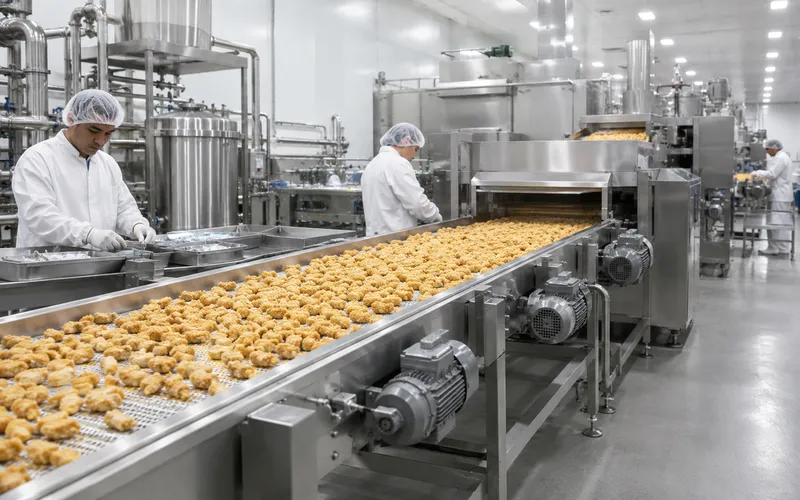
Meat and Poultry Processing
Conveyor drives, blending and grinding equipment, and packaging line motors are subject to multiple daily washdowns with hot water and sodium hypochlorite solution at temperatures of 70 to 85°C. IP69K motors with 316L stainless frames and NSF H1 food-grade bearing grease are the only technically acceptable specification for these environments under USDA and EU hygiene regulations for red meat and poultry processing facilities. |

Pharmaceutical and Beverage Manufacturing
Mixing tank agitators, filling line conveyors, and fluid transfer pump drives in pharmaceutical and beverage production are subject to CIP validation requirements where every component in the washdown zone must be demonstrably resistant to the cleaning protocol. IP69K certification provides the third-party tested evidence of washdown resistance needed for GMP qualification documentation in pharmaceutical facilities. |
Cheese and yoghurt production lines use aggressive alkaline CIP cleaning at high temperature. IP69K with 316L construction for all motors in direct contact zones.
Extreme chloride and organic acid exposure from seafood brine and gut content. 316L stainless and IP69K are the minimum; EHEDG-approved designs preferred.
Sugar, chocolate, and dough residue require high-pressure hot water removal. IP69K prevents water from being forced into the motor by the cleaning pressure and contaminating subsequent production.
Wort, beer, and spirits spill zones require IP69K motors on agitator, transfer pump, and conveyor drives to meet brewery hygiene codes and prevent product contamination.
7. Frequently Asked Questions
Edited by Cxm