2. Dimensionnement de la puissance des moteurs pour les entraînements de pompes
3. Méthode de démarrage : DOL, étoile-triangle, démarrage progressif
4. Classification des tâches pour le service de pompage
5. Indice de protection IP pour les environnements de pompage
6. Spécifications des entraînements de pompe série Y2
7. Applications par type de pompe
8. Foire aux questions
1. Lois d'affinité et puissance du moteur de la pompe
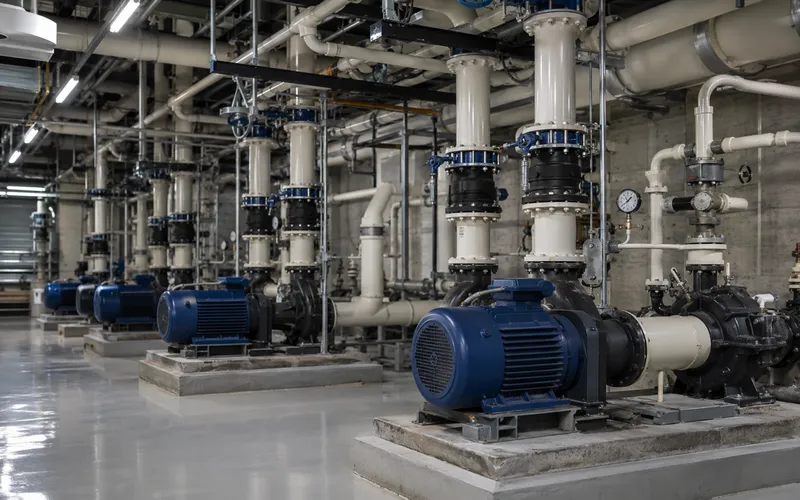
Les lois d'affinité des pompes centrifuges décrivent la relation entre la vitesse de la pompe, le débit, la hauteur manométrique (pression) et la puissance à l'arbre. Ces lois sont essentielles pour comprendre pourquoi la régulation de vitesse par variateur de fréquence permet de réaliser d'importantes économies d'énergie sur les entraînements de pompes centrifuges, et pourquoi le moteur doit être dimensionné pour le point de fonctionnement le plus défavorable sur la courbe caractéristique de la pompe plutôt que pour le point de fonctionnement moyen.
La loi de puissance cubique explique pourquoi la régulation de vitesse par variateur de fréquence (VFD) des pompes centrifuges permet de réaliser d'importantes économies d'énergie. Une pompe fonctionnant à 80% de sa vitesse nominale fournit un débit nominal de 80% tout en ne consommant que 80³ = 51,2% de sa puissance nominale. Pour un moteur de pompe de 22 kW fonctionnant à 80% pendant 6 000 heures par an à un coût de $0,13/kWh, l'économie annuelle par rapport à une régulation par vanne d'étranglement à pleine vitesse est d'environ 22 × (1 – 0,512) × 6 000 × 0,13 = $8 400 par an.
2. Dimensionnement de la puissance des moteurs pour les entraînements de pompes
La puissance à l'arbre moteur nécessaire à l'entraînement d'une pompe centrifuge est déterminée par la puissance hydraulique de la pompe (débit × hauteur manométrique × masse volumique du fluide) divisée par son rendement hydraulique au point de fonctionnement nominal. Il convient d'ajouter un coefficient de service pour tenir compte du fonctionnement hors du point de rendement optimal (PRO) et de l'usure de la roue en fin de vie.
P = (0,05 × 40 × 1 000 × 9,81) ÷ (1 000 × 0,72) = 27,25 kW
Avec un facteur de service de 1,15 : 27,25 × 1,15 = 31,3 kW
→ Sélectionner la série Y2 37 kW, 4 pôles, IE3
| Application de pompe | Pompe typique η | Facteur de service | Gamme de moteurs typique | Poteau Y2 |
|---|---|---|---|---|
| Alimentation en eau du bâtiment | 0,65–0,78 | 1.10 | 0,75–30 kW | 2P ou 4P |
| eau glacée du système de chauffage, ventilation et climatisation | 0,70–0,82 | 1.10–1.15 | 3,0–75 kW | 2P ou 4P |
| eau de process industrielle | 0,68–0,80 | 1.15 | 1,5–55 kW | 2P ou 4P |
| Irrigation / transfert d'eau | 0,62–0,75 | 1.15 | 2,2–90 kW | 2P ou 4P |
| Pompe à boues/eaux usées | 0,55–0,70 | 1.25 | 2,2–75 kW | 4P |
3. Méthode de démarrage : DOL, étoile-triangle et démarrage progressif
La méthode de démarrage détermine l'intensité du courant de démarrage consommé par le moteur et le couple disponible lors de l'accélération. Pour les pompes centrifuges, le choix est généralement simple car la charge à l'arrêt est quasi nulle (les pompes centrifuges démarrent à vide contre une vanne fermée). Par conséquent, toute méthode de démarrage fournissant un couple suffisant pour vaincre le frottement des paliers et accélérer la roue convient.
Courant de démarrage 6 à 7,5 fois supérieur au courant nominal. Convient aux moteurs de pompes jusqu'à environ 11 kW sur un réseau électrique stable où la chute de tension au démarrage est inférieure à 101 V (101 V) de la tension nominale. Au-delà de 11 kW, vérifiez auprès du fournisseur d'électricité si le démarrage direct (DOL) est autorisé. Le démarrage direct offre un couple de démarrage maximal, largement suffisant pour une pompe centrifuge démarrant avec une vanne fermée. Démarreur simple et économique ; aucun entretien supplémentaire après le contacteur.
Réduit le courant de démarrage à 33% de la valeur DOL et le couple de démarrage à 33% de la valeur DOL. Convient aux pompes centrifuges grâce à son faible couple de charge au démarrage. Nécessite un moteur à 6 bornes (standard sur la série Y2) et un relais temporisé étoile-triangle. Le passage du couplage étoile au couplage triangle, à environ 80% de la vitesse synchrone, provoque une variation transitoire de couple et de courant ; assurez-vous que la vanne de refoulement est fermée ou partiellement fermée pendant ce passage afin d'éviter les coups de bélier.
Le démarreur progressif assure une montée en couple douce et réglable, éliminant ainsi le pic de courant au démarrage et le coup de bélier dû à l'ouverture rapide de la vanne. Le variateur de fréquence (VFD) offre un démarrage progressif et une vitesse variable. Cette combinaison de démarrage progressif et de régulation de vitesse fait du variateur de fréquence associé au moteur YVF2 la solution idéale pour les systèmes de pompage de plus de 7,5 kW nécessitant une régulation de débit. Consultez l'article sur le variateur de fréquence Ever-Power YVF2 de Korea pour obtenir le guide d'application complet.
4. Classification des tâches pour le service de pompage
La plupart des applications de pompes centrifuges relèvent de la classe S1 (service continu) : la pompe fonctionne en continu à charge quasi constante pendant toute la durée du poste de travail ou 24 heures sur 24. Il s’agit de la classe de service la plus exigeante sur le plan thermique, et la puissance nominale Y2 correspond à la puissance de sortie continue maximale à une température ambiante de 40 °C.
Circulateur d'alimentation en eau du bâtiment, pompe à eau glacée pour le CVC, eau de refroidissement de process, pompe d'alimentation de chaudière, pompe incendie en phase d'essai, pompe principale d'irrigation. Le moteur fonctionne en continu à sa charge nominale. Le choix du rendement IE3 est le plus avantageux financièrement dans cette catégorie d'utilisation : un moteur de pompe IE3 de 22 kW permet d'économiser environ 1 TP4T500 à 1 TP4T900 € par an sur la facture d'électricité par rapport à un moteur IE1 fonctionnant à la même puissance.
Les surpresseurs utilisés dans les installations techniques du bâtiment, qui démarrent et s'arrêtent en fonction d'un signal de demande (pressostat ou débitmètre), fonctionnent en mode intermittent S3. Le moteur fonctionne par périodes de 1 à 10 minutes, puis s'arrête. Avec un facteur de marche de 401 TMP3 T, le moteur peut fonctionner jusqu'à 1151 TMP3 T de sa puissance nominale S1 sans dépasser les limites thermiques. Cependant, les démarrages fréquents génèrent également de la chaleur due aux pertes au démarrage ; il est donc important de vérifier la limite maximale de démarrages par heure du moteur dans la fiche technique Y2.
Note concernant les moteurs de pompes incendie : les moteurs de pompes incendie doivent être conçus pour fonctionner en cas de blocage du rotor. La pompe peut être amenée à fonctionner à pleine vitesse malgré une vanne fermée (débit nul) pendant un certain temps, ce qui provoque un échauffement de l’eau en circulation. Le moteur doit rester opérationnel et ne pas se déclencher pour surcharge dans ces conditions. Les moteurs Korea Ever-Power de la série Y2, dotés d’une isolation de classe F, répondent aux exigences thermiques pour le fonctionnement des pompes incendie en cas de blocage du rotor, conformément aux normes EN 12845 et NFPA 20.
5. Indice de protection IP pour les environnements de salles de pompes
Locaux techniques intérieurs propres à légèrement poussiéreux, avec une humidité ambiante inférieure à 901 µg/L (HR), sans projection d'eau directe. Norme pour les pompes à eau glacée des services du bâtiment, les circulateurs CVC et les pompes à eau de process industrielles dans les locaux techniques fermés. Spécification standard de la série Y2 : IP54.
Les stations de pompage extérieures exposées à la pluie, ou les locaux de pompage intérieurs soumis au nettoyage au jet d'eau ou aux projections d'eau dues à des fuites de canalisations, sont des exemples de stations de pompage. Les stations de pompage des usines de traitement d'eau, les stations de pompage d'irrigation et les zones de pompage des installations industrielles nécessitent un indice de protection IP55. La série Y2 est disponible avec l'option IP55, et la série YB2 est conçue pour une installation extérieure en zone dangereuse.
Les installations chimiques, pétrolières et gazières, ainsi que les stations de pompage de solvants situées en zones 1 ou 2 nécessitent des moteurs antidéflagrants. La norme est celle des moteurs Korea Ever-Power série YB2 Ex d IIB T4 IP55. Le groupe de gaz doit correspondre aux substances présentes dans la zone classée : IIA pour le propane/butane, IIB pour l’éthylène et IIC pour l’hydrogène ou l’acétylène.
6. Systèmes d'entraînement de pompes Korea Ever-Power série Y2
La série Y2 est le moteur standard pour les entraînements de pompes centrifuges de la gamme Korea Ever-Power. Pour les entraînements de pompes à vitesse fixe, la série Y2 offre un rendement IE3 à un prix compétitif sur toute la plage de puissance de 0,18 à 200 kW. Les pompes centrifuges sont accouplées directement à l'arbre moteur par un accouplement flexible ; aucun réducteur n'est nécessaire car la pompe et le moteur fonctionnent à la même vitesse (1 450 tr/min ou 2 900 tr/min pour les moteurs à 4 et 2 pôles à 50 Hz). La gamme complète de moteurs Y2 est disponible en Corée. section produits moteurs triphasés.
Pour les systèmes de pompage nécessitant une régulation de débit variable, Korea Ever-Power recommande le moteur YVF2 pour variateur de fréquence. Le YVF2 assure une ventilation forcée IC416 pour un couple nominal maximal à vitesse réduite, une isolation de classe H pour résister aux pics de tension du variateur et une protection par thermistance PTC pour les applications de pompage les plus exigeantes. contacter l'équipe technique pour le dimensionnement des variateurs de fréquence des pompes.
| Gamme de puissance | 0,18 – 200 kW |
| Poteaux typiques | 2P (2 900 tr/min) ou 4P (1 450 tr/min) |
| Efficacité | norme IE3 |
| Protection | Norme IP54 ; option IP55 |
| Devoir | S1 continu |
| Couple de démarrage | 2,0–2,8× valeur nominale (adéquate pour la pompe) |
| Type de couplage | Accouplement flexible direct (sans réducteur) |
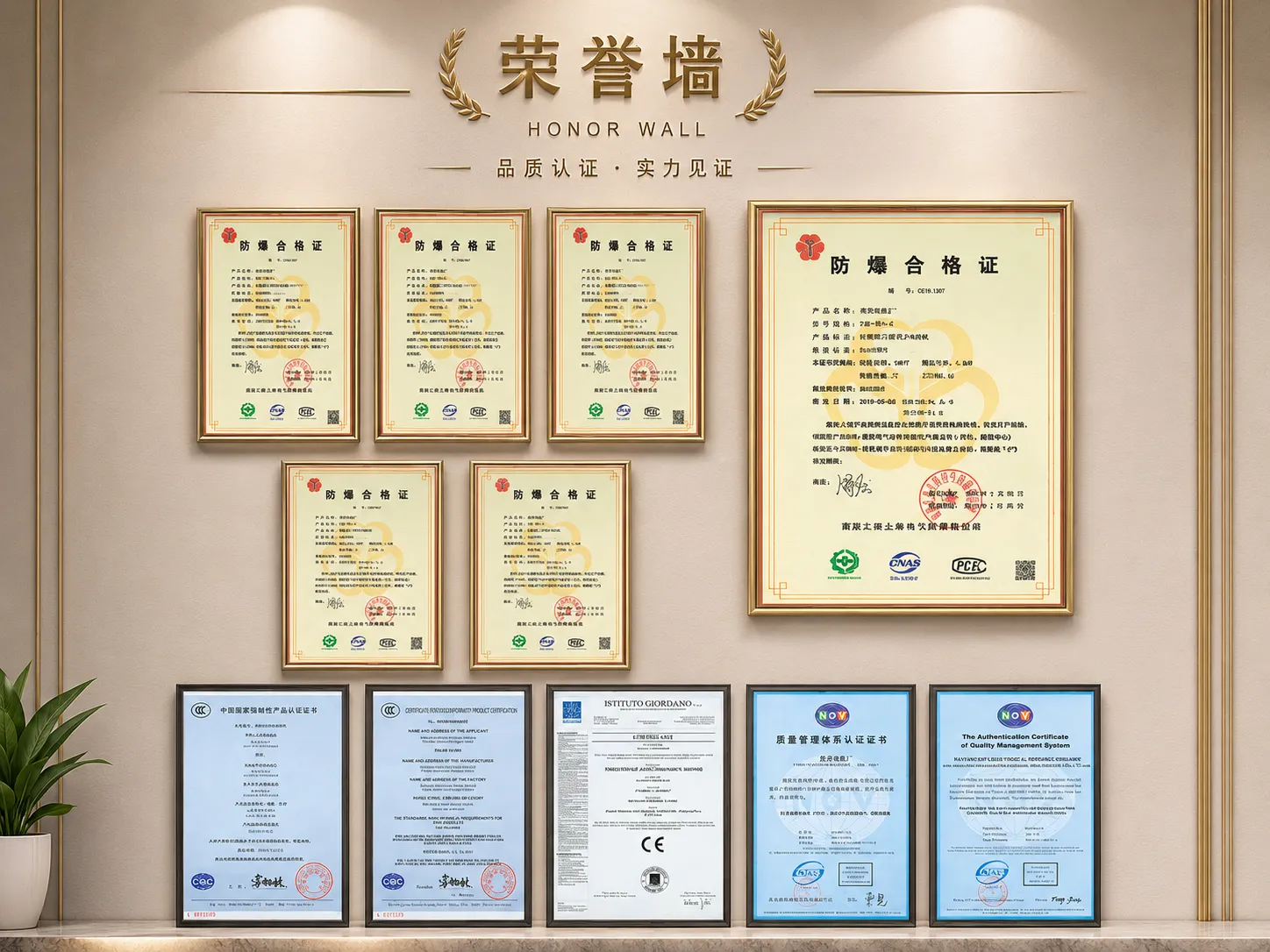
| Certification | CE, ISO 9001, IEC 60034 |
7. Applications par type de pompe
Surpresseurs, pompes d'alimentation en eau domestique et pompes de maintien de pression pour la lutte contre l'incendie. Moteurs Y2 bipolaires (2 900 tr/min) de 0,75 à 7,5 kW, à accouplement direct avec des pompes centrifuges verticales multicellulaires. Service S3 pour surpresseur, S1 pour alimentation principale. Indice de protection IP54 pour local technique intérieur.
Groupes motopompes à eau glacée primaire et secondaire pour systèmes CVC centraux. Moteurs Y2 quadripolaires de 3,0 à 75 kW, à variateur de fréquence pour débit variable dans les systèmes primaire-secondaire ou primaire variable. Moteurs YVF2 à variateur de fréquence pour tous les entraînements de pompes à variateur de fréquence.
Circulation d'eau de refroidissement, pompes de service d'échangeurs de chaleur, circuits de refroidissement de réacteurs. Moteur Y2 quadripolaire de 2,2 à 55 kW, S1 continu. Pour les fluides de process corrosifs, utiliser une pompe en acier inoxydable avec moteur Y2 standard (le moteur n'étant pas en contact avec le fluide).
Pompes d'irrigation agricole, de transfert d'eau et de remplissage de réservoirs. Modèle Y2 à 4 pôles, de 5,5 à 90 kW, souvent utilisé de façon saisonnière avec des arrêts prolongés ; suivre la procédure de maintenance du réservoir. Indice de protection IP55 pour une installation extérieure. Démarrage étoile-triangle ou progressif pour les longues canalisations afin d'éviter les coups de bélier.

8. Foire aux questions
Édité par Cxm