2. Gasgruppenklassifizierung: IIA, IIB, IIC
3. Erläuterung der Temperaturklasse T4
4. Ex d Flammgeschützt vs. Ex e Erhöhte Sicherheit
5. Spezifikationen der YB2-Serie
6. Anwendungen in Chemieanlagen
7. Installationsregeln für Motoren in explosionsgefährdeten Bereichen
8. Häufig gestellte Fragen
1. ATEX-Zone-1- und Zone-2-Klassifizierung
Die Norm IEC 60079-10-1 definiert drei Zonen für Bereiche, in denen explosionsfähige Gase, Dämpfe oder Nebel auftreten können. Die Zoneneinteilung basiert auf der Häufigkeit und Dauer des Auftretens explosionsfähiger Atmosphären, nicht auf der Toxizität oder der Menge des Stoffes. Jeder in einem explosionsgefährdeten Bereich installierte Motor muss für die jeweilige Zone zertifiziert sein.
In Tanks, Behältern und geschlossenen Räumen, in denen explosionsfähige Dampf-Luft-Gemische kontinuierlich oder über längere Zeiträume (mehr als 1.000 Stunden pro Jahr) vorhanden sind, sind Standardmotoren, einschließlich explosionsgeschützter Motoren, für Zone 0 nicht geeignet. Zone 0 erfordert eigensichere (Ex ia) Geräte, die speziell für diese Zone zertifiziert sind. Anlagen der chemischen Industrie, die in geschlossenen Prozessbehältern installiert sind, fallen in Zone 0; Motoren, die Rührwerke in Behältern antreiben, sind außerhalb des Behälters installiert und befinden sich typischerweise in Zone 1.
Bereiche um Entlüftungsöffnungen, Pumpendichtungen, Flanschverbindungen und Prozessanlagen, in denen während des normalen Betriebs (10 bis 1000 Stunden pro Jahr) explosive Dämpfe freigesetzt werden können, werden als Zone 1 eingestuft. Dazu gehören auch Pumpenräume, in denen brennbare Lösungsmittel gehandhabt werden, Bereiche im Umkreis von 0,5 m um offene Abwassersysteme sowie Bereiche um Probenahmestellen an Prozessleitungen. Alle Motoren in Zone 1 müssen gemäß ATEX oder IECEx Ex d, Ex e oder gleichwertig für Gase der Gruppe II und die jeweilige Temperaturklasse des Standorts zertifiziert sein.
Bereiche, in denen während des Normalbetriebs keine explosiven Dämpfe zu erwarten sind, diese aber gelegentlich oder kurzzeitig (unter 10 Stunden pro Jahr) auftreten können – typischerweise der Bereich um Zone 1, der sich 1 bis 3 m von den Zone-1-Grenzen erstreckt. Allgemeine Außenbereiche einer Chemieanlage, in denen brennbare Stoffe verarbeitet werden, gehören typischerweise zur Zone 2. Motoren in Zone 2 müssen gemäß ATEX/IECEx für Gase der Gruppe II nach Ex d oder Ex e zertifiziert sein. Ein für Zone 1 zertifizierter Motor (Ex d IIB T4) ist auch für die Installation in Zone 2 geeignet.
Einhaltungspflicht: Der Einsatz eines handelsüblichen, nicht explosionsgeschützten Motors in explosionsgefährdeten Bereichen der Zone 1 oder 2 verstößt gegen die ATEX-Richtlinie (EU 2014/34/EU), das IECEx-System und die nationalen Sicherheitsvorschriften der meisten Länder. Er stellt eine Zündquelle in einem Bereich dar, in dem explosionsfähige Atmosphären auftreten können. Der Motor muss zum Zeitpunkt der Funkenbildung nicht laufen – interne Lichtbögen beim Einschalten des Schützes, Bürstenfunken bei Schleifringläufermotoren oder elektrostatische Entladungen vom Motorgehäuse können in explosionsgefährdeten Bereichen der Zone 1 oder 2 eine Explosion auslösen. In explosionsgefährdeten Bereichen dürfen ausschließlich Ex-zertifizierte Motoren installiert werden.
2. Gasgruppenklassifizierung: IIA, IIB, IIC
Gase der Gruppe II werden anhand ihres maximalen experimentellen Sicherheitsabstands (MESG) und ihres minimalen Zündstromverhältnisses (MIC) in drei Untergruppen eingeteilt. Beide Werte bestimmen, wie wahrscheinlich es ist, dass sich ein Funke oder eine heiße Oberfläche im Motor durch die flammfesten Gehäuseverbindungen in eine explosionsgefährdete Umgebung ausbreitet. Der Motor muss für eine Gasgruppe zertifiziert sein, die das gefährlichste im explosionsgefährdeten Bereich vorkommende Gas abdeckt.
| Gasgruppe | Typische Gase und Lösungsmittel | MESG | Motorzertifizierung erforderlich | YB2 geeignet? |
|---|---|---|---|---|
| IIA | Propan, Butan, Methan, Aceton, Ammoniak, Ethanol, Toluol, Xylol, Methanol | > 0,9 mm | Ex d IIA oder höher | Ja (IIB umfasst IIA) |
| IIB | Ethylen, Diethylether, Isopropylalkohol, Butadien, Vinylchlorid, Styrol | 0,5–0,9 mm | Ex d IIB oder höher | Ja (YB2 ist IIB) |
| IIC | Wasserstoff, Acetylen, Schwefelkohlenstoff – höchstes Explosionsrisiko | < 0,5 mm | Ex d IIC nur | Nein (benötigt IIC-Motor) |
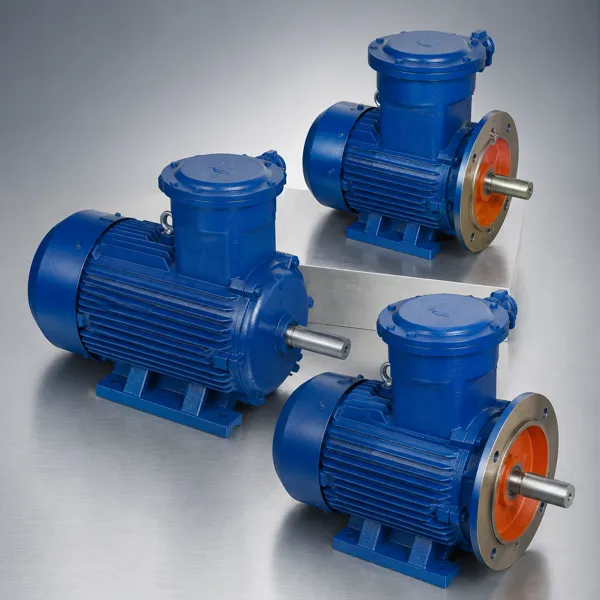
Die Korea Ever-Power YB2-Serie ist nach Ex d IIB T4 zertifiziert und somit für alle Gase und Dämpfe der Gruppen IIA und IIB geeignet. Sie deckt damit die meisten Atmosphären in Chemieanlagen ab, einschließlich der meisten organischen Lösungsmittel, Erdölfraktionen und Prozessgase. Für Bereiche, in denen Wasserstoff (Gruppe IIC) der Gefahrstoff ist – wie z. B. Elektrolyseanlagen, Wasserstoffspeicher und einige Batterieanlagen – ist ein Motor mit Zertifizierung der Gruppe IIC erforderlich. In diesen Fällen ist die YB2 IIB-Serie nicht ausreichend. Bitte prüfen Sie die spezifische Gasgruppe anhand der Zonenklassifizierung, bevor Sie den Motor auswählen.
3. Erläuterung der Temperaturklasse T4
Die Temperaturklasse eines explosionsgeschützten Motors begrenzt die maximale Oberflächentemperatur des Motorgehäuses auf einen Wert unterhalb der Selbstentzündungstemperatur der umgebenden explosionsgefährdeten Atmosphäre. Übersteigt die Oberflächentemperatur des Motors die Selbstentzündungstemperatur des umgebenden explosionsfähigen Gemisches, kann es zu einer Zündung ohne Funkenbildung kommen – eine Heißoberflächenentzündung ist in explosionsgefährdeten Bereichen genauso gefährlich wie elektrische Funkenbildung.
Die Temperaturklasse T4 der YB2 (Oberflächengrenztemperatur 135 °C) umfasst Ethylen (Selbstentzündungstemperatur 490 °C), Diethylether (160 °C), Acetaldehyd (175 °C) und die meisten gängigen organischen Lösungsmittel, die in der chemischen Produktion vorkommen. Das Dokument zur Gefahrenbereichseinstufung muss die für die jeweilige Atmosphäre erforderliche Temperaturklasse angeben – gehen Sie niemals davon aus, dass die Standardklasse ausreichend ist, ohne die Selbstentzündungstemperatur des am stärksten entzündlichen Stoffes zu überprüfen.
4. Ex d Flammgeschützt vs. Ex e Erhöhte Sicherheit
Ex-d-Motoren sind so konstruiert, dass eine interne Explosion innerhalb des Motorgehäuses eingeschlossen und eine Ausbreitung in die Außenatmosphäre verhindert wird. Der Motor ist intern nicht funkenfrei – vielmehr ist das Gehäuse so ausgelegt, dass es dem internen Explosionsdruck (typischerweise 10 bis 15 bar) standhält. Alle externen Verbindungen sind mit präzisen Spaltmaßen (MESG) versehen, die austretende heiße Gase unter die Zündtemperatur der Umgebungsluft abkühlen, bevor sie austreten können. Ex-d-Motoren eignen sich für Zone 1 und Zone 2.
Ex-e-Motoren verhindern Funkenbildung, Lichtbögen und heiße Oberflächen im Normalbetrieb und unter festgelegten Überlastbedingungen. Dies wird durch verbesserte Konstruktionsstandards erreicht, die die internen Zündquellen eliminieren, welche bei Ex-d-Motoren lediglich vorhanden sind. Ex-e-Motoren besitzen keine Bürstenkontakte, keinen Kommutator und verfügen über eine verbesserte Wicklungsisolierung sowie eine Temperaturüberwachung. Ex-e-Käfigläufermotoren werden in Zone 2 häufig bevorzugt, da ihr offenes Gehäuse (im Vergleich zum geschlossenen, schweren Gusseisengehäuse von Ex-d-Motoren) eine bessere natürliche Belüftung und Kühlung ermöglicht, was die Effizienz steigert und das Gewicht reduziert. Ex-e-Motoren erfordern eine obligatorische Wicklungstemperaturüberwachung (PTC-Thermistoren), die an ein zertifiziertes Schutzrelais angeschlossen ist.
5. Spezifikationen der koreanischen Ever-Power YB2-Serie
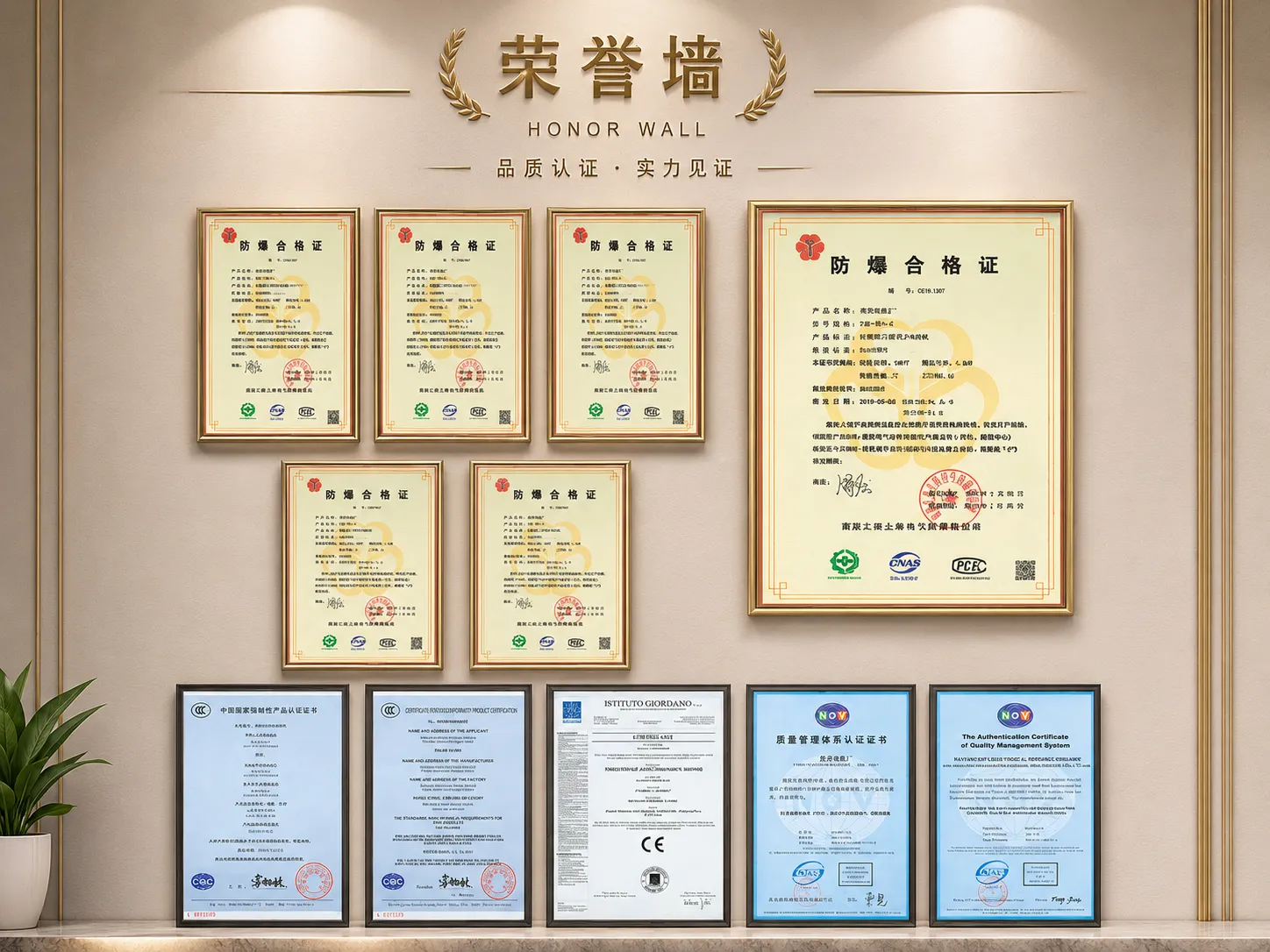
Die Korea Ever-Power YB2-Serie ist ein Drehstrom-Käfigläufermotor, der gemäß ATEX-Richtlinie und IECEx-Norm nach Ex d IIB T4 zertifiziert ist. Er eignet sich für den Einsatz in explosionsgefährdeten Bereichen der Zonen 1 und 2, in denen die explosionsfähige Atmosphäre der Gruppe IIA oder IIB zugeordnet ist (einschließlich der meisten organischen Lösungsmittel, Erdölfraktionen und Chemieanlagengase außer Wasserstoff und Acetylen). Die gesamte YB2-Baureihe ist erhältlich in der Produktbereich explosionsgeschützte Motoren.
Der YB2 basiert auf der gleichen metrischen IEC 72-1-Rahmenkonstruktion wie die Standard-Y2-Serie und kann daher einen Standard-Y2-Motor in einer bestehenden Anlage ohne Änderungen an Motorgrundplatte, Kupplung oder Kabeleinführung ersetzen. Das robuste Gusseisengehäuse bietet Schutzart IP55 für die Installation im Außenbereich von Chemieanlagen, wo Regen und Reinigung mit Wasserschlauch möglich sind. Der Klemmenkasten ist mit einer Ex-d-zertifizierten Kabelverschraubung für den Einsatz mit armierten Kabeln oder Schutzrohrsystemen in explosionsgefährdeten Bereichen ausgestattet.
| Zertifizierung | ATEX + IECEx: Ex d IIB T4 |
| Zoneneignung | Zone 1 und Zone 2 |
| Gasgruppe | IIA und IIB (nicht IIC) |
| Oberflächentemperaturgrenze | T4 = maximal 135 °C |
| Leistungsbereich | 0,55–200 kW |
| Gehäuse | Schutzart IP55, Gusseisenrahmen |
| Spannung / Frequenz | 380 V 50 Hz Standard |
| Rahmen | IEC 72-1 (identisch mit Y2) |
| Isolierung | Klasse F |
6. Anwendungen in Chemieanlagen
Lösungsmittel- und Chemikalientransferpumpen
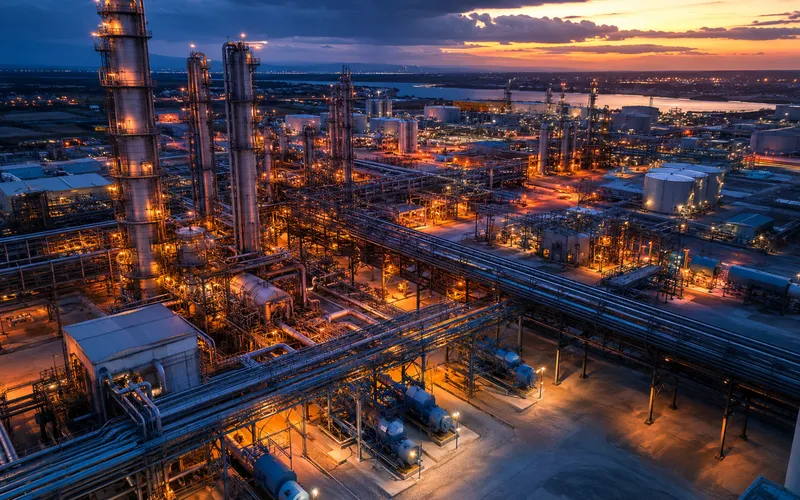
Kreisel- und Zahnradpumpen für brennbare Lösungsmittel wie Ethanol, Toluol, Xylol, Aceton, Methanol und Methylenchlorid werden in Zone 1 im Bereich der Pumpendichtung und der Flansche installiert. Motoren der Schutzart YB2 Ex d IIB T4 mit Leistungen von 0,75 bis 22 kW, 2- oder 4-polig, gewährleisten den erforderlichen Schutz für explosionsgefährdete Bereiche. Der Motor ist über eine flexible Kupplung auf einer gemeinsamen Grundplatte außerhalb der Zone 0 (innerhalb des Behälters oder Tanks) direkt mit der Pumpe gekoppelt. Schutzart IP55 für die Installation im Freien in Chemieanlagen; Kabelverschraubungen der Schutzart Ex d sind an allen Klemmenkasteneinführungen vorgeschrieben. |

Antriebe für Lüftungs- und Abluftventilatoren
In Chemieanlagen werden Lüftungsventilatoren und Absauganlagen, die brennbare Dämpfe fördern, in Zone 1 am Kanalanschluss und in Zone 2 im umgebenden Bereich installiert. Die Ventilatoren werden über einen Keilriemen oder eine Direktkupplung von YB2 Ex d IIB T4-Motoren mit einer Leistung von 1,5 bis 30 kW angetrieben. Für Lackierkabinen, Beschichtungsanlagen und Lösemittelrückgewinnungsanlagen, in denen Abluftventilatoren lösemittelhaltige Luft in Konzentrationen fördern, die sich der unteren Explosionsgrenze (UEG) annähern können, ist eine Ex d-Zertifizierung für die entsprechende Gasgruppe unabhängig von der Zonenklassifizierung des umgebenden Bereichs zwingend erforderlich. |
Externe Rührwerksmotoren, die Rührwerke in chemischen Reaktoren über Gleitringdichtungen antreiben, befinden sich in Zone 1. Es handelt sich um 4- oder 6-polige Motoren der Baureihe YB2 mit einer Leistung von 1,5 bis 22 kW, die typischerweise mit einem Schneckengetriebe der Baureihe NMRV für niedrige Rührgeschwindigkeiten (10 bis 60 U/min) kombiniert sind. Motor und Getriebe müssen in Ex-d-Gehäusen untergebracht sein.
Gaskompressoren und Prozessluftgebläse in Chemieanlagen, die mit brennbaren Prozessgasen arbeiten, benötigen Motoren der Schutzart YB2 Ex d IIB T4 mit einer Leistung von 5,5 bis 200 kW. Der Motor muss mit dem Kompressorrahmen über einen Erdungsleiter geerdet sein, der so dimensioniert ist, dass er den vollen Motorfehlerstrom für eine Zeit führen kann, die ausreicht, um die Sicherung oder den Leistungsschalter auszulösen.
Flüssigprodukt-Beladepumpen in Tanklagerhallen, die Erdölprodukte (Benzin, Diesel, Kerosin) umschlagen, fallen im Normalbetrieb unter Zone 2 und während des Beladevorgangs unter Zone 1. Die Norm YB2 Ex d IIB T4 bietet eine Zone-1-Zertifizierung, die sowohl für den Normalbetrieb als auch für den Beladevorgang gilt, ohne dass zwei unterschiedliche Motorspezifikationen erforderlich sind.
Abwasserpumpen in Chemieanlagen, die lösungsmittelhaltiges Abwasser fördern, können der Zone 2 zugeordnet werden, wenn Lösemittelkonzentrationen über 25% UEG möglich sind. Für die Zone-2-Klassifizierung bietet YB2 Ex d IIB T4 die erforderliche Zertifizierung mit Schutzart IP55 für die Installation in Außenschächten und -pumpen.
7. Installationsregeln für Motoren in explosionsgefährdeten Bereichen
Alle Kabeleinführungen in einen YB2-Anschlusskasten müssen Ex-d-zertifizierte Kabelverschraubungen des für das verwendete Kabel geeigneten Typs und Durchmessers verwenden. Standardmäßige IP68- oder wasserdichte Kabelverschraubungen sind für Ex-d-Anwendungen nicht ausreichend – die Verschraubung muss speziell für die Verwendung mit Ex-d-Gehäusen zertifiziert sein und so installiert werden, dass die Ex-d-Integrität des Anschlusskastens gemäß IEC 60079-0 erhalten bleibt.
Der Motorrahmen des Typs YB2 muss über einen separaten Erdungsleiter, der an die externe Erdungsschraube am Motorrahmen angeschlossen ist, mit dem Erdungsnetz der Anlage verbunden werden. Die Erdungsdurchgängigkeit muss im Rahmen der Inbetriebnahmeprüfung überprüft und in den elektrischen Prüfprotokollen des Bereichs dokumentiert werden.
In Anlagen der Zone 1, in denen der Motor längeren Überlastbedingungen ausgesetzt sein kann (z. B. Pumpenblockade oder Kavitation), sollten PTC-Wicklungsthermistoren installiert und an ein zertifiziertes Thermistorrelais angeschlossen werden. Ein überlasteter Ex-d-Motor kann Oberflächentemperaturen über dem Grenzwert T4 von 135 °C erreichen, bevor das Motorüberlastrelais auslöst. Dies stellt selbst bei einem korrekt dimensionierten Motor eine Zündgefahr dar.
Elektrische Betriebsmittel in explosionsgefährdeten Bereichen (einschließlich Ex-d-Motoren) müssen gemäß IEC 60079-17 regelmäßig geprüft werden, um sicherzustellen, dass die Ex-d-Schutzart erhalten bleibt – d. h., dass alle Befestigungselemente vorhanden sind, der Klemmenkastendeckel korrekt sitzt, die Kabelverschraubungen dicht sind und das Motorgehäuse nicht korrodiert ist. In Zone 1 ist eine genaue Prüfung in der Regel mindestens alle 3 Jahre, in Zone 2 alle 5 Jahre erforderlich.

8. Häufig gestellte Fragen
Bearbeitet von Cxm