2. Classificazione dei gruppi di gas: IIA, IIB, IIC
3. Spiegazione della classe di temperatura T4
4. Ex d Antideflagrante vs Ex e Maggiore sicurezza
5. Specifiche della serie YB2
6. Applicazioni negli impianti chimici
7. Norme di installazione per motori per aree pericolose
8. Domande frequenti
1. Classificazione ATEX Zona 1 e Zona 2
La norma IEC 60079-10-1 definisce tre zone per le aree in cui possono essere presenti atmosfere di gas, vapori o nebbie esplosive. La classificazione delle zone si basa sulla frequenza e sulla durata della presenza dell'atmosfera esplosiva, non sulla tossicità o sulla quantità del materiale. Ogni motore installato in un'area pericolosa deve essere certificato per la zona in cui è installato.
All'interno di serbatoi, recipienti e spazi chiusi in cui sono presenti miscele vapore-aria esplosive in modo continuo o per lunghi periodi (oltre 1.000 ore all'anno). I motori standard, compresi i motori antideflagranti, NON sono adatti per la Zona 0. La Zona 0 richiede apparecchiature a sicurezza intrinseca (Ex ia) specificamente certificate per questa zona. Le apparecchiature degli impianti chimici installate all'interno di recipienti di processo chiusi rientrano nella Zona 0; i motori che azionano gli agitatori all'interno dei recipienti sono installati all'esterno del recipiente e si trovano in genere nella Zona 1.
Le aree intorno alle aperture di sfiato, alle guarnizioni delle pompe, ai raccordi flangiati e alle apparecchiature di processo in cui possono essere rilasciati vapori esplosivi durante il normale funzionamento (da 10 a 1.000 ore all'anno). Le sale pompe che gestiscono solventi infiammabili, le aree entro 0,5 m dai sistemi di drenaggio aperti e le aree intorno ai punti di campionamento sulle tubazioni di processo sono generalmente classificate come Zona 1. Tutti i motori nella Zona 1 devono essere certificati ATEX o IECEx Ex d, Ex e o equivalenti per i gas del Gruppo II e per la specifica classe di temperatura del luogo.
Zone in cui non si prevede la presenza di vapori esplosivi durante il normale funzionamento, ma che possono verificarsi infrequentemente o per brevi periodi (inferiori a 10 ore all'anno): tipicamente l'area circostante la Zona 1 che si estende da 1 a 3 m dai confini della Zona 1. Le aree esterne generali di un impianto chimico in cui vengono lavorati materiali infiammabili sono tipicamente classificate come Zona 2. I motori in Zona 2 devono essere certificati ATEX/IECEx Ex d o Ex e per i gas del Gruppo II. Un motore certificato per la Zona 1 (Ex d IIB T4) è adatto anche per l'installazione in Zona 2.
Requisito di conformità: l'utilizzo di un motore standard non antideflagrante in un'area classificata Zona 1 o Zona 2 costituisce una violazione della Direttiva ATEX (UE 2014/34/UE), dello schema IECEx e della legislazione nazionale in materia di sicurezza nella maggior parte dei paesi. Crea una fonte di innesco in un'area in cui potrebbero essere presenti atmosfere esplosive. Il motore non deve necessariamente essere in funzione al momento dell'evento di scintilla: l'arco interno all'accensione del contattore, le scintille generate dalle spazzole nei motori a rotore avvolto o le scariche elettrostatiche dai telai dei motori possono innescare un'esplosione in un'atmosfera di Zona 1 o Zona 2. Solo i motori con certificazione Ex possono essere installati nelle zone classificate.
2. Classificazione dei gruppi di gas: IIA, IIB, IIC
I gas del Gruppo II sono suddivisi in tre sottogruppi in base al loro rapporto tra la massima distanza di sicurezza sperimentale (MESG) e la minima corrente di accensione (MIC), entrambi fattori che determinano la probabilità che una scintilla o una superficie calda all'interno del motore possano propagarsi in un'atmosfera esplosiva esterna attraverso le giunzioni dell'involucro antideflagrante. Il motore deve essere certificato per un gruppo di gas che comprenda il gas più pericoloso presente nell'area classificata.
| Gruppo Gas | Gas e solventi tipici | MESG | È richiesta la certificazione per la guida di veicoli a motore. | Adatto al modello YB2? |
|---|---|---|---|---|
| IIA | Propano, butano, metano, acetone, ammoniaca, etanolo, toluene, xilene, metanolo | > 0,9 mm | Ex d IIA o superiore | Sì (IIB comprende IIA) |
| IIB | Etilene, dietiletere, alcol isopropilico, butadiene, cloruro di vinile, stirene | 0,5–0,9 mm | Ex d IIB o superiore | Sì (YB2 è IIB) |
| IIC | Idrogeno, acetilene, disolfuro di carbonio: rischio di esplosione più elevato | < 0,5 mm | Ex d IIC solo | No (richiede motore IIC) |
La serie YB2 di Ever-Power Korea è certificata Ex d IIB T4, il che significa che è adatta a tutti i gas e vapori dei gruppi IIA e IIB, coprendo la stragrande maggioranza delle atmosfere degli impianti chimici, inclusi la maggior parte dei solventi organici, delle frazioni petrolifere e dei gas di processo. Per le aree in cui l'idrogeno (gruppo IIC) è il materiale pericoloso, come impianti di elettrolisi, stoccaggio di idrogeno e alcuni impianti di batterie, è richiesto un motore certificato per il gruppo IIC e il modello YB2 IIB non è adeguato. Si prega di verificare lo specifico gruppo di gas con il documento di classificazione dell'area prima di specificare il motore.
3. Spiegazione della classe di temperatura T4
La classe di temperatura di un motore antideflagrante limita la temperatura superficiale massima dell'involucro del motore al di sotto della temperatura di autoaccensione dell'atmosfera pericolosa presente. Se la temperatura superficiale del motore supera la temperatura di autoaccensione della miscela esplosiva circostante, può verificarsi l'accensione senza alcuna scintilla: l'accensione di una superficie calda è pericolosa quanto una scintilla elettrica in un'area pericolosa.
La classe di temperatura T4 del YB2 (limite di temperatura superficiale di 135 °C) comprende etilene (autoaccensione a 490 °C), dietiletere (160 °C), acetaldeide (175 °C) e la maggior parte dei solventi organici comuni utilizzati nella produzione chimica. Il documento di classificazione dell'area pericolosa deve specificare la classe di temperatura richiesta per l'atmosfera specifica: non si deve mai presumere che la classe predefinita sia adeguata senza aver prima verificato la temperatura di autoaccensione del materiale più infiammabile presente.
4. Ex d Antideflagrante vs Ex e Maggiore sicurezza
I motori Ex d sono progettati per contenere qualsiasi esplosione interna all'interno dell'involucro del motore e impedirne la propagazione nell'atmosfera esterna. Il motore non è a prova di scintille internamente; l'involucro è invece costruito per resistere alla pressione interna dell'esplosione (tipicamente da 10 a 15 bar) e tutte le giunzioni esterne sono progettate con dimensioni precise dell'intercapedine (MESG) che raffreddano qualsiasi gas caldo in fuoriuscita al di sotto della temperatura di accensione dell'atmosfera circostante prima che fuoriesca. I motori Ex d sono adatti per le zone 1 e 2.
I motori Ex e prevengono la formazione di scintille, archi elettrici o superfici calde durante il normale funzionamento e in condizioni di sovraccarico specificate, grazie all'applicazione di standard costruttivi avanzati che eliminano le fonti di accensione interne presenti nei motori Ex d. I motori Ex e non hanno contatti a spazzola, né collettore, e utilizzano un isolamento degli avvolgimenti e un sistema di monitoraggio della temperatura migliorati. I motori a gabbia di scoiattolo Ex e sono spesso preferiti in Zona 2 perché il loro involucro aperto (rispetto al pesante involucro sigillato in ghisa dei motori Ex d) garantisce una migliore ventilazione e raffreddamento naturali, migliorando l'efficienza e riducendo il peso. I motori Ex e richiedono il monitoraggio obbligatorio della temperatura degli avvolgimenti (termistori PTC) collegati a un relè di protezione certificato.
5. Specifiche della serie YB2 di Ever-Power (Corea del Sud).
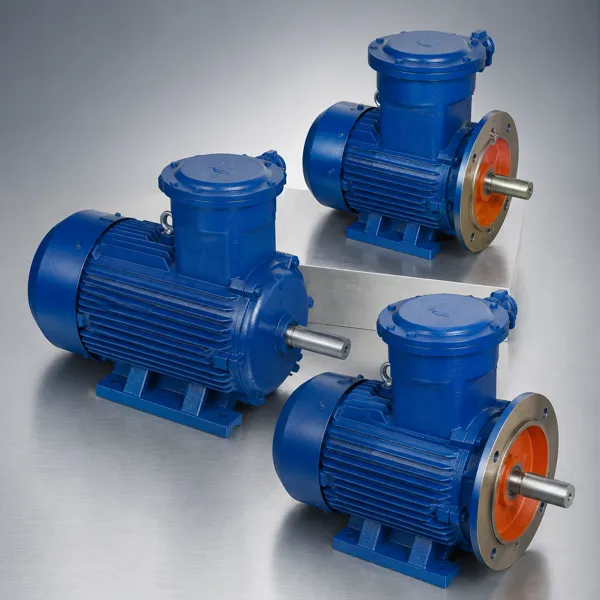
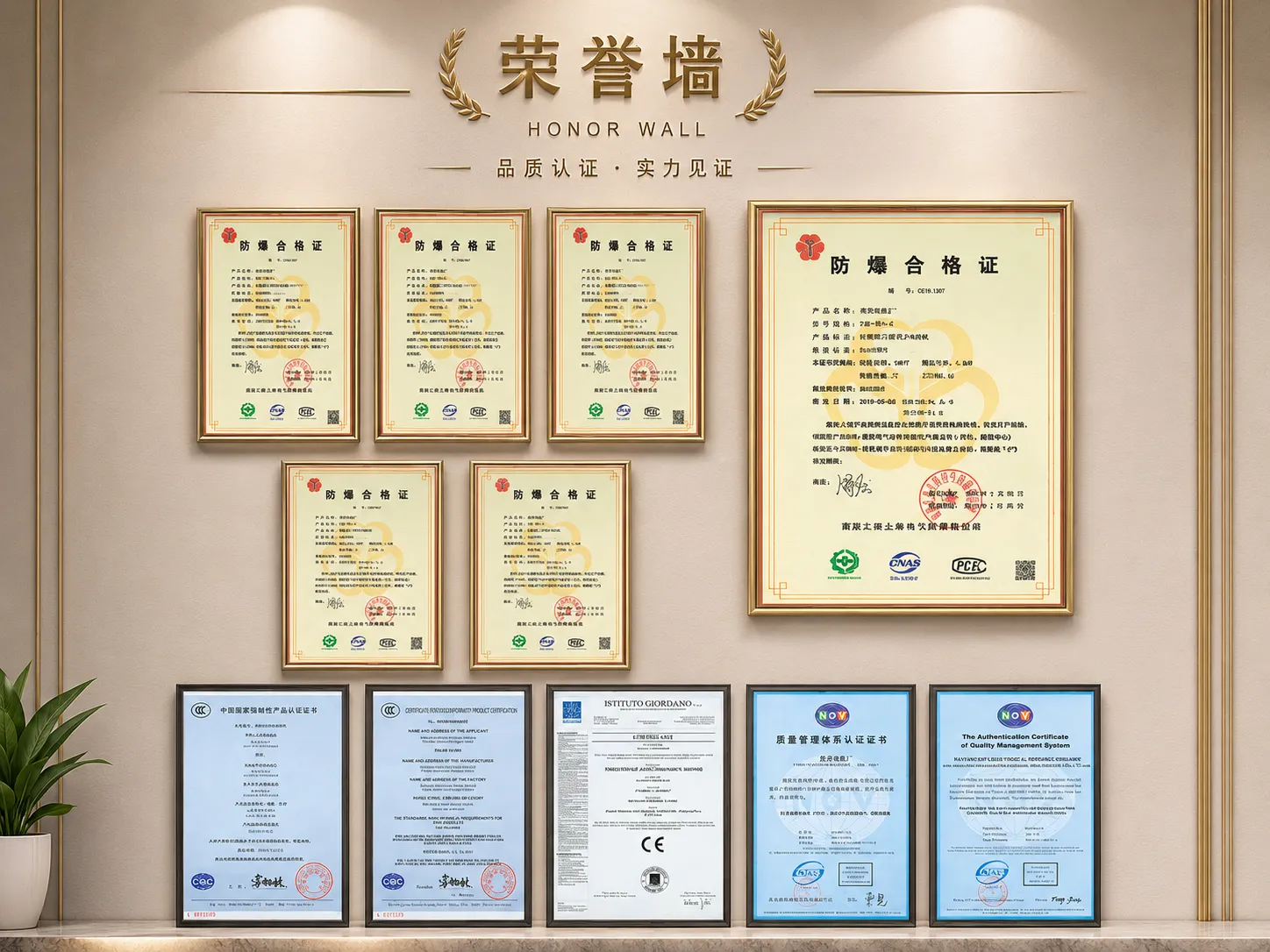
La serie Korea Ever-Power YB2 è un motore a induzione trifase a gabbia di scoiattolo certificato Ex d IIB T4 sia secondo la Direttiva ATEX che secondo lo schema IECEx. È adatto per l'installazione in aree pericolose di Zona 1 e Zona 2 dove l'atmosfera esplosiva è classificata come Gruppo IIA o IIB (inclusi la maggior parte dei solventi organici, frazioni di petrolio e gas di impianti chimici diversi da idrogeno e acetilene). L'intera gamma YB2 è disponibile nella sezione prodotti motori antideflagranti.
Il modello YB2 è costruito sulla stessa piattaforma con telaio metrico IEC 72-1 della serie Y2 standard, consentendo la sostituzione di un motore Y2 standard in un impianto esistente senza modifiche alla piastra di base del motore, all'accoppiamento o alle posizioni di ingresso del condotto. L'involucro in ghisa per impieghi gravosi offre una protezione IP55 per l'installazione in impianti chimici esterni esposti a pioggia e lavaggi con getto d'acqua. La scatola di derivazione è sigillata con un pressacavo certificato Ex d per l'utilizzo con cavi armati o sistemi di condotti in aree pericolose.
| Certificazione | ATEX + IECEx: Ex d IIB T4 |
| Idoneità della zona | Zona 1 e Zona 2 |
| Gruppo Gas | IIA e IIB (non IIC) |
| limite di temperatura delle superfici | T4 = 135 °C massimo |
| Gamma di potenza | 0,55–200 kW |
| Allegato | IP55, telaio in ghisa |
| Tensione/frequenza | 380 V 50 Hz standard |
| Telaio | IEC 72-1 (equivalente a Y2) |
| Isolamento | Classe F |
6. Applicazioni negli impianti chimici
Pompe per il trasferimento di solventi e sostanze chimiche
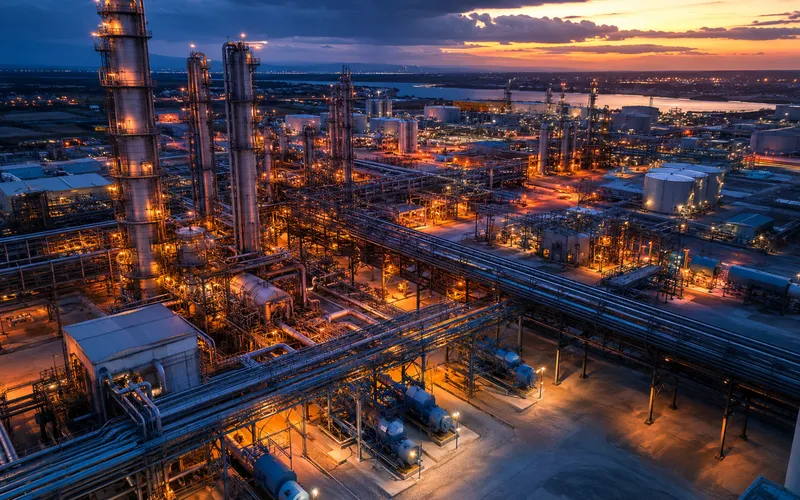
Le pompe centrifughe e a ingranaggi per solventi infiammabili (etanolo, toluene, xilene, acetone, metanolo, diclorometano) sono installate in Zona 1, in prossimità della tenuta e delle flange della pompa. I motori YB2 Ex d IIB T4, da 0,75 a 22 kW, a 2 o 4 poli, garantiscono la protezione certificata per aree pericolose richiesta. Il motore è accoppiato direttamente alla pompa tramite un giunto flessibile su una piastra di base comune, esterna alla Zona 0 interna del recipiente o del serbatoio. Grado di protezione IP55 per installazione in impianti chimici esterni; pressacavi Ex d obbligatori su tutti gli ingressi delle scatole di derivazione. |

Azionamenti per ventilatori di ventilazione e di estrazione
I ventilatori e i sistemi di aspirazione dei fumi per impianti chimici, destinati al trattamento di aria contenente vapori infiammabili, sono installati nella Zona 1, in corrispondenza del collegamento del condotto, e nella Zona 2, nell'area circostante. I ventilatori sono azionati da motori YB2 Ex d IIB T4 da 1,5 a 30 kW tramite cinghia trapezoidale o accoppiamento diretto. Per cabine di verniciatura a spruzzo, linee di rivestimento e unità di recupero solventi, dove i ventilatori di aspirazione trattano aria contenente solventi a concentrazioni che possono avvicinarsi al limite inferiore di esplosività (LEL), la certificazione Ex d per il gruppo di gas appropriato è obbligatoria, indipendentemente dalla classificazione della zona ambiente circostante. |
I motori degli agitatori esterni che azionano gli agitatori all'interno dei reattori chimici attraverso tenute meccaniche si trovano in Zona 1. I motori YB2 a 4 o 6 poli da 1,5 a 22 kW sono tipicamente abbinati a un riduttore a vite senza fine NMRV per basse velocità di agitazione (da 10 a 60 giri/min). Sia il motore che il riduttore devono essere alloggiati in contenitori Ex d.
I compressori di gas e i soffiatori d'aria di processo negli impianti chimici che gestiscono gas di processo infiammabili richiedono motori YB2 Ex d IIB T4 da 5,5 a 200 kW. Il motore deve essere messo a terra al telaio del compressore con un conduttore di messa a terra dimensionato per sopportare l'intera corrente di guasto del motore per un tempo sufficiente ad azionare il fusibile o l'interruttore automatico.
Le pompe di carico per prodotti liquidi nei depositi di stoccaggio di prodotti petroliferi (benzina, gasolio, carburante per aerei) sono di Zona 2 durante il normale funzionamento e di Zona 1 durante il carico. La norma YB2 Ex d IIB T4 fornisce la certificazione di Zona 1 applicabile sia alle condizioni normali che a quelle di carico, senza richiedere due diverse specifiche del motore.
Le pompe per effluenti di impianti chimici che trattano acque reflue contaminate da solventi possono essere classificate in Zona 2 se sono possibili concentrazioni di solventi superiori al limite inferiore di esplosività (LEL) di 25%. Laddove classificate come Zona 2, la certificazione YB2 Ex d IIB T4 fornisce la certificazione richiesta con IP55 per l'installazione in pozzetti e vasche di raccolta esterni.
7. Norme di installazione per motori per aree pericolose
Tutti gli ingressi dei cavi in una scatola di derivazione YB2 devono utilizzare pressacavi certificati Ex d del tipo e del diametro corretti per il cavo utilizzato. I pressacavi standard IP68 o impermeabili non sono sufficienti per le applicazioni Ex d: il pressacavo deve essere specificamente certificato per l'uso con custodie Ex d e deve essere installato in modo da mantenere l'integrità Ex d della scatola di derivazione come definito nella norma IEC 60079-0.
Il telaio del motore YB2 deve essere collegato alla rete di messa a terra dell'impianto tramite un conduttore di terra dedicato, collegato al bullone di messa a terra esterno presente sul telaio del motore. La continuità della terra deve essere verificata durante l'ispezione pre-messa in servizio e registrata nei registri delle ispezioni elettriche di zona.
Negli impianti in Zona 1, dove il motore può essere soggetto a condizioni di sovraccarico prolungato (come blocco della pompa o cavitazione), è necessario installare termistori PTC sugli avvolgimenti e collegarli a un relè termistore certificato. Un motore Ex d sovraccarico può sviluppare temperature superficiali superiori al limite T4 di 135 °C prima che il relè di sovraccarico del motore intervenga, creando un rischio di accensione anche con un motore di dimensioni adeguate.
Le apparecchiature elettriche per aree pericolose (inclusi i motori Ex d) devono essere ispezionate periodicamente secondo la norma IEC 60079-17 per verificare che l'integrità Ex d sia mantenuta, ovvero che tutti i dispositivi di fissaggio siano presenti, che il coperchio della scatola di derivazione sia montato correttamente, che i pressacavi siano serrati e che il telaio del motore non sia corroso. Nelle aree di Zona 1, è generalmente richiesta un'ispezione accurata almeno ogni 3 anni; in Zona 2 ogni 5 anni.

8. Domande frequenti
A cura di Cxm