1. Positioning Requirements in Packaging Machine Drives
Secondary packaging machines handle cartons, cases, trays, and bottles that must arrive at a defined station at a consistent position for the next operation to be performed correctly. The positioning tolerance depends on the operation being performed at the stop point.
Label applicator, glue nozzle, and robotic pick operations where the tool must engage a specific feature of the package. Requires encoder feedback or servo positioning system if the tolerance is below ± 2 mm. Y2EJ brake motor is borderline for this tolerance — confirm with mechanical stop registration.
Carton erecting, case packing, and tray loading operations where the package must arrive within a guide or stop that catches and aligns it. Y2EJ brake motor provides this accuracy reliably at cycle rates below 120 stops/hour. Mechanical guide registration refines the final position.
Accumulation conveyor end-of-run stops and gravity feed lanes where the package is stopped by a mechanical stop bar. Standard Y2 motor (no brake) may be adequate if the mechanical stop dissipates the kinetic energy without package damage. Y2EJ is still preferred to avoid package impact damage at the stop bar.
2. The Coast-to-Rest Problem with Standard Motors
Contactor opens; motor de-energises
Motor coasts freely under friction only
Speed decays from 1,450 rpm over 1–4 s
Final stop position: unpredictable each cycle
Variation: ± 50 to ± 200 mm on gearmotor output
Result: package misaligned every cycle
Contactor opens; motor and brake coil de-energise
Spring engages brake disc within 50–100 ms
Motor decelerates from 1,450 rpm in 0.1–0.4 s
Final stop position: consistent each cycle
Variation: ± 3 to ± 10 mm on gearmotor output
Result: package arrives at correct station every cycle
The stop position variation on a gearmotor output with a standard motor is the product of the coasting time × output speed at deceleration × gear ratio. At 60 rpm output (24:1 ratio from 1,450 rpm motor) with a 2-second coast time, the output shaft rotates 60/60 × 2 = 2 full revolutions during coasting — equivalent to 2 × drive roller circumference = potentially 400 to 600 mm of package travel variation per stop event. This variation is eliminated by the Y2EJ brake motor which produces a consistent 0.2 to 0.4 second stop time equivalent to 0.2 to 0.4 revolutions of output shaft travel.
3. Brake Motor Stop Accuracy and Repeatability
The Y2EJ brake motor provides high stop consistency (the same stop position is reached on each cycle) rather than absolute positional accuracy. The absolute stop position depends on: the timing of the stop command relative to the package position; the consistency of the brake engagement time; and the load inertia. For packaging machine positioning, consistency is the critical property — as long as the package stops at the same position every cycle, the machine mechanism (mechanical stop guide, carton pocket, or robot end effector) can be designed to register the package from that consistent position.
The most reliable approach for packaging machine positioning with a Y2EJ brake motor is to combine the brake motor with a mechanical stop: the brake motor decelerates the package rapidly to near-zero speed, and a mechanical stop pin or guide catches and precisely positions the package for the operation. This two-stage approach — brake motor for rapid deceleration, mechanical stop for final precision — eliminates any residual stop position variation from brake timing and provides positioning accuracy of ± 0.5 mm at the mechanical stop regardless of the brake motor stop consistency.
Korea Ever-Power Y2EJ brake motors include an adjustable brake spring that allows the brake torque to be set from approximately 1.5 to 2.5 times rated motor torque. Reducing the brake torque from the maximum setting lengthens the stop time and reduces package impact at the mechanical stop, which is important for fragile packages (glass jars, blister packs, or open-top trays) that may tip or slide if the conveyor decelerates too abruptly. Increasing the brake torque shortens the stop time and reduces package overshoot for heavier packages or higher conveyor speeds.
4. Integration with Packaging Machine PLC
The Y2EJ brake motor integrates with the packaging machine PLC through the same motor contactor control circuit as a standard induction motor — no additional brake control wiring or brake controller is required. The integral rectifier within the Y2EJ motor terminal box converts the three-phase AC supply to 24 V DC for the brake coil, ensuring the brake releases simultaneously with motor energisation and engages simultaneously with motor de-energisation when the contactor opens.
5. Safety Guard Interlock Application
Packaging machines with safety guards that prevent operator access while the machine is moving use the brake motor stop time as the basis for the guard interlock delay. The Machinery Directive (EU 2006/42/EC) and EN ISO 14119 require that a guard interlock permits access only after the machine motion has ceased and any stored energy that could restart motion is dissipated.
A standard motor with no brake coasts to rest for 1 to 4 seconds after the stop command. To ensure the machine has stopped before the guard opens, the safety controller must impose a delay of at least 4 to 6 seconds after the stop command before unlocking the guard. This delay reduces machine availability and frustrates operators who must wait for the guard interlock delay before clearing a jam or changing a tool.
The Y2EJ brake motor stops the machine within 0.1 to 0.4 seconds. The safety controller guard interlock delay can be set to 1 second (brake stop time plus a safety margin), after which the guard can be unlocked and the operator can access the machine. This dramatic reduction in interlock delay improves machine availability and reduces operator frustration at jam clearing stations that must be accessed many times per shift.
6. Korea Ever-Power Y2EJ for Packaging Machine Positioning
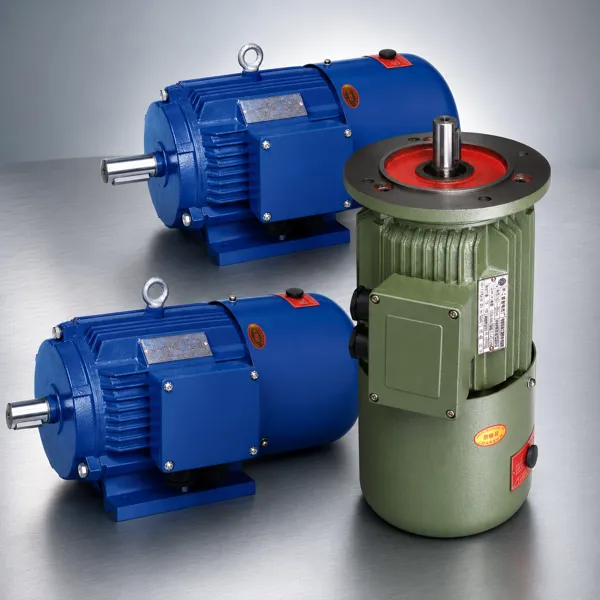
The Korea Ever-Power Y2EJ series is the standard brake motor specification for carton erector, case packer, tray former, and indexing conveyor drives in secondary packaging lines. The 0.18 to 11 kW power range covers all standard packaging machine conveyor and mechanism drives. For packaging machines using an NMRV worm gearmotor, the Y2EJ connects directly to the NMRV IEC B5 input flange — no additional coupling or adapter. The complete Y2EJ range is in the brake motor product section. For custom packaging machine drive specifications or brake torque adjustment queries, contact the Korea Ever-Power team.
| Power range | 0.18–11 kW |
| Poles | 4P (1,450 rpm) standard |
| Brake type | Spring-applied, DC released |
| Stop time | 0.10–0.40 s typical |
| Brake torque | 1.5–2.5× rated motor |
| Max cycles/hr | 240 braking ops/hr |
| Manual release | Standard on all models |
| Protection | IP54 motor and brake |
7. Positioning Drive Applications in Packaging Lines
Carton Erector and Case Packer
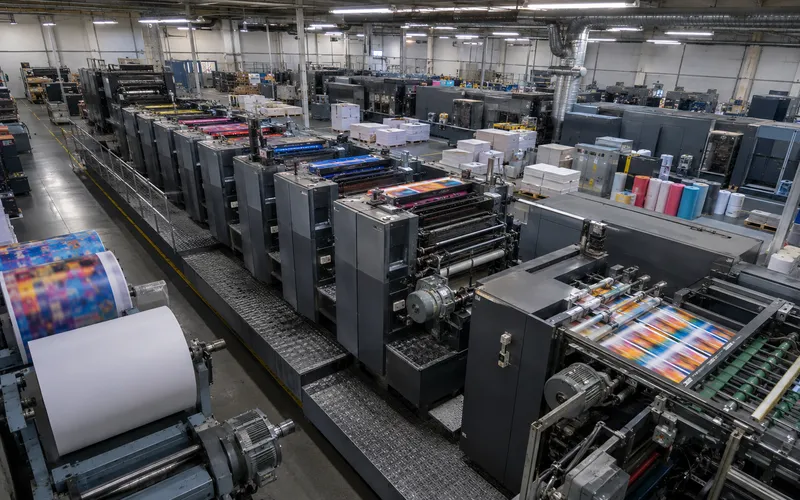
Carton erector magazine drive and case former blank feed use Y2EJ 4-pole 0.18 to 0.55 kW to advance the blank stack precisely one pitch at each forming cycle. The brake holds the blank stack at the erector head during the forming operation, preventing the stack from advancing under gravity. At typical rates of 20 to 60 cartons per minute, the cycle rate is 1,200 to 3,600 per hour — above the Y2EJ 240 brake operations per hour limit. For high-rate carton erectors, the blank feed uses a separate low-inertia indexer cam mechanism with the Y2EJ motor as the continuous drive for the cam drive shaft rather than a stop-start brake motor directly indexing the blank stack. |
Tray Former and Indexing Conveyor
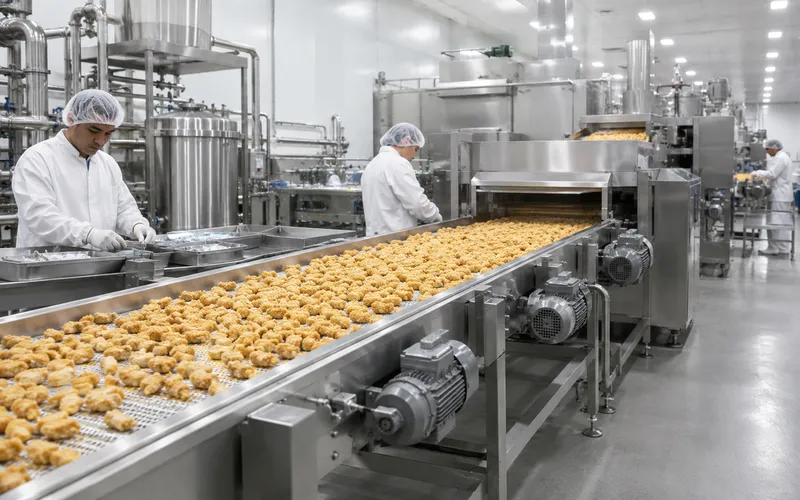
Tray forming machines for retail-ready packaging operate at 20 to 50 trays per minute. The tray conveyor indexes one tray pitch at each cycle using a Y2EJ 4-pole 0.37 to 0.75 kW on the conveyor drive roller, stopping the tray at the loading station for automatic or manual product loading. Brake stop time 0.2 to 0.3 s provides consistent tray presentation at the loading station for a robotic arm or manual operator. At 20 trays/min, cycle rate is 1,200/hr — this is a NMRV + Y2EJ combination with the gearmotor driving a cam-indexed chain conveyor at one revolution per tray pitch. |
Row-forming conveyor on automatic palletiser stops cases at the row-forming station for layer alignment before transfer to the pallet. Y2EJ 4-pole 0.75 to 2.2 kW. Low cycle rate (below 10 layers/min = 600/hr) with single-row index per layer. Brake holds case row stationary during lateral sweep.
Conveyor stopping product at print-and-apply labelling station for top, side, or wrap-around label application. Y2EJ 4-pole 0.18 to 0.37 kW stops product within ± 5 mm of label applicator head. Mechanical backstop on the labelling station guide confirms final product position before label application.
Stop-and-reject conveyor on inline metal detector. When contaminated product is detected, the conveyor stops and a reject mechanism pushes the product off the line. Y2EJ 4-pole 0.37 kW stops the pack at the reject station without allowing it to advance past the reject mechanism. Critical for food safety compliance at metal detection check points.
Mass-flow accumulation table discharge conveyor stops products at the gate for controlled single-file discharge. Y2EJ 4-pole 0.37 to 1.1 kW stops the discharge belt within 0.3 s to prevent product from running ahead of the gate into the wrong lane of the downstream distribution conveyor.

8. Frequently Asked Questions
Edited by Cxm