2. Freno accionado por resorte para mayor seguridad del polipasto
3. Selección del par de frenado: 1,5× a 4×
4. Cálculo del tiempo de parada
5. Clase de servicio de grúa S3 / S4
6. Especificaciones Y2EJ para grúas y polipastos
7. Aplicaciones de grúas y polipastos
8. Preguntas frecuentes
1. ¿Por qué los polipastos necesitan un motor con freno a prueba de fallos?
Un polipasto de grúa eleva y suspende cargas contra la gravedad. Cuando el motor del polipasto se desenergiza —ya sea intencionalmente al final de un ciclo de elevación o accidentalmente debido a un corte de energía, una sobrecarga del motor o una falla en el contactor— la carga suspendida caerá por gravedad a menos que se active un mecanismo de sujeción. La gravedad de una caída incontrolada varía desde daños al producto y a la grúa hasta lesiones mortales en áreas de trabajo elevadas o donde se encuentren operarios.
Cuando se interrumpe la alimentación de un motor de inducción estándar, el rotor desacelera únicamente por fricción. Sin alimentación eléctrica, no hay frenado regenerativo y el motor no proporciona un par de frenado significativo por debajo de aproximadamente 20% de velocidad síncrona. Un motor de polipasto sin freno mecánico permite que la carga descienda por gravedad a una velocidad limitada únicamente por la velocidad del cable y la fricción, generalmente de 0,5 a 2,0 m/s para un polipasto de taller estándar.
Un freno externo montado en el eje de salida del mecanismo de elevación o en el tambor de la cadena de carga requiere un montaje, alineación y cableado de control independientes. El freno debe conectarse a una señal de control que se coordine con precisión con el funcionamiento del contactor del motor; cualquier error de sincronización entre la desenergización del motor y la activación del freno puede provocar una desviación de la carga. Los frenos externos en los polipastos también requieren un ajuste manual periódico y son más susceptibles a la contaminación del entorno de la grúa que un freno de motor integrado.
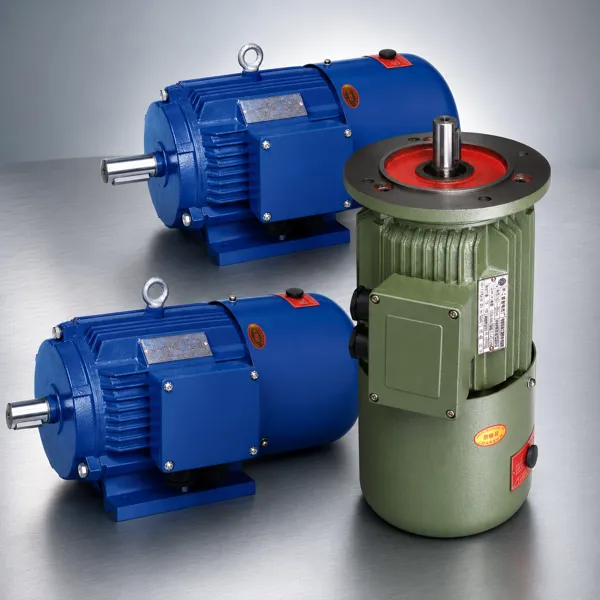
El motor de freno Y2EJ integra el motor y el freno en una sola unidad sellada que comparte una única caja de bornes. La alimentación de CC del freno se obtiene de la misma alimentación trifásica que el motor a través de un rectificador interno, lo que garantiza que el freno se libere simultáneamente con la energización del motor y se active simultáneamente con la desenergización del motor. No requiere cableado externo para el freno, montaje independiente, relé de temporización ni procedimiento de alineación. Su diseño integral elimina todos los modos de fallo de coordinación propios de los sistemas de freno externos.
2. Freno accionado por resorte: A prueba de fallos para la seguridad del polipasto
El motor de freno Y2EJ utiliza un freno electromagnético accionado por resorte y liberado eléctricamente. Su diseño a prueba de fallos permite que, por defecto, el freno se active y la carga permanezca inmóvil. Se requiere energía eléctrica para liberar el freno y permitir el funcionamiento del motor. Esto significa que cualquier interrupción del suministro eléctrico —parada intencionada, fallo de alimentación, sobrecarga o parada de emergencia— activa automáticamente el freno y detiene la carga sin necesidad de ninguna acción de control.
El contactor de elevación o descenso se cierra. La alimentación trifásica energiza el devanado del motor; el rectificador de CC energiza la bobina del freno. El electroimán vence la fuerza del resorte; el freno se libera. El motor acelera hasta la velocidad nominal en 0,5–1,5 s, dependiendo de la inercia de la carga.
El motor eleva o baja la carga a la velocidad nominal. La bobina del freno permanece energizada; el disco de freno gira libremente sin contacto. No hay desgaste durante la fase de funcionamiento.
El contactor se abre. El motor y la bobina de freno se desenergizan simultáneamente. Los resortes accionan el disco de freno en un lapso de 50 a 150 ms. El motor desacelera desde su velocidad nominal hasta cero en 0,1 a 0,4 s, dependiendo del par de frenado y la inercia de la carga. La carga se mantiene estacionaria indefinidamente sin necesidad de alimentación eléctrica.
Igual que en el paso 3, el freno se activa automáticamente. La carga queda sujeta de forma segura. No se requiere alimentación auxiliar para el frenado. Esta característica de seguridad es la que hace que el freno accionado por resorte sea indispensable para aplicaciones en polipastos y grúas.
3. Selección del par de frenado: de 1,5 a 4 veces el par nominal del motor.
El par de frenado debe ser suficiente para desacelerar la carga desde la velocidad nominal del polipasto hasta cero dentro del tiempo de parada requerido, y para mantener la carga inmóvil contra la gravedad sin deslizarse bajo la carga nominal máxima. En aplicaciones de polipasto, la selección del par de frenado depende de si el polipasto se clasifica como polipasto de materiales o polipasto de personal, y del factor de multiplicación del sistema de cables.
| Aplicación de polipasto | Tiempo de parada requerido | Relación de par de frenado | Base regulatoria |
|---|---|---|---|
| Elevador de personal (elevador de personas) | < 0,15 s | Calificación de 3.0–4.0× | EN 14492-2; AS 1418.3; normativa local de elevación |
| Grúa puente (carga de trabajo segura superior a 1 t) | < 0,25 s | Calificación 2.0–3.0× | FEM 1.001; ISO 4301; EN 13001 |
| Polipasto de cadena / polipasto de taller | < 0,30 s | Calificación de 1,5 a 2,5 veces | EN 14492-1; AS 1418.2 |
| Grúa de pluma / polipasto de grúa giratoria | < 0,30 s | Calificación de 1,5 a 2,5 veces | EN 13001; normativa local sobre grúas |
| Polipasto monorraíl (debajo de la viga) | < 0,35 s | Calificación 1.5–2.0× | EN 14492-1 |
Nota de seguridad: En polipastos para personas, nunca confíe en el autobloqueo del engranaje helicoidal como mecanismo principal de seguridad. El autobloqueo puede perderse debido a vibraciones, variaciones térmicas de la viscosidad del lubricante o relaciones de transmisión cercanas al límite. La norma EN 14492-2 para polipastos eléctricos utilizados en servicio de transporte de personas exige un freno certificado con un par de retención documentado y probado de al menos 1,5 veces el par de carga suspendida nominal, como mecanismo separado e independiente del tren de engranajes.
4. Cálculo del tiempo de parada para el freno del polipasto
ω = velocidad angular a velocidad nominal (rad/s)
Freno M = par de frenado (N·m)
Carga M = par de carga en el eje del motor (N·m)
ω = 1.450 × π ÷ 30 = 151,8 rad/s
Par nominal del motor = 9550 × 0,75 ÷ 1450 = 4,95 N·m
J-total (motor + tambor) = 0,012 kg·m²
Freno M (2,0×) = 9,9 N·m; Carga M en el eje del motor = 1,8 N·m
t = 0,012 × 151,8 ÷ (9,9 − 1,8) = 0,22 s → dentro del límite de 0,30 s
El par de carga en el eje del motor es el par gravitatorio de carga reflejado a través del sistema de cables, la relación de la caja de engranajes y la eficiencia de la polea. Para un sistema de cables de 2 vueltas con una carga de 500 kg y una relación de caja de engranajes de 20:1 con una eficiencia de caja de engranajes 85%: Carga M en el motor = (500 × 9,81 × 0,1) ÷ (2 × 20 × 0,85) = 490,5 ÷ 34 = 14,4 N·m. Verifique que el par de frenado supere este par de carga al menos en el múltiplo de seguridad requerido.
5. Clase de servicio de la grúa: S3 y S4
El motor funciona durante un tiempo definido y luego se detiene para un tiempo de descanso, repitiéndose a intervalos regulares. La potencia nominal del motor Y2EJ en servicio S3 se especifica con un factor de duración cíclica (CDF) concreto, normalmente 15%, 25% o 40% de tiempo de funcionamiento. Un motor Y2EJ con una potencia nominal de 1,5 kW en S3 25% CDF puede producir 1,5 kW durante el periodo de funcionamiento, siempre que cada periodo de funcionamiento no supere el tiempo nominal y el periodo de inactividad proporcione una refrigeración adecuada. El servicio de polipastos y grúas suele estar en el rango S3 25% a 40% para el funcionamiento normal de almacenes y talleres.
El servicio S4 considera las pérdidas térmicas durante los arranques frecuentes como una parte significativa del calentamiento total del motor, no solo las pérdidas durante el funcionamiento. Para grúas de ciclo intensivo que realizan más de 60 elevaciones por hora (grúas para plantas siderúrgicas, grúas portacontenedores y grúas industriales de alto rendimiento), el motor debe seleccionarse para el servicio S4 o bien, los arranques por hora deben verificarse con respecto a la frecuencia máxima de arranque permitida del motor Y2EJ. Los motores de la serie Y2EJ de Korea Ever-Power están diseñados para soportar hasta 240 operaciones de frenado por hora en servicio cíclico continuo.
6. Korea Ever-Power Y2EJ para grúas y polipastos
El motor de freno de la serie Y2EJ de Korea Ever-Power es la especificación estándar para polipastos de cadena, grúas puente de taller, grúas de pluma y polipastos monorraíl. El freno electromagnético integral aplicado por resorte proporciona un par de retención estático de 1,5 a 4,0 veces el par nominal del motor, dependiendo del tamaño y el modelo de freno seleccionado, cubriendo toda la gama, desde polipastos de cadena ligeros de taller hasta aplicaciones de grúas de producción de servicio pesado. La gama completa Y2EJ está disponible en Sección de productos de motores de freno.
Para aplicaciones de elevación que requieren tiempos de parada muy rápidos (inferiores a 0,15 s para el transporte de personal) o para puentes de grúa donde las largas distancias de recorrido transversal requieren una parada precisa en las posiciones de los estantes, Korea Ever-Power recomienda: contactar con el equipo técnico para un dimensionamiento del sistema de freno del motor específico para la clase de servicio de la aplicación, el sistema de cable y la distancia de parada requerida.
| Rango de potencia | 0,18–45 kW |
| Postes (polipasto) | 4P (1450 rpm) estándar |
| Tipo de freno | Aplicado en primavera, DC lanzado |
| Voltaje de la bobina de freno | 24 V CC (rectificador integrado) |
| Tiempo de parada (típico) | 0,10–0,40 s |
| relación de par de frenado | 1,5–4,0 veces el par motor nominal |
| Máximo de arranques por hora | 240 operaciones de frenado/hora |
| Liberación manual | De serie en todos los modelos. |
| Protección | Motor + freno con clasificación IP54 |
7. Aplicaciones de grúas y polipastos
Grúa puente (grúa EOT)
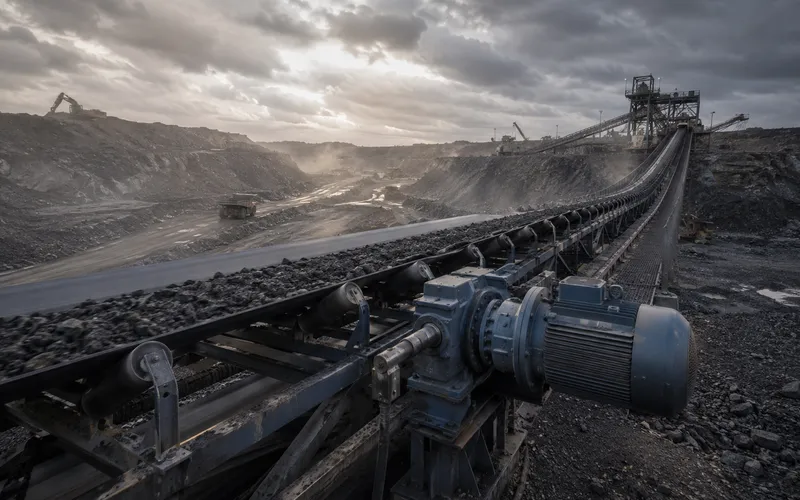
Las grúas puente eléctricas (EOT) monorraíl y birraíl en talleres y almacenes utilizan motores de freno Y2EJ para el mecanismo de elevación, con potencias de 0,75 a 15 kW y 4 polos (1450 rpm), con reductores de tambor de cable. Los accionamientos de traslación del puente y de traslación transversal utilizan motores Y2EJ independientes, con potencias de 0,37 a 3,0 kW, para proporcionar un posicionamiento preciso y una parada sin carga al final de cada desplazamiento. El par de frenado es de 2 a 3 veces el nominal para todos los motores de elevación de las grúas EOT; la protección IP54 es estándar para aplicaciones industriales en interiores. |
Polipastos de cadena y equipos de elevación para talleres
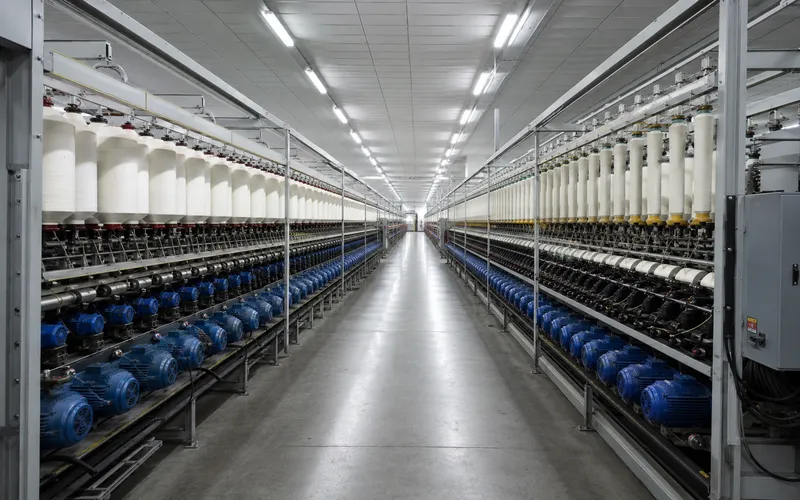
Los polipastos eléctricos de cadena de 0,25 a 5 toneladas utilizan motores de freno Y2EJ con una potencia de entre 0,18 y 2,2 kW. El motor de freno es el componente principal de cualquier polipasto eléctrico de cadena: eleva la cadena a la velocidad nominal, mantiene la carga indefinidamente al detenerse y limita la velocidad de descenso durante el proceso. Los motores de freno de 4 polos Y2EJ de Korea Ever-Power, con un par de frenado de 1,5 a 2,5 veces el nominal, son la especificación estándar para los fabricantes de polipastos de cadena que requieren una unidad de motor compacta, fiable y rentable. |
Las grúas de pluma para talleres y las grúas giratorias montadas sobre columna de hasta 2 t utilizan motores Y2EJ de 0,37 a 2,2 kW para el izaje y motores Y2EJ o estándar independientes para el giro. El motor Y2EJ compacto de 4 polos se adapta al espacio disponible en el carro de elevación estándar sin aumentar las dimensiones del recorrido del gancho de la grúa.
Los sistemas de elevación monorraíl utilizados en el ensamblaje de automóviles, el procesamiento de alimentos y la manipulación de productos en almacenes emplean motores Y2EJ de 0,18 a 3,0 kW con parada precisa para el posicionamiento en las estaciones de trabajo. El motor de freno garantiza que la carga no se desplace entre las estaciones de trabajo cuando el motor de elevación se detiene.
Los motores de accionamiento de la plataforma y el labio de las plataformas niveladoras de muelle requieren un sistema de frenado a prueba de fallos para mantener la plataforma en cualquier posición intermedia durante la carga del vehículo. La especificación estándar para las unidades de accionamiento motorizadas de las plataformas niveladoras de muelle es Y2EJ de 0,37 a 0,75 kW con un par de frenado 2,0 veces superior.
Los montacargas y elevadores de carga para entreplantas (no los ascensores de pasajeros) utilizan motores de freno Y2EJ con un par de frenado de 2,0 a 3,0 veces el nominal. La gama Y2EJ de 4 polos, de 0,75 a 5,5 kW, cubre montacargas de hasta aproximadamente 500 kg de carga segura (SWL) con velocidades de desplazamiento estándar de 0,15 a 0,30 m/s.
8. Preguntas frecuentes
Editado por Cxm