1. Spray Booth Hazardous Area Classification
Paint spray booths are classified as hazardous areas under IEC 60079-10-1 and the ATEX Directive because solvent-based paints, lacquers, and primers release flammable vapours during atomisation that mix with air within the booth to form potentially explosive vapour-air mixtures. The extent of the hazardous zone around a spray booth depends on the type of solvent, the spray rate, and the booth ventilation effectiveness.
During active spray operations, the interior of the spray booth is Zone 1: an explosive solvent vapour-air mixture is likely to be present during normal spraying. The spray zone extends from the floor to the ceiling and the full width and depth of the booth interior. All electrical equipment within the booth boundary — including the exhaust fan motor, any conveyor drive inside the booth, and any lighting — must be ATEX/IECEx certified for Zone 1 service.
The area immediately outside the spray booth opening (within 1 m of the booth face opening), the area around any spray booth ventilation supply or exhaust duct openings (within 1 m), and the area around paint mixing rooms (within 1 m of any open container) are classified as Zone 2. Motors in Zone 2 must be certified Ex d or equivalent for Zone 2 service. A Zone 1 certified YB2 motor is also suitable for Zone 2 installation.
If the exhaust fan is located on the roof of the building or in an external plenum more than 3 m from the spray booth exhaust duct opening, it may fall outside the classified zone boundary. However, the exhaust airstream itself may contain solvent vapour above the lower explosive limit (LEL) if the booth ventilation rate is insufficient, making the fan impeller and motor a potential ignition source. Korea Ever-Power recommends always specifying YB2 Ex d for both exhaust and supply fan motors on spray booth ventilation systems regardless of fan location relative to zone boundaries.
2. Paint Solvent Gas Groups and T4 Requirement
Paint solvents fall in IEC gas groups IIA and IIB. The YB2 Ex d IIB T4 certification covers all common paint and coating solvents used in automotive, industrial, wood, and furniture coating applications.
| Solvent | Gas Group | Auto-Ignition Temp | T Class Required | YB2 IIB T4 Suitable? |
|---|---|---|---|---|
| Toluene | IIA | 480°C | T1 | Yes |
| Xylene | IIA | 464°C | T1 | Yes |
| Acetone | IIA | 465°C | T1 | Yes |
| Ethyl acetate | IIA | 427°C | T2 | Yes |
| Isopropyl alcohol | IIB | 399°C | T2 | Yes |
| Ethylene glycol | IIB | 398°C | T2 | Yes |
| Diethyl ether | IIB | 160°C | T4 | Yes — T4 required |
| Water-based paint (low VOC) | IIA | > 400°C | T1–T2 | Yes |
Specification note: most automotive and industrial solvent-based paints use toluene, xylene, ethyl acetate, and alcohols as solvent carriers — all Group IIA or IIB. The YB2 Ex d IIB T4 motor covers all of these with a single certification. For facilities using diethyl ether or other low auto-ignition temperature solvents, the T4 temperature class provides the required protection. Always confirm the specific solvents used with the area classification document before specifying the motor.
3. Exhaust Fan Motor Specification for Spray Booths
The exhaust fan is the critical safety-critical motor in a spray booth installation. Its primary function is to maintain a minimum air change rate through the booth (typically 0.5 to 1.0 m/s face velocity) to dilute solvent vapour below 25% of the LEL at all times during spray operations. If the exhaust fan motor fails and the fan stops during spraying, solvent vapour rapidly accumulates in the booth to potentially explosive concentrations — making the exhaust fan motor reliability and explosion-proof specification paramount.
Spray booth exhaust fan power depends on the booth face area, face velocity, duct static pressure loss, and fan efficiency. For a typical automotive spray booth 4 m wide × 2.5 m high at 0.5 m/s face velocity: Q = 4.0 × 2.5 × 0.5 = 5.0 m³/s. At 200 Pa duct static pressure and 65% fan efficiency: motor power = 5.0 × 200 ÷ (1,000 × 0.65) = 1.54 kW. With service factor 1.25: select YB2 2.2 kW, 4-pole or 2-pole, Ex d IIB T4.
The fan motor may be belt-driven from outside the Zone 1 boundary through a shaft penetration in the booth wall, with only the impeller inside the booth. In this case, the motor shaft seal and the motor itself may be in Zone 2 rather than Zone 1. However, Korea Ever-Power recommends YB2 Ex d IIB T4 for both Zone 1 and Zone 2 positions on spray booth fans — the motor is directly connected to the fan impeller that handles explosive atmosphere, and any motor fault that generates heat must be contained within the Zone 1/2 motor specification. Do not use standard motors even if the motor body is claimed to be outside the classified zone.
Every spray booth must have an airflow interlock that inhibits spray gun operation if the exhaust fan motor is not running or if the measured face velocity falls below the minimum safe level. This interlock is typically achieved with an airflow switch or differential pressure sensor in the exhaust duct, connected through a safety relay to the spray gun supply circuit. The YB2 exhaust fan motor must start and prove airflow before the spray interlock permits the spray gun to operate.
4. Booth Conveyor Motor Requirements
Continuous coating lines pass work pieces through the spray booth on overhead conveyors or floor-level chain conveyors. Any conveyor motor or gearbox installed within the Zone 1 boundary of the spray booth must be certified to the same Ex d IIB T4 specification as the fan motor. There are no exceptions for conveyor motors based on their small size or low power rating — a 0.55 kW conveyor drive motor inside a spray booth is as capable of igniting a solvent-air mixture as a 22 kW fan motor.
Overhead chain conveyors passing through spray booths use drive motors located outside the spray zone where possible, with the conveyor chain entering and exiting the booth through small openings. When the conveyor drive motor must be located inside the spray zone (for compact booth layouts), specify YB2 0.55 to 3.0 kW Ex d IIB T4 for the drive head. The motor must also be rated for continuous S1 duty at the conveyor line speed without overloading, as any motor overload in an explosive atmosphere creates a T4 surface temperature exceedance risk.
Floor-level slat conveyors or roller conveyors carrying work pieces through a horizontal spray booth have motors in the spray zone floor area. Solvents are heavier than air and tend to accumulate at floor level — the floor area inside a spray booth may have higher solvent concentrations than the mid-zone where the spray plume is. All floor-level conveyor motors inside the booth must be YB2 Ex d IIB T4. IP55 provides protection against paint overspray landing on the motor during spraying.
5. IP55 and Paint Overspray Protection
In addition to the Ex d explosion-proof certification, the YB2 motor’s IP55 enclosure provides an important secondary benefit in spray booth service: it prevents paint overspray from entering the motor. Paint overspray particles that enter a motor through ventilation slots accumulate on the winding and cooling fins, insulating the motor from its own cooling airflow and raising winding temperature above the T4 surface limit. IP55 prevents this accumulation and also protects the motor from the weekly high-pressure water washdown that spray booths require to remove paint buildup from floor, walls, and equipment.
6. Korea Ever-Power YB2 for Spray Booth Applications
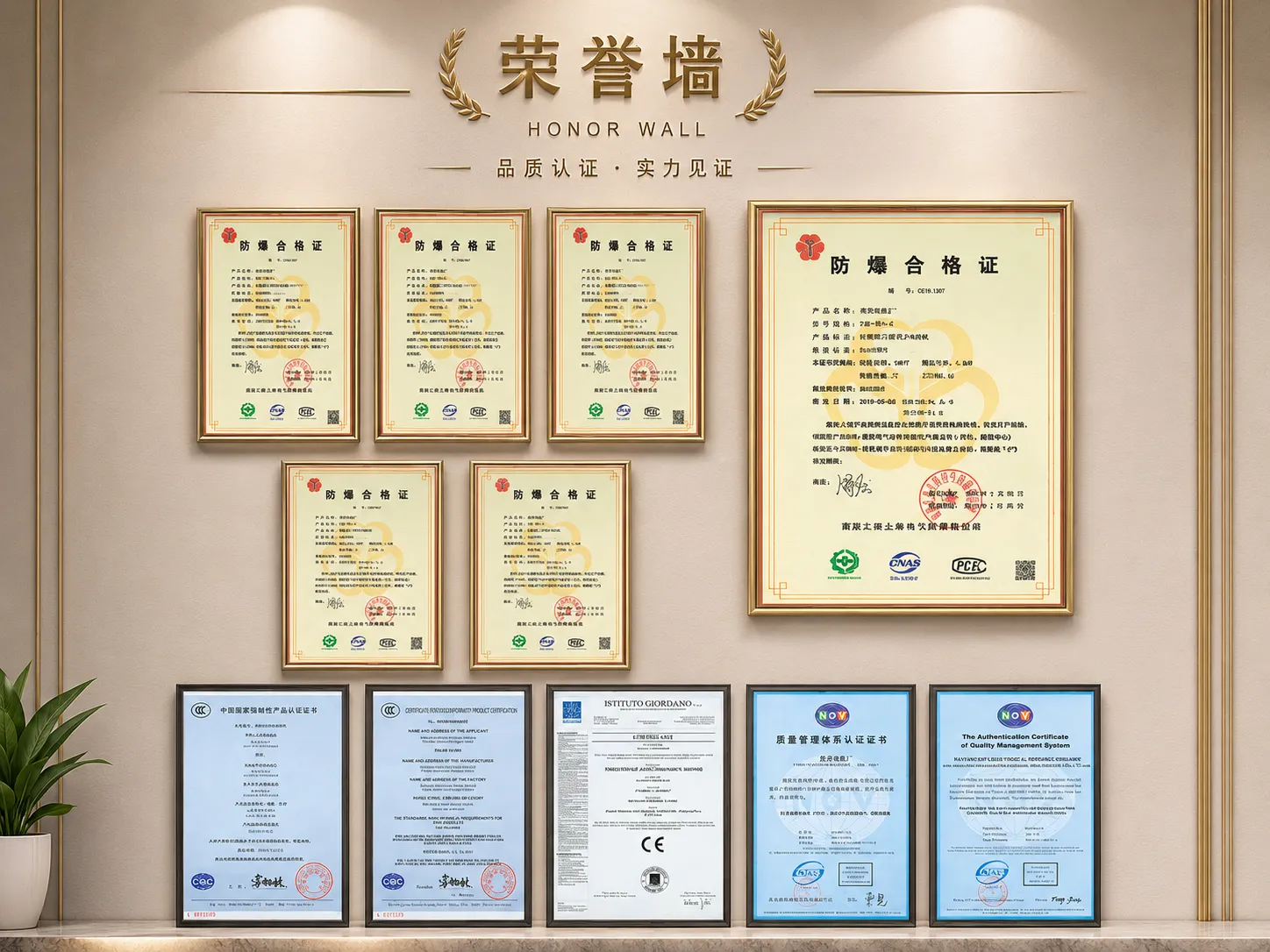
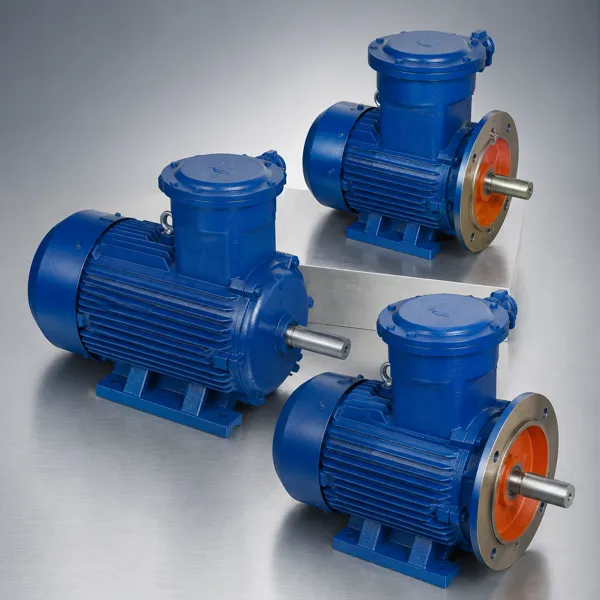
The Korea Ever-Power YB2 Ex d IIB T4 is the complete motor specification for all Zone 1 and Zone 2 motors in paint spray booths, coating lines, and paint mixing rooms. It provides ATEX and IECEx certification, IP55 protection against paint overspray and water washdown, T4 surface temperature limit for all common paint solvents, and the same IEC metric frame dimensions as the standard Y2 for easy retrofit into existing spray booth installations. The complete YB2 range is available in the explosion-proof motor product section. For spray booth installations requiring VFD speed control of exhaust fans for variable airflow, contact Korea Ever-Power for Ex d motor VFD compatibility guidance.
| Certification | ATEX + IECEx Ex d IIB T4 |
| Zone | Zone 1 and Zone 2 |
| Gas group | IIA and IIB paint solvents |
| Surface temp | T4 = 135°C maximum |
| IP rating | IP55 (overspray + washdown) |
| Power range | 0.55–200 kW |
| Poles | 2P / 4P / 6P available |
| Frame | IEC 72-1 (same as Y2) |
7. Spray Booth and Coating Line Applications
Automotive Paint Spray Booth
Automotive body shop and vehicle refinishing spray booths use solvent-based basecoats and clearcoats containing toluene, xylene, and isopropyl alcohol. Exhaust fan: YB2 2.2 to 7.5 kW, 4-pole or 2-pole, Ex d IIB T4. Supply fan (fresh air): YB2 1.5 to 5.5 kW. The exhaust fan operates continuously throughout the spray cycle and the flash-off period following spraying; it must not stop until the booth air has been purged of all solvent vapour at the end of each spray cycle. |
Industrial Liquid Paint Coating Line
Continuous coating lines for metal components, furniture, and industrial parts use overhead chain conveyors to transport work pieces through spray zones, flash-off ovens, and curing ovens. Conveyor drive motors in the spray zone: YB2 0.55 to 3.0 kW, Ex d IIB T4. Zone 1 in spray zone; Zone 2 in flash-off area where residual solvent vapour may be present. All motors within Zone 1 or Zone 2 boundary must be YB2 certified. |
Furniture and wood product spray lines using nitrocellulose lacquers and polyurethane finishes. Exhaust fans YB2 1.5 to 11 kW. Nitrocellulose lacquers use ethyl acetate and butyl acetate — Group IIA; YB2 IIB covers both. High paint spray volumes in wood coating lines require very high air change rates and correspondingly powerful exhaust fans.
Paint mixing and thinning rooms where solvent containers are opened and paint is thinned to spray viscosity. Zone 2 in general mixing room area. Exhaust fan: YB2 0.55 to 2.2 kW to maintain 6 to 10 air changes per hour. Any electrical equipment in the mixing room including the exhaust fan motor must be Zone 2 certified.
Solvent recovery and recirculation systems on large coating lines recover solvent from exhaust air for reuse. The recovery unit fan and any pump motors handling solvent-laden air or liquid solvent are in Zone 1 or Zone 2 depending on their position relative to the recovery vessel. YB2 0.75 to 5.5 kW for recovery unit fan and pump drives.
Flash-off oven exhaust fans handling high concentrations of solvent vapour evaporating from wet paint film immediately after spraying. Zone 1 classification applies to the flash-off zone exhaust duct interior. YB2 2.2 to 11 kW, 2-pole for high-airflow flash-off exhaust at elevated temperature (ambient up to 60°C — specify derated motor power for elevated ambient).


8. Frequently Asked Questions
Edited by Cxm