1. AS/RS Stacker Crane Drive Axes
A single-mast or twin-mast AS/RS stacker crane has three independent drive axes, each with distinct speed, positioning, and safety requirements. Brake motors are required on all three axes, but for different reasons on each.
The hoist axis lifts and lowers the load carrier (pallet fork or tote shuttle) along the mast. Travel speed: 0.3 to 1.5 m/s. Maximum SWL: 500 to 3,000 kg depending on machine class. Brake requirement: fail-safe spring brake that holds the suspended load stationary on power failure, E-stop, or any drive fault. This is the safety-critical axis — a brake failure here results in a pallet falling from the rack position, which is a serious safety hazard and can damage both the load and the racking structure.
The travel axis moves the crane along the aisle on floor rails between storage locations. Travel speed: 1.0 to 4.0 m/s. Positioning accuracy: ± 5 to ± 20 mm at the target rack column. Brake requirement: repeatable stop at the target column position with brake engaging after VFD deceleration ramp to near-zero speed. Brake also provides safety stop in E-stop and emergency situations, preventing the crane from overrunning the end buffers.
The extraction axis extends the load carrier fork or shuttle into the rack to pick up or deposit a pallet. Travel: 0.5 to 1.5 m horizontal extension at 0.2 to 0.5 m/s. Positioning accuracy: ± 3 to ± 10 mm. Brake requirement: brake motor holds the fork at the extended position during load transfer (the fork must not retract while the pallet is being lifted or lowered onto it), and provides a fast stop at the end of the extension stroke to prevent collision with the rack beam.
2. Hoist Axis Brake Motor Requirements
Rope system = 2:1 mechanical advantage
Hoist drum diameter = 300 mm (radius 0.15 m)
Gearbox ratio = 30:1
Hoist motor: 4-pole, rated torque T
Required lift force = 1,000 × 9.81 = 9,810 N
Load torque at motor shaft = 9,810 × 0.15 ÷ (2 × 30 × 0.88) = 27.9 N·m
Select 3.0 kW, 4-pole: T-rated = 9,550 × 3.0 ÷ 1,450 = 19.8 N·m
(Select next size: 4.0 kW, T-rated = 26.3 N·m — marginal)
Select 5.5 kW: T-rated = 36.2 N·m → load torque 77% rated — correct
Brake torque at 2.5× = 36.2 × 2.5 = 90.5 N·m → Y2EJ 5.5 kW
Brake holding vs load torque: 90.5 ÷ 27.9 = 3.2× safety factor
For AS/RS hoist motors, specify a brake torque of at least 2.5 times rated motor torque and verify that the resulting brake holding torque provides a minimum of 2.0 times the maximum load torque at the motor shaft. This gives a safety factor of 2.0 between the brake capacity and the full rated load at the maximum radius from the drum centre, accounting for gearbox efficiency variation and drum diameter tolerance.
3. Travel Axis Brake Motor for Rack Positioning
The travel axis brake motor is used differently from the hoist brake motor. Rather than holding a gravitational load, the travel brake provides a rapid deceleration stop after the VFD has decelerated the crane to near-zero speed, and then holds the crane stationary at the target rack column position while the hoist and extraction axes complete the storage or retrieval cycle.
The AS/RS travel cycle uses a two-stage deceleration: (1) VFD decelerates the crane from full travel speed to a creep speed of approximately 0.1 m/s over the final 0.5 to 2.0 m approach to the target column; (2) when the position sensor (encoder, laser, or barcode reader) confirms the crane is at the target column, the VFD output ramps to zero and the Y2EJ brake engages, stopping the crane within 50 to 150 mm from the target position. The Y2EJ brake provides the final precise stop and holds the crane stationary throughout the storage or retrieval operation.
In an emergency stop from full travel speed (for example, if a person enters the aisle), the travel brake must stop the fully loaded stacker crane within a defined distance. At 4 m/s travel speed with 2,000 kg total crane mass, the kinetic energy is 0.5 × 2,000 × 4² = 16,000 J. The Y2EJ brake must absorb this energy; verify that the brake rated stopping energy per stop (specified in joules in the brake motor data sheet) exceeds 16,000 J with appropriate safety factor. For high-speed heavy stacker cranes, supplementary braking through the VFD regenerative braking function reduces the mechanical brake load during E-stop events.
4. S4 High-Cycle Duty Rating for AS/RS Stacker Cranes
AS/RS stacker cranes may perform 100 to 400 storage or retrieval cycles per hour in high-throughput e-commerce or cold-chain warehouse applications. Each cycle involves multiple start-stop events on the hoist and travel axes. The Y2EJ brake motor must be rated for S4 duty (intermittent periodic with starting) to handle the thermal load from frequent starting and braking.
The Korea Ever-Power Y2EJ is rated for 240 braking operations per hour maximum at rated brake torque. For an AS/RS performing 120 cycles per hour with one hoist and one travel brake stop per cycle, the total brake operations are 240/hr — exactly at the rated limit. For higher cycle rates, select the next motor size up to reduce the thermal load per brake operation, or use a VFD with regenerative braking to reduce the mechanical brake thermal load on each stop.
For AS/RS with 120 cycles/hour, a typical hoist axis has a cyclic duration factor (CDF) of 30 to 50% — the hoist motor runs for 50% of each cycle during lift and lower movements. Select the Y2EJ motor to S4 duty at the actual CDF, not S1 continuous. The S4 rated power is typically 15 to 25% higher than S1 for the same motor frame, allowing a smaller motor to be specified for the actual duty without thermal derating.
For AS/RS drives at the upper limit of the Y2EJ duty rating, specify PTC thermistors in the motor winding connected to a certified thermistor relay in the crane control panel. The thermistor relay inhibits crane motor operation if winding temperature exceeds the Class F limit, protecting the motor from thermal damage during abnormal operating periods such as after aisle jams or manual rescue operations that require repeated hoist movements in a short period.
5. VFD and Brake Motor Coordination in AS/RS Drives
All AS/RS stacker crane axes use VFDs for smooth acceleration and deceleration control. The Y2EJ brake motor is used with the VFD, not instead of it. The coordination between VFD speed control and brake engagement is the key to achieving both high throughput and safe load holding.
Critical: when using a VFD with the Y2EJ brake motor, the brake DC supply must NOT come from the VFD output — the VFD output voltage varies with frequency and will not reliably release the brake at low frequencies. Supply the brake coil DC from a separate mains-connected rectifier or from a dedicated brake power supply module. Coordinate the brake engage/release commands through the crane PLC with appropriate timing delays confirmed during commissioning.
6. Korea Ever-Power Y2EJ for AS/RS Stacker Crane Drives
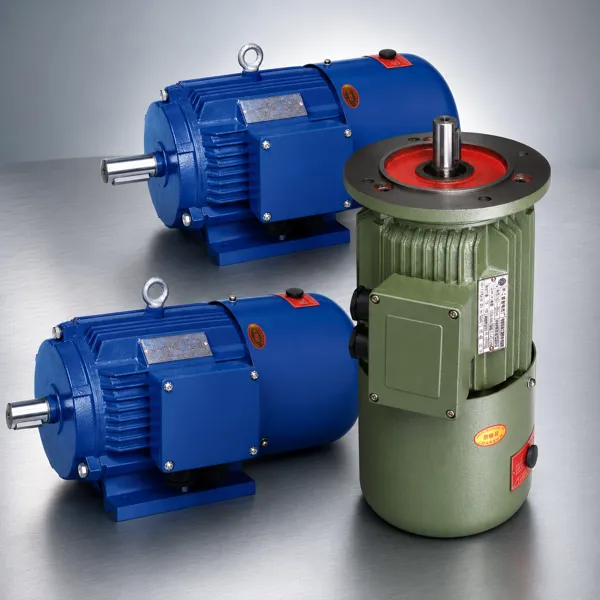
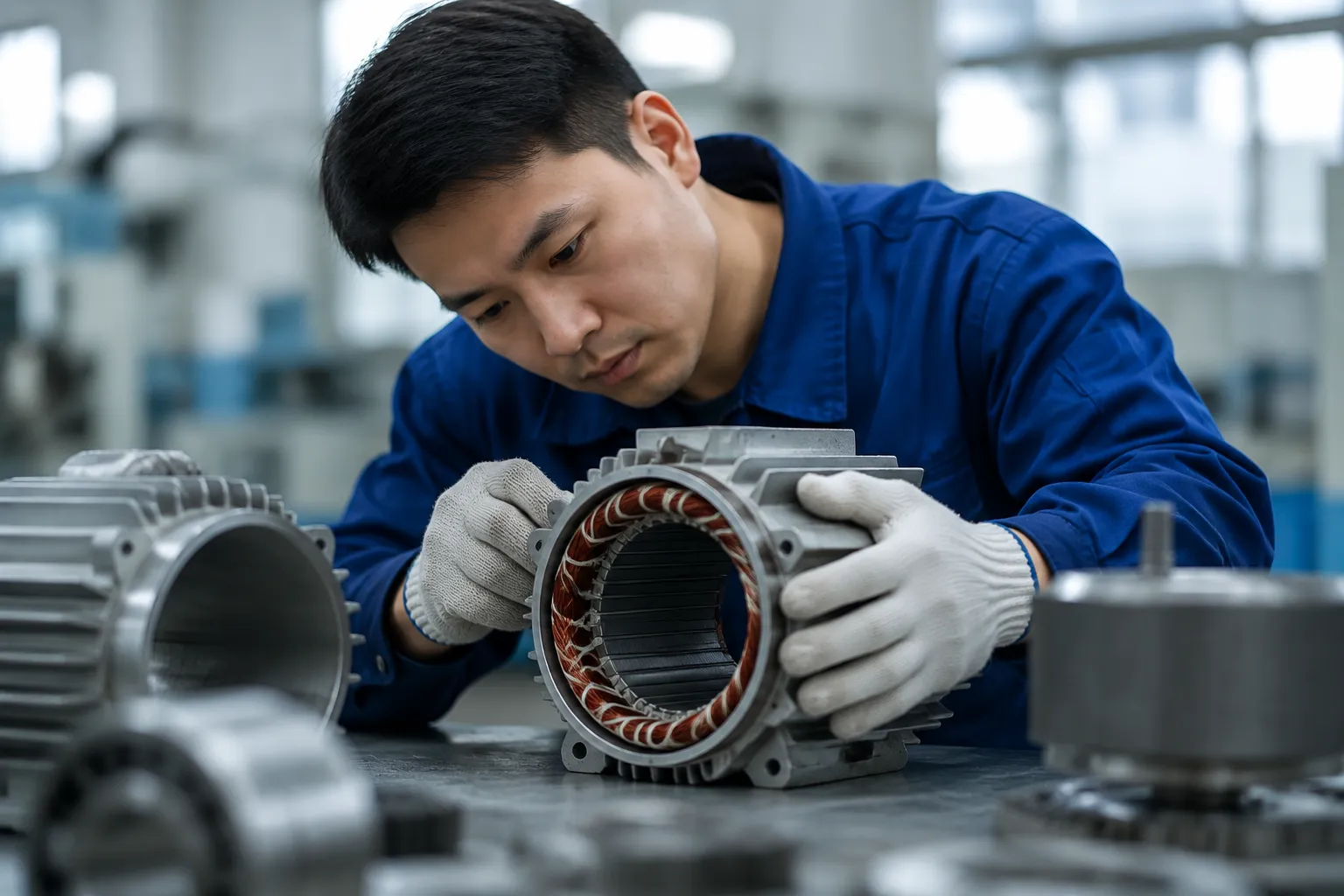
The Korea Ever-Power Y2EJ series brake motor is the standard specification for AS/RS stacker crane hoist, travel, and extraction axis drives requiring fail-safe brake holding and accurate stop positioning. The 0.18 to 45 kW power range covers the hoist and travel axis motors for stacker cranes from the smallest miniload machines (SWL 30 to 100 kg) through medium pallet stacker cranes (SWL 500 to 1,500 kg). For heavy pallet stacker cranes above 1,500 kg SWL where hoist motor power exceeds 45 kW, contact Korea Ever-Power technical support for alternative brake motor configurations. The complete Y2EJ range is in the brake motor product section.
| Power range | 0.18–45 kW |
| Brake type | Spring-applied, DC released |
| Brake torque | 1.5–4.0× rated motor |
| Engage time | 50–100 ms |
| Release time | 50–100 ms |
| Duty class | S3 / S4 crane duty |
| Max braking ops | 240 per hour |
| Manual release | Standard for rescue ops |
7. AS/RS and Warehouse Lifting Applications
High-Bay Pallet Stacker Crane
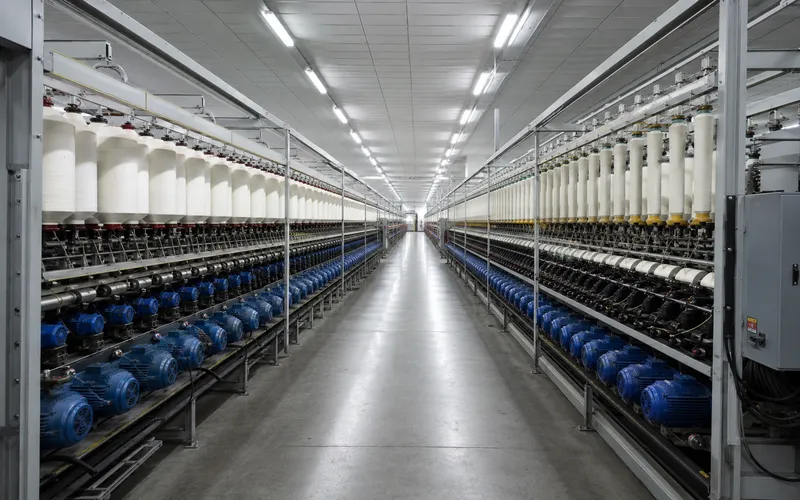
High-bay pallet AS/RS (10 to 40 m rack height) in distribution centres, cold stores, and manufacturing warehouses. Hoist axis: Y2EJ 5.5 to 22 kW, 4-pole, 2.5× brake torque for SWL 500 to 1,500 kg. Travel axis: Y2EJ 2.2 to 11 kW, 4-pole, for crane traverse at 1.5 to 3.0 m/s. Both axes on VFD for smooth ramp control; Y2EJ brake engaged after VFD deceleration to near-zero speed. |
Miniload AS/RS Tote Stacker
Miniload AS/RS for totes, cartons, and small-parts storage (SWL 30 to 150 kg, rack height 8 to 20 m). Hoist axis: Y2EJ 0.37 to 1.5 kW for light tote lifting at 1.0 to 2.0 m/s. Travel axis: Y2EJ 0.75 to 2.2 kW for high-speed traverse at 2.5 to 4.0 m/s. Very high cycle rates (300 to 500 cycles/hr) — verify brake thermal rating against actual cycle rate at commissioning. E-commerce fulfilment applications typically run miniload AS/RS at the upper cycle rate limit. |
Frozen food and chilled product high-bay cold stores at -25 to +5°C. Y2EJ brake motor must be specified for cold store ambient: grease selection for low-temperature bearing operation, and brake spring characteristics at low temperature. Contact Korea Ever-Power for Y2EJ cold store specification including Class F insulation confirmation at cold ambient.
Vertical lift modules (VLM) for parts storage in manufacturing and MRO applications. The VLM tray carrier is driven vertically by a single hoist motor. Y2EJ 0.55 to 3.0 kW, 4-pole. Fail-safe brake prevents tray from dropping to the access opening if motor or power fails during vertical travel between storage levels.
Rail-guided vehicles (RGV) transferring pallets between AS/RS aisles or between storage and pick stations. Y2EJ 0.75 to 2.2 kW for RGV travel motor. Brake motor provides accurate stop at aisle transfer positions and holds vehicle stationary during pallet transfer between RGV and conveyor.
Mezzanine goods lifts and pallet lifts where the EN 14492 standard for powered hoists applies. Y2EJ 0.75 to 7.5 kW, 4-pole, 2.0× rated brake torque. Manual brake release required for emergency load recovery when power fails. Lift rated to EN 1570 or equivalent goods lift standard.

8. Frequently Asked Questions
Edited by Cxm