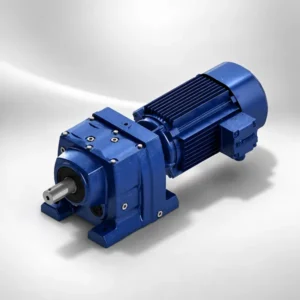
R Series Inline Helical Gear Reducer
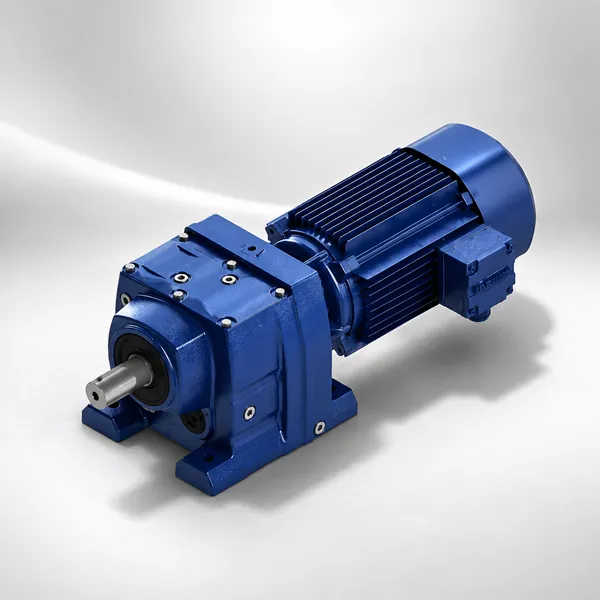
Coaxial inline helical gear reducer with IEC B5 motor input flange and solid or hollow output shaft, available in sizes R17 through R167. Multi-stage helical gearing delivers efficiency up to 98% per stage, making the R series the preferred specification for high-duty-cycle conveyor drives, heavy mixer drives, and continuous industrial process drives where energy efficiency and low operating temperature are primary requirements.
Ratios: 3.77 – 289.74
Output Torque: 85 – 18,000 N·m
Efficiency: up to 98% per stage
Inline / Coaxial Output
IP55 Protection
High-Efficiency Coaxial Helical Reducer for Heavy Continuous Duty
The R series inline helical gear reducer is a multi-stage coaxial gearbox in which motor input shaft and load output shaft share the same centreline. This inline geometry simplifies machine layout by eliminating the offset between motor and load shafts that is inherent in right-angle gearboxes, and it allows the motor to be coupled directly to the gearbox input without an intermediate coupling shaft or coupling spacer.
Helical gear stages achieve efficiency of up to 98% per stage because the gradual tooth engagement of helical gears (teeth mesh along a diagonal line rather than a point) reduces impact loading, noise, and sliding friction compared to spur gears or worm gears at the same ratio. A two-stage R series gearbox achieves overall efficiency of approximately 96%, and a three-stage unit approximately 94% — versus 48 to 58% for a worm gearbox at the same overall ratio. For a 15 kW drive running 16 hours per day, the energy saving of a three-stage R series versus a worm gearbox at 50:1 ratio can exceed 6,000 kWh per year at the load shaft.
The housing is spheroidal graphite cast iron (GJL-250 or GJS-400), providing high rigidity and excellent thermal conductivity. Gear teeth are case-hardened 20CrMnTi alloy steel, profile-ground to ISO accuracy grade 6 after heat treatment. All bearing arrangements use taper roller bearings or angular contact ball bearings to handle the combined radial and axial loads generated by helical gear thrust forces.
Explore matched motors on the Three-Phase Induction Motors page, or see the full reducer range at Helical Gear Reducers.
R Series Size and Performance Data
Performance data at rated input speed 1440 rpm (4-pole motor). 2-stage and 3-stage configurations available per size. Output torque values shown are maximum for that housing size.
| Size | Stages | Ratio Range | Max Output Torque (N·m) | Efficiency (%) | IEC Motor Frames | Max Input kW | Weight (kg) |
|---|---|---|---|---|---|---|---|
| R17 | 2 | 3.77 – 24.35 | 85 | 96 | 63, 71, 80 | 0.75 | 2.5 |
| R27 | 2 | 3.77 – 24.35 | 130 | 96 | 71, 80, 90 | 1.5 | 4.2 |
| R37 | 2 | 3.77 – 24.35 | 200 | 96 | 80, 90, 100 | 2.2 | 6.8 |
| R47 | 2 / 3 | 3.77 – 289.74 | 300 | 94 – 96 | 90, 100, 112 | 3.0 | 11.0 |
| R57 | 2 / 3 | 3.77 – 289.74 | 500 | 94 – 96 | 100, 112, 132 | 5.5 | 18.0 |
| R67 | 2 / 3 | 3.77 – 289.74 | 800 | 94 – 96 | 112, 132, 160 | 7.5 | 26.0 |
| R77 | 2 / 3 | 5.21 – 289.74 | 1,300 | 94 – 96 | 132, 160, 180 | 15 | 42.0 |
| R87 | 2 / 3 | 5.21 – 289.74 | 2,000 | 94 – 96 | 160, 180, 200 | 22 | 62.0 |
| R97 | 2 / 3 | 5.21 – 289.74 | 3,000 | 94 – 96 | 180, 200, 225 | 37 | 88.0 |
| R107 | 2 / 3 | 5.21 – 289.74 | 4,800 | 94 – 96 | 200, 225, 250 | 55 | 128.0 |
| R137 | 2 / 3 | 5.21 – 289.74 | 9,000 | 94 – 96 | 225, 250, 280 | 90 | 210.0 |
| R167 | 2 / 3 | 5.21 – 289.74 | 18,000 | 94 – 96 | 280, 315 | 160 | 380.0 |
Gearbox Specifications
| Gear material | 20CrMnTi case-hardened |
| Tooth accuracy | ISO 1328 Grade 6 |
| Housing material | GJL-250 cast iron |
| Gear oil | ISO VG 220 synthetic |
| Protection | IP55 |
| Thermal limit | 100 °C oil temperature |
| Paint | RAL 5010 blue epoxy |
| Mounting | Any orientation |
Input and Output Configurations
| Input type | IEC B5 flange direct |
| Output shaft | Solid keyed (standard) |
| Hollow shaft | Shrink disc option |
| Output flange | Available R47 and above |
| Shaft position | Coaxial inline |
| Torque arm | Included with hollow shaft |
| IEC frame range | 63 – 315 |
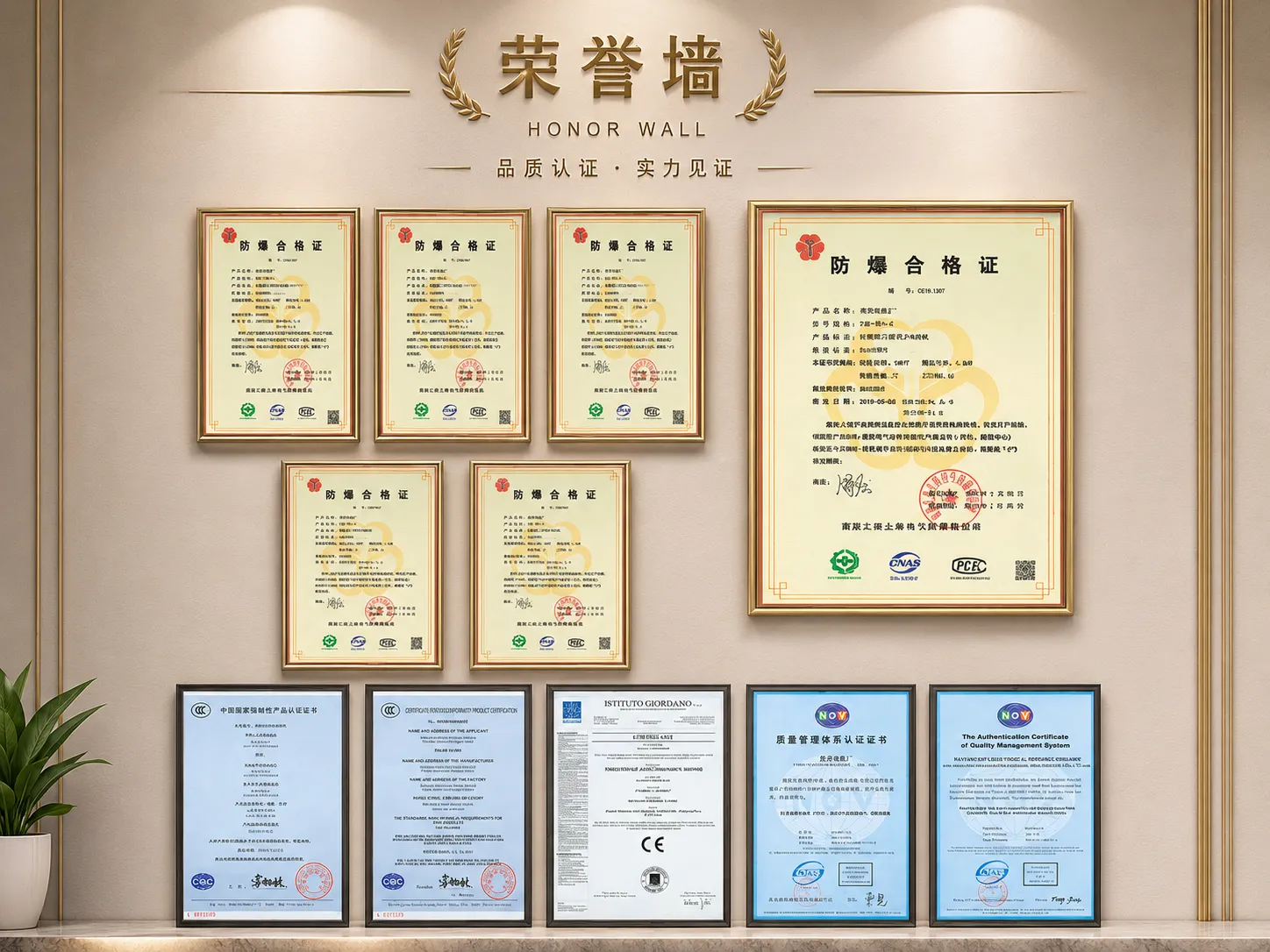
| Standards | ISO 9001 / CE |
Typical Applications for R Series Helical Gear Reducers
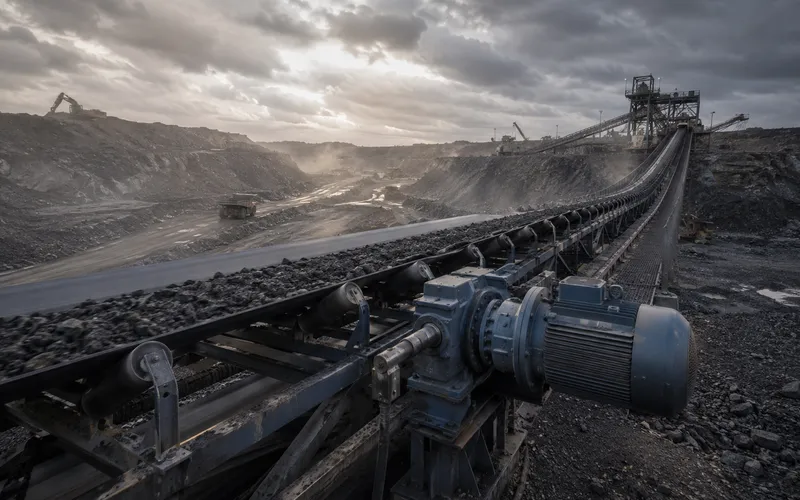
Belt Conveyor Drives
Long-distance belt conveyors in mining, quarrying, and aggregate handling plants use R series inline helical reducers for the combination of high output torque, high efficiency (minimising conveyor power consumption at full load), and coaxial geometry that simplifies head-pulley drive shaft alignment.
|

Industrial Mixers and Agitators
Large vessel agitators and industrial mixers for chemical, petrochemical, and water treatment applications use R series reducers for their high output torque capacity and the hollow shaft option that allows the agitator shaft to pass directly through the gearbox output without a coupling flange.
|
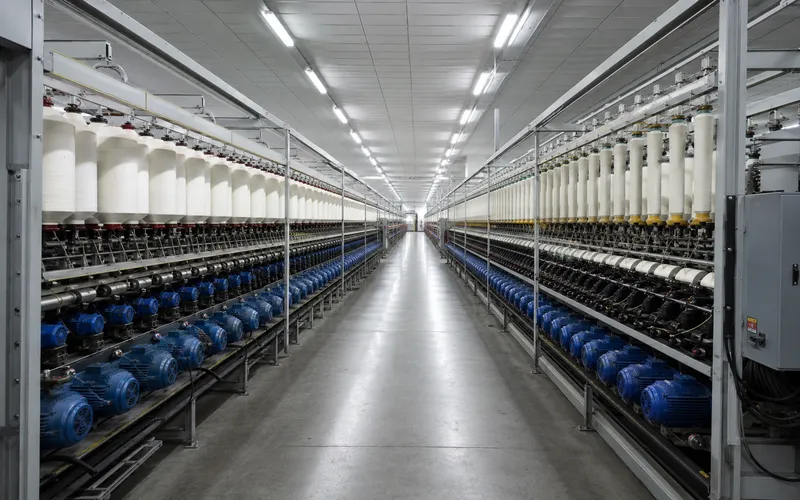
Textile and Winding Machines
Yarn winding machines, rope stranding machines, and wire drawing lines use R series reducers for their high efficiency at partial load and the quiet helical gear mesh that eliminates the gear-tooth noise that would otherwise affect delicate fibre tension control systems.
|
|
⚙
Screw and Auger Drives
Screw conveyors, extruder feed augers, and grain auger drives use the R series hollow shaft configuration to mount directly on the auger shaft without a coupling, eliminating shaft alignment requirements and reducing overall drive train length in installations with limited axial space.
|
🚢
Hoist and Lifting Drives
Industrial hoists and goods lifts use R series reducers for their high efficiency at load-bearing ratios, the ability to combine with an electromagnetic brake motor for load holding, and the high output torque capacity relative to gearbox weight compared to worm alternatives.
|
🏭
Cooling Tower Fan Drives
Cooling tower fan drive reducers use the R series for the combination of high efficiency (reducing cooling tower fan power consumption) and the hollow shaft configuration that allows the fan shaft to pass through the gearbox without a coupling, simplifying the mechanical arrangement at the top of the tower structure.
|
R Series vs Worm Gearbox: When to Choose Each
Efficiency at Continuous Duty
For continuous-duty drives running more than 8 hours per day, the energy saving of the R series over a worm gearbox is significant. At 50:1 ratio, a three-stage R series achieves approximately 94% efficiency versus 52% for a worm gearbox. For a 15 kW motor running continuously, this difference is approximately 6,300 kWh saved per 8,000-hour operating year — representing a typical energy cost saving of 500 to 800 USD per year per drive at industrial electricity rates, which typically recoups the higher purchase cost of the helical gearbox within 12 to 24 months of operation.
Output Shaft Direction
The R series is coaxial: motor and load shafts share the same centreline. This makes it directly compatible with inline drive applications such as conveyor head pulleys, pump shafts, and auger shafts, where the motor must be positioned behind the driven shaft. For 90° right-angle drives (motor at right angles to the load shaft), the F series parallel shaft helical gearbox or the K series bevel-helical gearbox is the appropriate choice. The worm gearbox remains the most compact right-angle option for lower duty or space-constrained applications.
Load Holding and Back-Driveability
The R series helical gearbox is back-driveable at all ratios — the load can back-drive the input shaft if the motor is de-energised. This is the correct behaviour for most conveyor and mixer applications where the motor is the only power source and the driven load is essentially passive. For applications requiring load holding (inclined conveyors, lifts, gates), an electromagnetic brake motor must be used with the R series to hold the load when the motor stops. The worm gearbox is self-locking above 30:1, so does not require a separate brake for load holding in those applications.

Frequently Asked Questions — R Series Helical Gear Reducer
Request a Quote for R Series Helical Gear Reducers
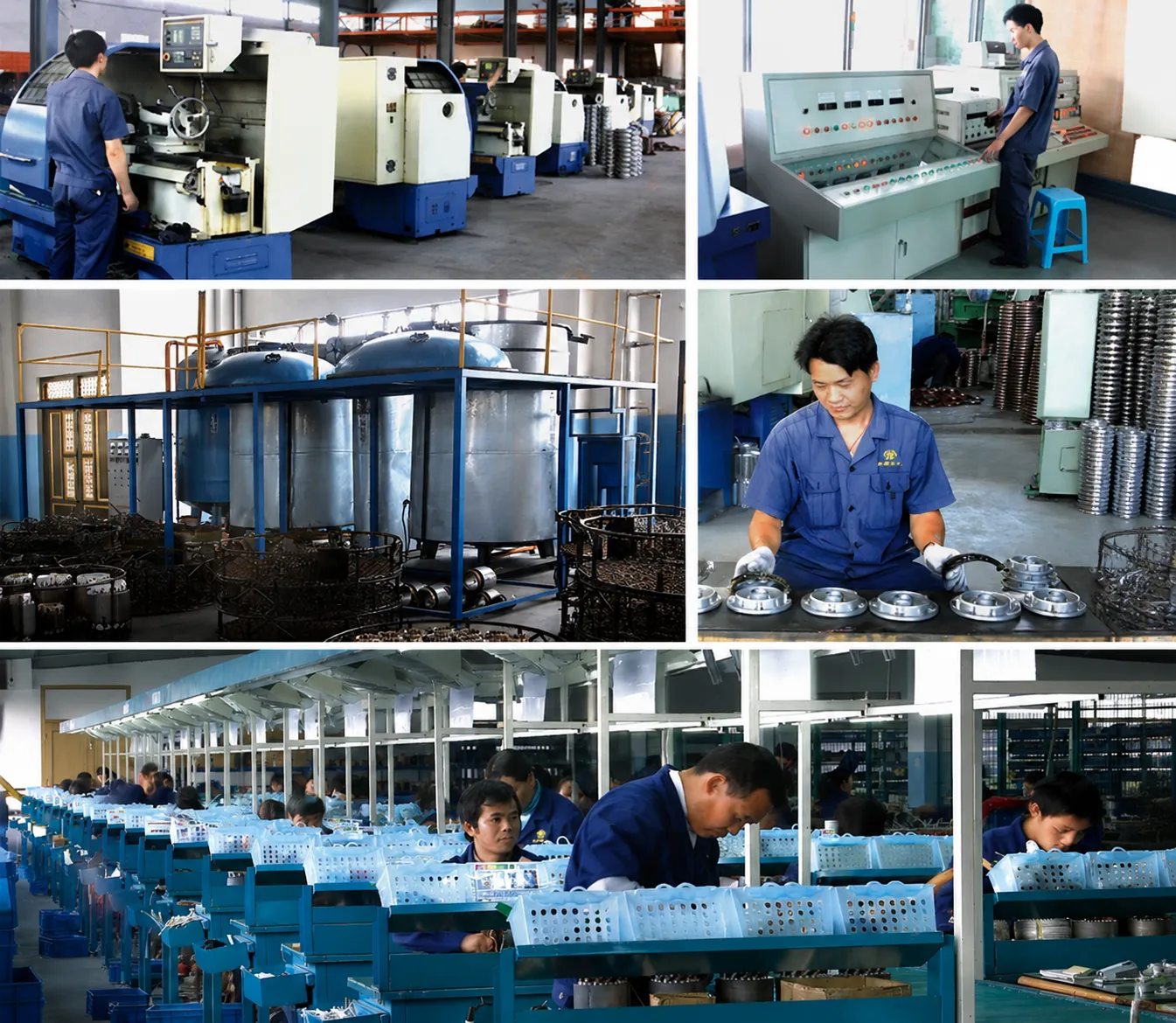
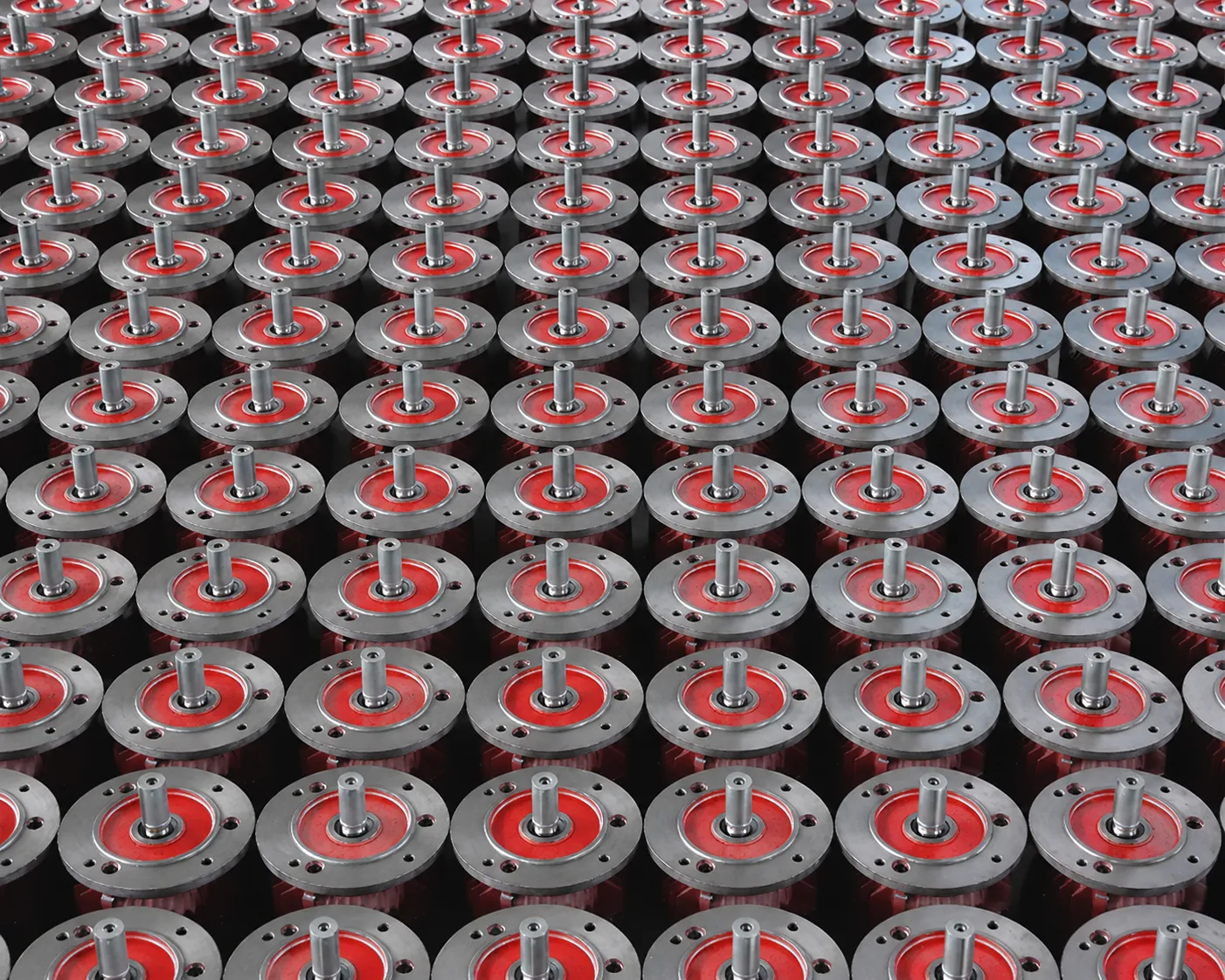
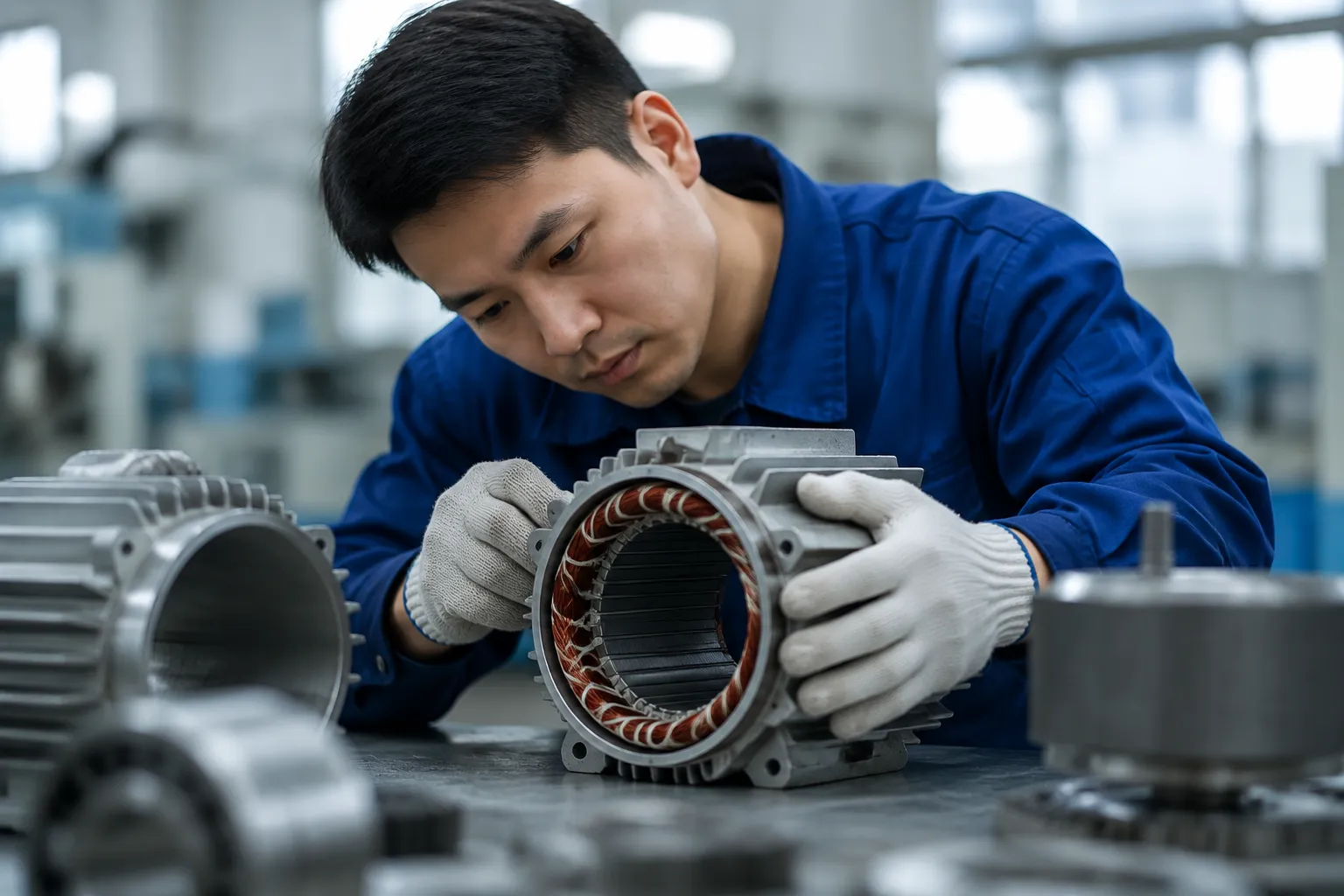
Specify gearbox size, ratio, output shaft type, mounting orientation, and motor frame. Learn about our manufacturing on the About Us page.
Edited by Cxm
Additional information
| Editor | Cxm |
|---|