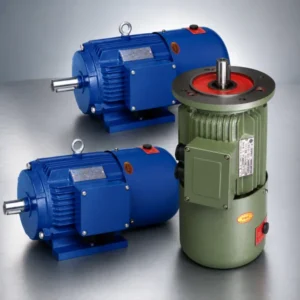
Y2EJ-seriens 6-polede elektromagnetiske bremsemotor
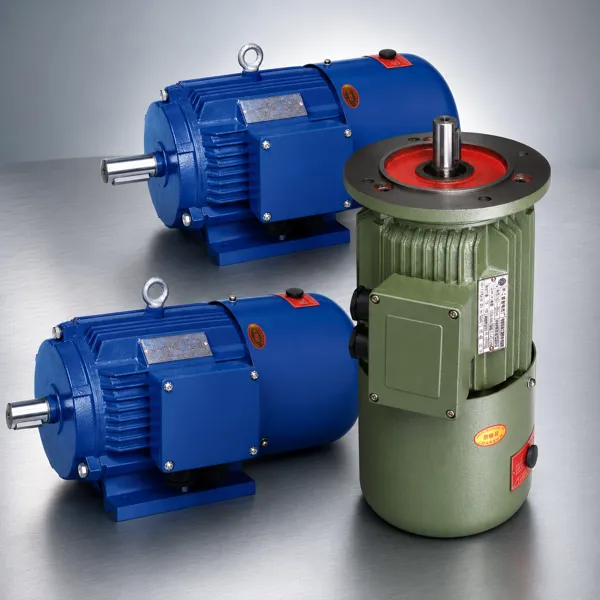
Sekspolet kortslutningsmotor med integreret DC-elektromagnetisk skivebremse, der kører ved cirka 960 o/min. med fejlsikker positiv standsning ved strømafbrydelse. Foretrukket til tunge transportbåndsdrev, langsomtgående løfteudstyr og store omrørere, hvor den lavere akselhastighed reducerer drivlinjens kompleksitet, og den integrerede bremse giver obligatorisk lastholdning uden en separat ekstern bremseenhed.
Effekt: 0,18 – 22 kW
Rammer: 71M – 180L
Bremse: DC fjederpåført
Beskyttelse: IP54
Isolering: Klasse F
Højmoment lavhastighedsbremsemotor til tunge industrielle drev
Y2EJ 6-polet bremsemotor kører med cirka 960 o/min og leverer 50% mere akselmoment end en 4-polet motor med samme effekt og samme stelstørrelse. Dette iboende højere momentoutput betyder, at der kræves et mindre gearkasseudvekslingsforhold for en given belastningshastighed, hvilket reducerer gearkassestørrelse, omkostninger og antallet af geartrin mellem motor og belastning. I applikationer, hvor belastningshastigheden ligger i området 20 til 100 o/min, opnår en 6-polet motor med et et-trins snekkegear ofte den nødvendige ydelse uden en totrins gearkasseenhed.
Den integrerede fjederpåvirkede elektromagnetiske DC-bremse fungerer identisk med 2-polede og 4-polede varianter. Fjederkraften holder friktionsskiven mod rotornavet i hvile; DC-strømmen aktiverer elektromagneten for at udløse bremsen, når motoren starter. Ved strømafbrydelse aktiveres bremsen på under 0,3 sekunder og holder lasten uden ekstern bremsekraft. Bremsemomentet kan justeres ved at ændre fjederforspændingen, og friktionsskivens belægning kan udskiftes på stedet.
Rammestørrelserne spænder fra 71M til 180L og dækker 0,18 kW til 22 kW. Alle enheder har IP54-beskyttelse, klasse F-isolering og CE-mærkning. 6-polsvarianten er særligt almindelig i port- og barrieremotorer, langsomme omrørere og rulletrappehjælpemotorer, hvor 960 o/min giver den rette balance mellem drejningsmoment og driftshastighed.
Se hele udvalget af bremsemotorer på Elektromagnetiske bremsemotorer side, eller gennemse matchende reduktionsgear i Snekkegearreduktionsgear afsnit.
Y2EJ 6-polet modelspecifikationer
Alle 6-polede modeller: ~960 o/min, 380 V 50 Hz, IP54, Klasse F. Bremsespænding: DC 205 V (ensrettet fra 380 V AC-forsyning).
| Model | Ramme | kW | Fuld belastning A | η % | cosφ | Bremsemoment (N·m) | Stoptid (s) | kg |
|---|---|---|---|---|---|---|---|---|
| Y2EJ71M1-6 | 71 mio. | 0.18 | 0.74 | 55.0 | 0.65 | 2.5 | < 0,30 | 12.0 |
| Y2EJ71M2-6 | 71 mio. | 0.25 | 1.00 | 58.0 | 0.66 | 3.5 | < 0,30 | 13.5 |
| Y2EJ80M1-6 | 80 mio. | 0.37 | 1.42 | 61.0 | 0.68 | 5.0 | < 0,30 | 20.0 |
| Y2EJ80M2-6 | 80 mio. | 0.55 | 2.02 | 64.0 | 0.69 | 7.0 | < 0,30 | 22.5 |
| Y2EJ90S-6 | 90'erne | 0.75 | 2.68 | 67.5 | 0.70 | 10.0 | < 0,30 | 31.0 |
| Y2EJ90L-6 | 90L | 1.1 | 3.72 | 70.0 | 0.71 | 14.0 | < 0,30 | 37.5 |
| Y2EJ100L-6 | 100L | 1.5 | 4.90 | 73.0 | 0.72 | 20.0 | < 0,30 | 52.0 |
| Y2EJ112M-6 | 112 mio. | 2.2 | 6.60 | 76.5 | 0.73 | 30.0 | < 0,30 | 70.0 |
| Y2EJ132S-6 | 132S | 3.0 | 8.40 | 78.0 | 0.74 | 40.0 | < 0,30 | 98.0 |
| Y2EJ132M1-6 | 132 mio. | 4.0 | 10.80 | 79.5 | 0.74 | 55.0 | < 0,30 | 118.0 |
| Y2EJ132M2-6 | 132 mio. | 5.5 | 14.60 | 81.0 | 0.75 | 70.0 | < 0,30 | 136.0 |
| Y2EJ160M-6 | 160 mio. | 7.5 | 19.80 | 83.0 | 0.76 | 100.0 | < 0,30 | 178.0 |
| Y2EJ160L-6 | 160L | 11 | 28.50 | 84.5 | 0.77 | 140.0 | < 0,30 | 210.0 |
| Y2EJ180L-6 | 180L | 15 | 38.60 | 85.5 | 0.77 | 200.0 | < 0,30 | 255.0 |
Motor- og bremseforhold
| Omgivelsestemperatur | −15 °C til +40 °C |
| Motorforsyning | 380 V 50 Hz 3-faset |
| Bremseforsyning | DC 205 V (fra ensretter) |
| Bremsefunktion | Fjederpåsat / EM-udløst |
| Bremseindkoblingstid | < 0,3 sekunder |
| Beskyttelse | IP54 (motor og bremse) |
| Isoleringsklasse | Klasse F |
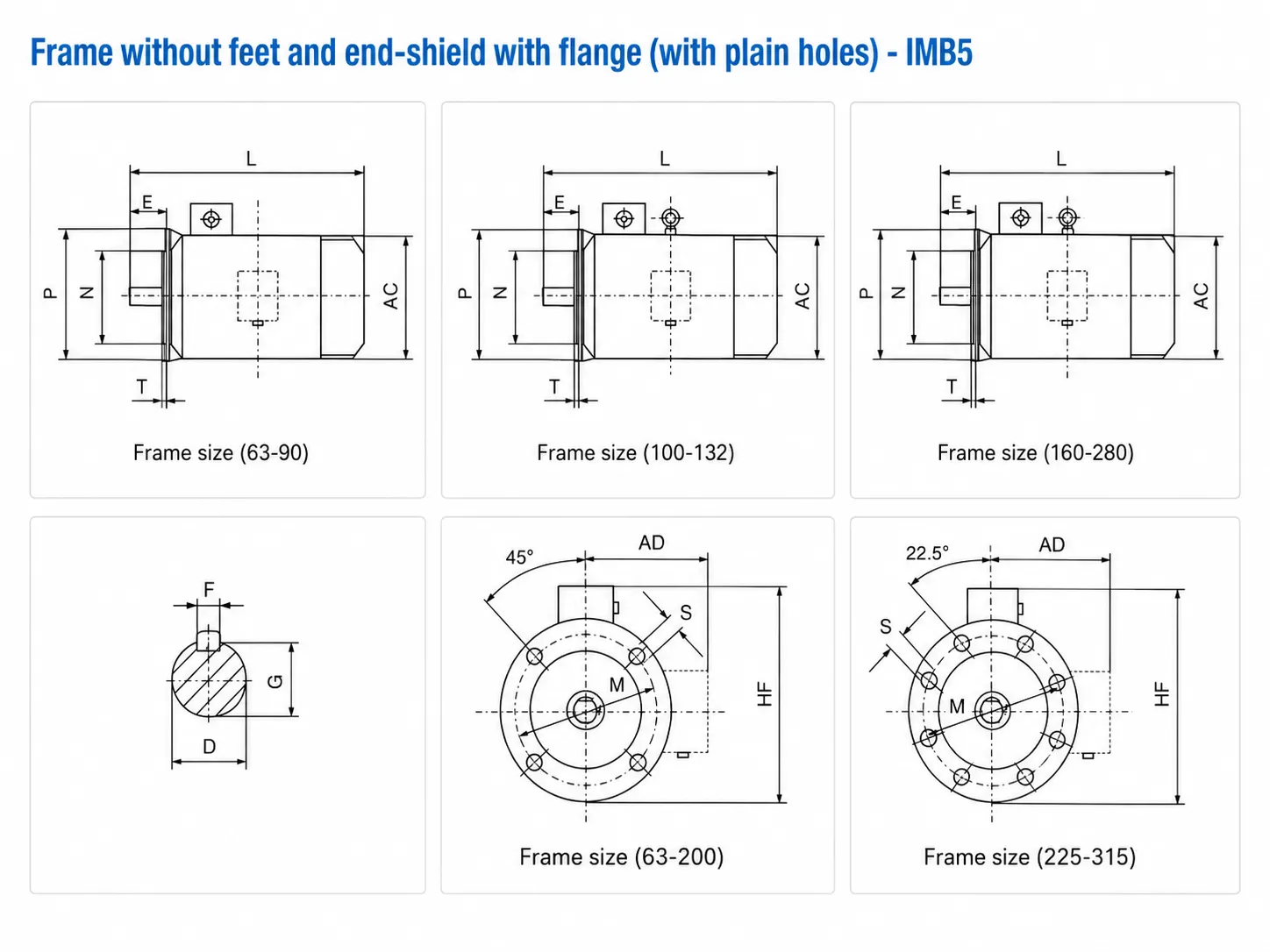
| Montering | IMB3 / IMB5 / IMB35 |
| Manuel bremseudløsning | Håndtag (valgfrit) |
Standarder og certificeringer
| Motordesign | IEC 60034 |
| Bremsestandard | IEC 60947-4 |
| Rammens dimensioner | IEC 72-1 |
| Beskyttelsesklassificering | IEC 60529 |
| Kvalitetsstyring | ISO 9001 |
| Mærkning | CE |
| Polakker | 6-polet |
| Driftscyklus | S1 / S3 (cyklisk) |
Typiske anvendelser for Y2EJ 6-polede bremsemotorer
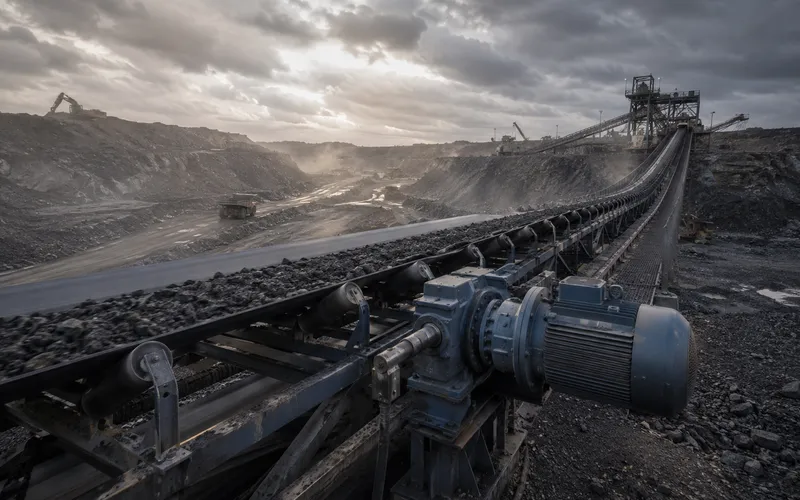
Kraftige transportbånd
Transportbånd til håndtering af bulkmaterialer og båndtransportører med stejle hældninger i minedrift og aggregatforarbejdning bruger den 6-polede bremsemotor til at kombinere det høje startmoment fra en langsomtgående vikling med fejlsikker bremsefastholdelse mod tilbagerulning af det belastede bånd ved effekttab.
|

Store omrørere
Top-entry omrørere på kemiske og farmaceutiske beholdere bruger den 6-polede bremsemotor til at holde akslen og impelleren stationære under tryksætning af beholderen, rengøringscyklusser og vedligeholdelse, hvilket forhindrer rotation fra resterende væskemodstandskræfter på impelleren.
|

Vertikale elevatorer og porte
Vertikale elevatorer, sluseporte og dæmningskontrolmekanismer til fødevareforarbejdning bruger den 6-polede bremsemotor på grund af dens høje drejningsmoment og positive lastholding, hvilket forhindrer portbevægelse under hydraulisk tryk, når motoren er strømløs.
|
|
⛷
Hjælpedrev til skilifter
Træktovsspændingssystemer og ekstra bull-wheel-drev på skilifte bruger 6-polede bremsemotorer på grund af deres lave driftshastighed, høje drejningsmoment og den obligatoriske fejlsikre bremsning, der kræves i henhold til sikkerhedsforskrifterne for kabeltransport.
|
🔥
Ovndrejeudstyr
Hjælpegearmotorer på cement- og kalkroterovne bruger 6-polede bremsemotorer til at rotere ovnskallen langsomt under afkøling og dermed forhindre termisk deformation af skallen. Bremsen holder ovnen i hvileposition, når drejning ikke er nødvendig.
|
🚨
Scenegardindrev
Brand- og sikkerhedsgardindrev i teatre og offentlige bygninger bruger 6-polede bremsemotorer, fordi deres lave hastighed og høje drejningsmoment muliggør direkte styring af viklingstromlen uden en flertrinsgearkasse, og den sikkerhedsbremse holder gardinet i den indstillede position.
|
Momentfordel ved 6-polet konfiguration i bremsemotorapplikationer
Højere akselmoment ved samme effekt
Motorakselmomentet er lig med effekten divideret med vinkelhastigheden. Ved 960 o/min producerer en 6-polet motor 50% mere akselmoment end en 4-polet motor med samme nominelle effekt ved 1440 o/min og tre gange momentet for en 2-polet motor ved 2880 o/min. For en 4 kW motor er dette forskellen mellem 26,5 N·m (2-polet), 26,5 N·m (4-polet ved 1440 o/min) og 39,8 N·m (6-polet ved 960 o/min). Dette højere tilgængelige moment betyder, at der er behov for et mindre gearkasseudvekslingsforhold for ethvert givet belastningsmomentkrav, hvilket direkte reducerer gearkassens omkostninger og vægt.
Reduceret kinetisk energi ved bremseindkobling
Den kinetiske energi, der er lagret i en roterende motorrotor, er lig med halvdelen af rotorens inerti ganget med kvadratet af vinkelhastigheden. Ved 960 o/min lagrer rotoren i en 6-polet motor 56% mindre kinetisk energi end den samme stelrotor, der roterer ved 1440 o/min, og 88% mindre end ved 2880 o/min. Dette reducerer den termiske energi, der afgives i bremseskivebelægningen ved hvert stop, væsentligt, hvilket forlænger belægningens levetid med to til tre gange sammenlignet med det samme antal stop på en 2-polet motor med tilsvarende effekt i samme stel.
Eliminering af gearkassefase
En belastning, der kræver en udgangseffekt på 20 o/min og et belastningsmoment på 200 N·m, ville kræve en 4-polet motor, der kører ved 1440 o/min gennem en 72:1 gearkasse, hvilket typisk kræver en totrins spiralformet eller totrins snekkegearkasse. Med en 6-polet bremsemotor ved 960 o/min opnår en et-trins snekkegearkasse ved 48:1 den samme udgangseffekt og fjerner et geartrin fra drivlinjen. Eliminering af et enkelt trin reducerer drivlinjens slør, oliemængde, vedligeholdelseshyppighed og antallet af akseltætninger, der kan lække over tid.

Ofte stillede spørgsmål — Y2EJ-seriens 6-polede bremsemotor
Anmod om et tilbud på Y2EJ 6-polede bremsemotorer
Angiv effekt (kW), påkrævet bremsemoment, arbejdscyklus, monteringskonfiguration og eventuelle krav til gearkasseparring. Lær mere om vores muligheder på Om os side.
Yderligere information
| Redaktør | Cxm |
|---|