Elektromagnetischer Bremsmotor der Serie Y2EJ, 6-polig
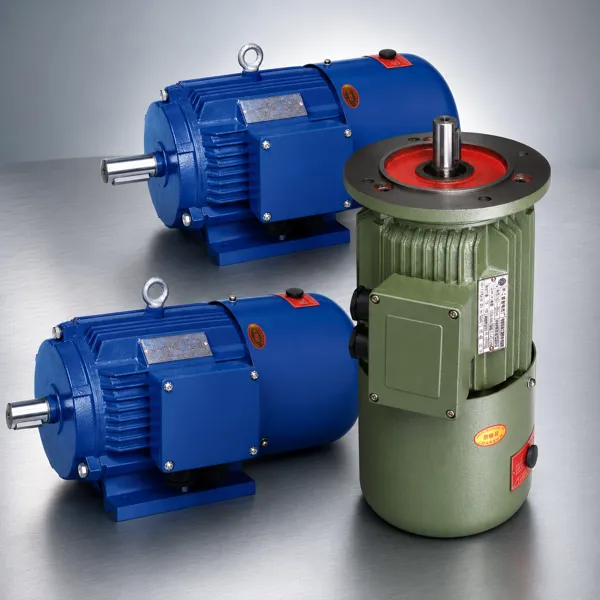
Sechspoliger Kurzschlussläufermotor mit integrierter elektromagnetischer Gleichstrom-Scheibenbremse, Drehzahl ca. 960 U/min, mit ausfallsicherem, zuverlässigem Stopp bei Stromausfall. Bevorzugt für schwere Förderbandantriebe, langsam laufende Hebezeuge und große Rührwerke, da die niedrigere Wellendrehzahl die Komplexität des Antriebsstrangs reduziert und die integrierte Bremse die erforderliche Lastsicherung ohne separate externe Bremseinheit gewährleistet.
Leistung: 0,18 – 22 kW
Rahmen: 71M – 180L
Bremse: Gleichstrom-Federbetätigung
Schutzart: IP54
Isolierung: Klasse F
Hochleistungs-Bremsmotor für niedrige Drehzahlen, geeignet für schwere Industrieantriebe
Der 6-polige Bremsmotor Y2EJ läuft mit ca. 960 U/min und liefert 50% mehr Wellendrehmoment als ein 4-poliger Motor gleicher Nennleistung und Baugröße. Dank dieses höheren Drehmoments ist für eine gegebene Lastdrehzahl ein kleineres Untersetzungsverhältnis im Getriebe erforderlich. Dies reduziert Getriebegröße, Kosten und die Anzahl der Getriebestufen zwischen Motor und Last. Bei Lastdrehzahlen zwischen 20 und 100 U/min erreicht ein 6-poliger Motor mit einem einstufigen Schneckengetriebe häufig die benötigte Leistung ohne zweistufiges Getriebe.
Die integrierte, federbetätigte elektromagnetische Gleichstrombremse funktioniert identisch zu den 2- und 4-poligen Varianten. Die Federkraft hält die Reibscheibe im Ruhezustand gegen die Rotornabe; Gleichstrom aktiviert den Elektromagneten und löst die Bremse beim Anlaufen des Motors. Bei Stromausfall greift die Bremse in weniger als 0,3 Sekunden und hält die Last ohne externe Bremskraft. Das Bremsmoment ist durch Verändern der Federvorspannung einstellbar, und der Reibscheibenbelag ist vor Ort austauschbar.
Die Baugrößen reichen von 71M bis 180L, der Leistungsbereich von 0,18 kW bis 22 kW. Alle Geräte verfügen über Schutzart IP54, Isolationsklasse F und CE-Kennzeichnung. Die 6-polige Variante findet insbesondere in Tor- und Schrankenantrieben, langsam laufenden Rührwerken und Hilfsantrieben für Rolltreppen Anwendung, wo 960 U/min das optimale Verhältnis zwischen Drehmoment und Betriebsgeschwindigkeit gewährleisten.
Sehen Sie sich die gesamte Bremsmotorenpalette auf der Website an. Elektromagnetische Bremsmotoren Seite oder durchsuchen Sie die passenden Reducer in der Schneckengetriebe Abschnitt.
Spezifikationen des 6-poligen Modells Y2EJ
Alle 6-poligen Modelle: ~960 U/min, 380 V 50 Hz, IP54, Klasse F. Bremsspannung: DC 205 V (gleichgerichtet aus 380 V AC-Versorgung).
| Modell | Rahmen | kW | Volllast A | η % | cosφ | Bremsmoment (N·m) | Stoppzeit (s) | kg |
|---|---|---|---|---|---|---|---|---|
| Y2EJ71M1-6 | 71 Millionen | 0.18 | 0.74 | 55.0 | 0.65 | 2.5 | < 0,30 | 12.0 |
| Y2EJ71M2-6 | 71 Millionen | 0.25 | 1.00 | 58.0 | 0.66 | 3.5 | < 0,30 | 13.5 |
| Y2EJ80M1-6 | 80 Millionen | 0.37 | 1.42 | 61.0 | 0.68 | 5.0 | < 0,30 | 20.0 |
| Y2EJ80M2-6 | 80 Millionen | 0.55 | 2.02 | 64.0 | 0.69 | 7.0 | < 0,30 | 22.5 |
| Y2EJ90S-6 | 90er Jahre | 0.75 | 2.68 | 67.5 | 0.70 | 10.0 | < 0,30 | 31.0 |
| Y2EJ90L-6 | 90 l | 1.1 | 3.72 | 70.0 | 0.71 | 14.0 | < 0,30 | 37.5 |
| Y2EJ100L-6 | 100 l | 1.5 | 4.90 | 73.0 | 0.72 | 20.0 | < 0,30 | 52.0 |
| Y2EJ112M-6 | 112M | 2.2 | 6.60 | 76.5 | 0.73 | 30.0 | < 0,30 | 70.0 |
| Y2EJ132S-6 | 132S | 3.0 | 8.40 | 78.0 | 0.74 | 40.0 | < 0,30 | 98.0 |
| Y2EJ132M1-6 | 132M | 4.0 | 10.80 | 79.5 | 0.74 | 55.0 | < 0,30 | 118.0 |
| Y2EJ132M2-6 | 132M | 5.5 | 14.60 | 81.0 | 0.75 | 70.0 | < 0,30 | 136.0 |
| Y2EJ160M-6 | 160 m | 7.5 | 19.80 | 83.0 | 0.76 | 100.0 | < 0,30 | 178.0 |
| Y2EJ160L-6 | 160 l | 11 | 28.50 | 84.5 | 0.77 | 140.0 | < 0,30 | 210.0 |
| Y2EJ180L-6 | 180 l | 15 | 38.60 | 85.5 | 0.77 | 200.0 | < 0,30 | 255.0 |
Motor- und Bremsenzustand
| Umgebungstemperatur | −15 °C bis +40 °C |
| Motorversorgung | 380 V, 50 Hz, Drehstrom |
| Bremsversorgung | 205 V Gleichstrom (vom Gleichrichter) |
| Bremswirkung | Federbetätigt / EM-freigegeben |
| Bremsbetätigungszeit | < 0,3 s |
| Schutz | IP54 (Motor und Bremse) |
| Isolationsklasse | Klasse F |
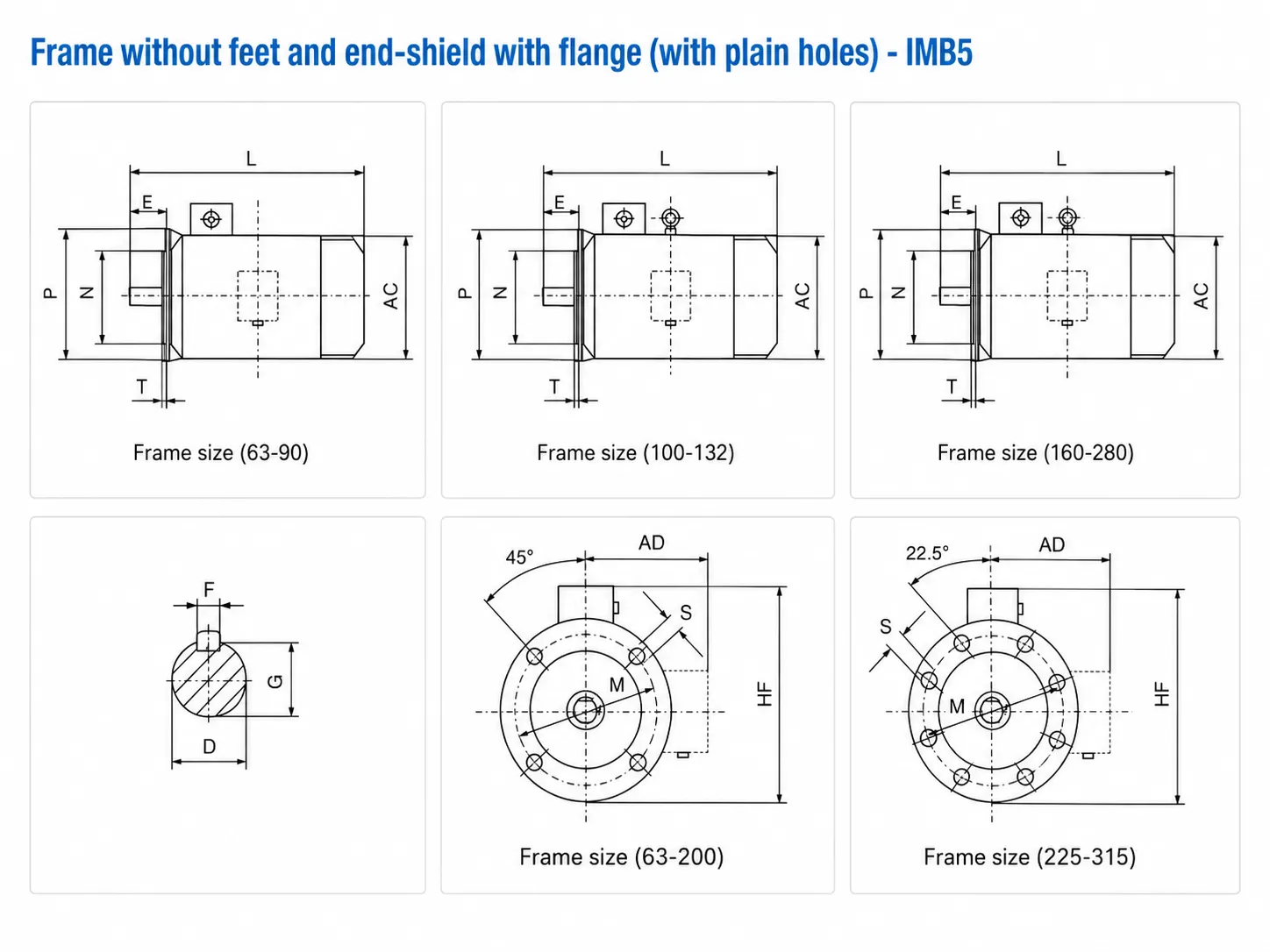
| Montage | IMB3 / IMB5 / IMB35 |
| Manuelle Bremsenentriegelung | Hebel (optional) |
Normen und Zertifizierungen
| Motorkonstruktion | IEC 60034 |
| Bremsstandard | IEC 60947-4 |
| Rahmenabmessungen | IEC 72-1 |
| Schutzklasse | IEC 60529 |
| Qualitätsmanagement | ISO 9001 |
| Markierung | CE |
| Polen | 6-polig |
| Tastverhältnis | S1 / S3 (zyklisch) |
Typische Anwendungen für Y2EJ 6-polige Bremsmotoren

Schwerlastförderer
Schüttgutförderanlagen und Steilbandförderer im Bergbau und in der Zuschlagstoffverarbeitung nutzen den 6-poligen Bremsmotor, um das hohe Anlaufdrehmoment einer langsam laufenden Wicklung mit einer ausfallsicheren Bremswirkung gegen das Zurückrollen des belasteten Bandes bei Stromausfall zu kombinieren.
|

Große Rührwerke
Bei Rührwerken mit Top-Entry-Technologie in chemischen und pharmazeutischen Behältern wird der 6-polige Bremsmotor verwendet, um die Welle und das Laufrad während der Druckbeaufschlagung des Behälters, der Reinigungszyklen und der Wartung stillzuhalten und so eine Rotation durch Restflüssigkeitsreibungskräfte auf das Laufrad zu verhindern.
|

Vertikalaufzüge und Tore
In der Lebensmittelverarbeitung werden vertikale Hebevorrichtungen, Schleusentore und Dammsteuerungsmechanismen mit 6 Polen eingesetzt, da diese ein hohes Drehmoment und eine positive Lasthaltung aufweisen, die eine Bewegung des Tores unter hydraulischem Druck bei stromlosem Motor verhindern.
|
|
⛷
Hilfsantriebe für Skilifte
Seilspannsysteme und Hilfsantriebe für die Zugräder von Skiliften verwenden 6-polige Bremsmotoren aufgrund ihrer niedrigen Betriebsdrehzahl, ihres hohen Drehmoments und der obligatorischen ausfallsicheren Bremsung, die gemäß den Sicherheitsvorschriften für den Seiltransport erforderlich ist.
|
🔥
Ofendrehvorrichtung
Hilfsdrehgetriebemotoren an Zement- und Kalkdrehöfen verwenden 6-polige Bremsmotoren, um die Ofenhülle während des Abkühlens langsam zu drehen und so thermische Verformungen zu verhindern. Die Bremse hält den Ofen in der Ruheposition, wenn keine Drehung erforderlich ist.
|
🚨
Bühnenvorhangantriebe
Feuer- und Sicherheitsvorhangantriebe in Theatern und öffentlichen Gebäuden verwenden 6-polige Bremsmotoren, da deren niedrige Drehzahl und hohes Drehmoment einen direkten Antrieb der Wickeltrommel ohne mehrstufiges Getriebe ermöglichen und die ausfallsichere Bremse den Vorhang in der eingestellten Position hält.
|
Drehmomentvorteil der 6-poligen Konfiguration in Bremsmotoranwendungen
Höheres Wellendrehmoment bei gleicher Leistung
Das Drehmoment der Motorwelle entspricht der Leistung geteilt durch die Winkelgeschwindigkeit. Bei 960 U/min erzeugt ein 6-poliger Motor ein um 501 TPM höheres Wellendrehmoment als ein 4-poliger Motor gleicher Nennleistung bei 1440 U/min und das Dreifache des Drehmoments eines 2-poligen Motors bei 2880 U/min. Für einen 4-kW-Motor beträgt die Differenz 26,5 Nm (2-polig), 26,5 Nm (4-polig bei 1440 U/min) und 39,8 Nm (6-polig bei 960 U/min). Dieses höhere verfügbare Drehmoment ermöglicht eine geringere Getriebeuntersetzung für jedes gewünschte Lastdrehmoment, wodurch Getriebekosten und -gewicht direkt reduziert werden.
Reduzierte kinetische Energie beim Bremseneingriff
Die im Rotor eines rotierenden Motors gespeicherte kinetische Energie entspricht der Hälfte des Rotorträgheitsmoments multipliziert mit dem Quadrat der Winkelgeschwindigkeit. Bei 960 U/min speichert der Rotor eines 6-poligen Motors 561 TP3T weniger kinetische Energie als der Rotor desselben Bautyps bei 1440 U/min und 881 TP3T weniger als bei 2880 U/min. Dadurch wird die in den Bremsbelägen bei jedem Bremsvorgang dissipierte Wärmeenergie erheblich reduziert, wodurch sich die Lebensdauer der Beläge im Vergleich zur gleichen Anzahl von Bremsvorgängen bei einem 2-poligen Motor gleicher Leistung im gleichen Bautyp um das Zwei- bis Dreifache verlängert.
Getriebe-Eliminierungsphase
Eine Last, die eine Ausgangsdrehzahl von 20 U/min und ein Drehmoment von 200 Nm erfordert, benötigt einen 4-poligen Motor, der mit 1440 U/min läuft und über ein Getriebe mit einem Übersetzungsverhältnis von 72:1 angetrieben wird. Typischerweise kommt hierfür eine zweistufige Stirnrad- oder Schneckengetriebeanordnung zum Einsatz. Mit einem 6-poligen Bremsmotor, der mit 960 U/min läuft, erreicht ein einstufiges Schneckengetriebe mit einem Übersetzungsverhältnis von 48:1 die gleiche Leistung und reduziert so eine Getriebestufe im Antriebsstrang. Durch den Wegfall einer Getriebestufe werden das Getriebespiel, der Ölverbrauch, der Wartungsaufwand und die Anzahl der Wellendichtungen, die im Laufe der Zeit undicht werden können, verringert.
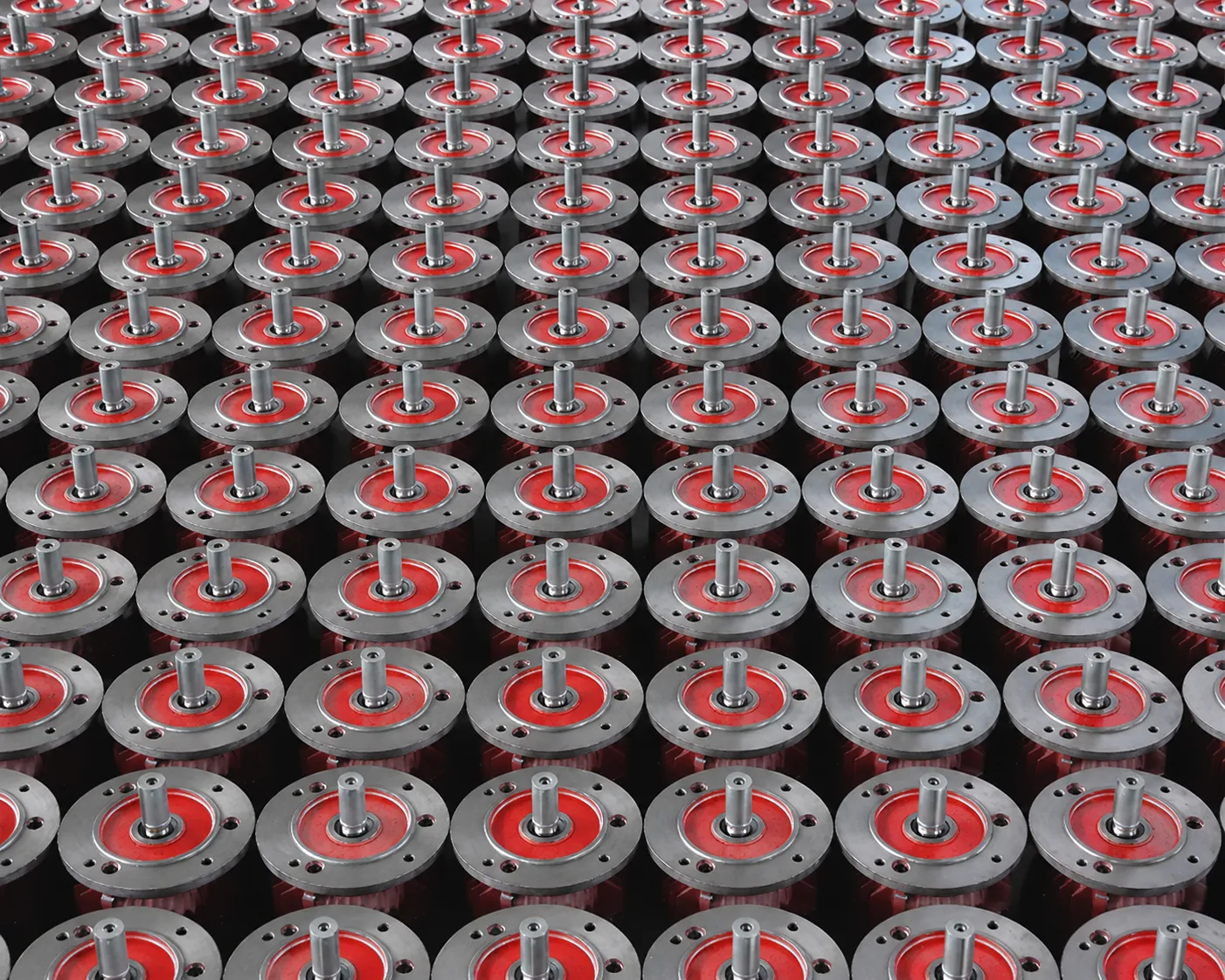

Häufig gestellte Fragen – Y2EJ-Serie 6-poliger Bremsmotor
Fordern Sie ein Angebot für Y2EJ 6-polige Bremsmotoren an
Geben Sie die Leistung (kW), das erforderliche Bremsmoment, den Betriebszyklus, die Montagekonfiguration und etwaige Anforderungen an die Getriebekombination an. Erfahren Sie mehr über unsere Leistungen unter [Link einfügen]. Über uns Seite.
Zusätzliche Informationen
| Editor | Cxm |
|---|