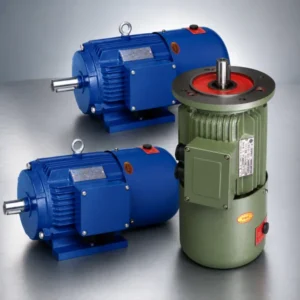
Motor de freno electromagnético de 8 polos serie Y2EJ
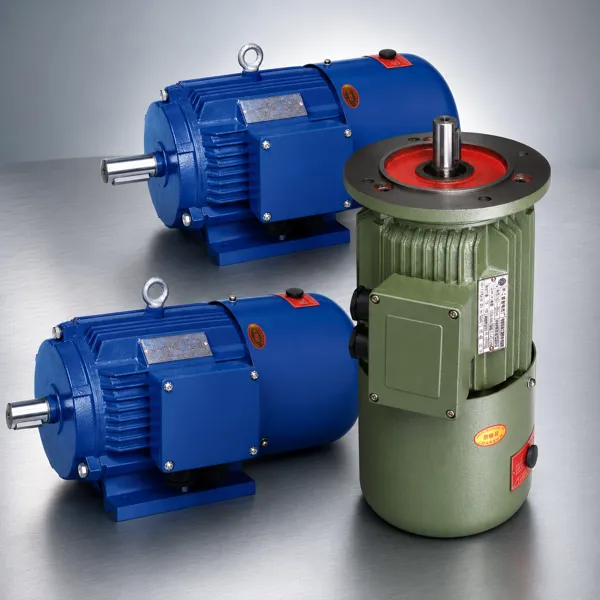
Motor de inducción de jaula de ardilla de ocho polos con freno de disco electromagnético de CC integrado, que funciona a aproximadamente 720 rpm con parada positiva a prueba de fallos en caso de interrupción del suministro eléctrico. La configuración de polos más lenta y de mayor par de la gama Y2EJ, diseñada para velocidades de carga muy bajas, arranques exigentes y aplicaciones donde minimizar la relación de reducción de la caja de engranajes es un objetivo de diseño primordial.
Potencia: 0,18 – 15 kW
Cuadros: 71M – 180L
Freno: CC de resorte aplicado
Protección: IP54
Aislamiento: Clase F
Densidad de par máxima y relación de transmisión mínima en la gama Y2EJ
El motor de freno de 8 polos Y2EJ es la variante de mayor par de la serie Y2EJ. A 720 rpm, el par del eje duplica el de un motor de 4 polos y es 33% superior al de un motor de 6 polos con la misma potencia y tamaño de carcasa. Esta ventaja de par permite accionar cargas pesadas mediante reductores de una sola etapa en aplicaciones donde otras configuraciones de polos requerirían una reducción de dos etapas, con el consiguiente ahorro en coste, peso y complejidad de mantenimiento del reductor.
El freno electromagnético de CC accionado por resorte funciona a una velocidad de entrada de 720 rpm, lo que significa que la energía cinética del disco de freno por parada es la más baja de la gama Y2EJ. Cada frenado disipa aproximadamente 84% menos de energía cinética que una parada de motor equivalente de 2 polos y 75% menos que una parada de 4 polos. Esto prolonga considerablemente la vida útil de las pastillas de freno en aplicaciones de alto ciclo, como compuertas de sección, accionamientos de posicionamiento y transportadores de arranque y parada, donde la durabilidad del freno es un factor clave en los costos de mantenimiento.
Los tamaños de bastidor abarcan desde 71 m hasta 180 l, con potencias de 0,18 kW a 15 kW. Todos los modelos cuentan con la misma protección IP54, aislamiento de clase F y marcado CE que el resto de la gama Y2EJ, con la misma arquitectura de rectificador, bobina de freno y reemplazo de discos de fricción para garantizar la uniformidad del servicio en todas las configuraciones de postes en una instalación mixta.
Vea la familia completa de motores de freno en el Motores con freno electromagnético página, o explore soluciones helicoidales de alto par en Reductores de engranajes helicoidales.
Especificaciones del modelo Y2EJ de 8 polos
Todos los modelos de 8 polos: ~720 rpm, 380 V 50 Hz, IP54, Clase F. Tensión de freno: CC 205 V (rectificada a partir de una fuente de alimentación de CA de 380 V).
| Modelo | Marco | kW | Carga completa A | η % | cosφ | Par de frenado (N·m) | Tiempo de parada (s) | kg |
|---|---|---|---|---|---|---|---|---|
| Y2EJ71M1-8 | 71M | 0.18 | 0.88 | 51.0 | 0.60 | 3.5 | < 0,40 | 12.5 |
| Y2EJ71M2-8 | 71M | 0.25 | 1.18 | 54.0 | 0.61 | 5.0 | < 0,40 | 14.0 |
| Y2EJ80M1-8 | 80M | 0.37 | 1.66 | 57.0 | 0.62 | 7.0 | < 0,40 | 21.0 |
| Y2EJ80M2-8 | 80M | 0.55 | 2.34 | 60.0 | 0.63 | 10.0 | < 0,40 | 23.5 |
| Y2EJ90S-8 | Años 90 | 0.75 | 3.04 | 63.0 | 0.64 | 14.0 | < 0,40 | 32.0 |
| Y2EJ90L-8 | 90 litros | 1.1 | 4.26 | 66.0 | 0.65 | 20.0 | < 0,40 | 39.0 |
| Y2EJ100L1-8 | 100 litros | 1.5 | 5.60 | 69.0 | 0.66 | 28.0 | < 0,40 | 54.0 |
| Y2EJ100L2-8 | 100 litros | 2.2 | 7.94 | 71.0 | 0.67 | 38.0 | < 0,40 | 62.0 |
| Y2EJ132S-8 | 132S | 3.0 | 9.60 | 74.0 | 0.68 | 55.0 | < 0,40 | 102.0 |
| Y2EJ132M-8 | 132M | 4.0 | 12.40 | 76.0 | 0.68 | 70.0 | < 0,40 | 122.0 |
| Y2EJ160M-8 | 160 metros | 5.5 | 16.60 | 78.5 | 0.69 | 100.0 | < 0,40 | 184.0 |
| Y2EJ160L-8 | 160 litros | 7.5 | 22.20 | 80.0 | 0.70 | 140.0 | < 0,40 | 218.0 |
| Y2EJ180L-8 | 180 litros | 11 | 32.00 | 82.0 | 0.70 | 200.0 | < 0,40 | 270.0 |
Estado del motor y de los frenos
| Temperatura ambiente | De -15 °C a +40 °C |
| Suministro de motor | 380 V 50 Hz trifásico |
| suministro de frenos | 205 V CC (proveniente del rectificador) |
| Acción de frenado | Aplicado en primavera / Liberado por EM |
| Tiempo de activación del freno | < 0,4 s |
| Protección | IP54 (motor y freno) |
| Clase de aislamiento | Clase F |
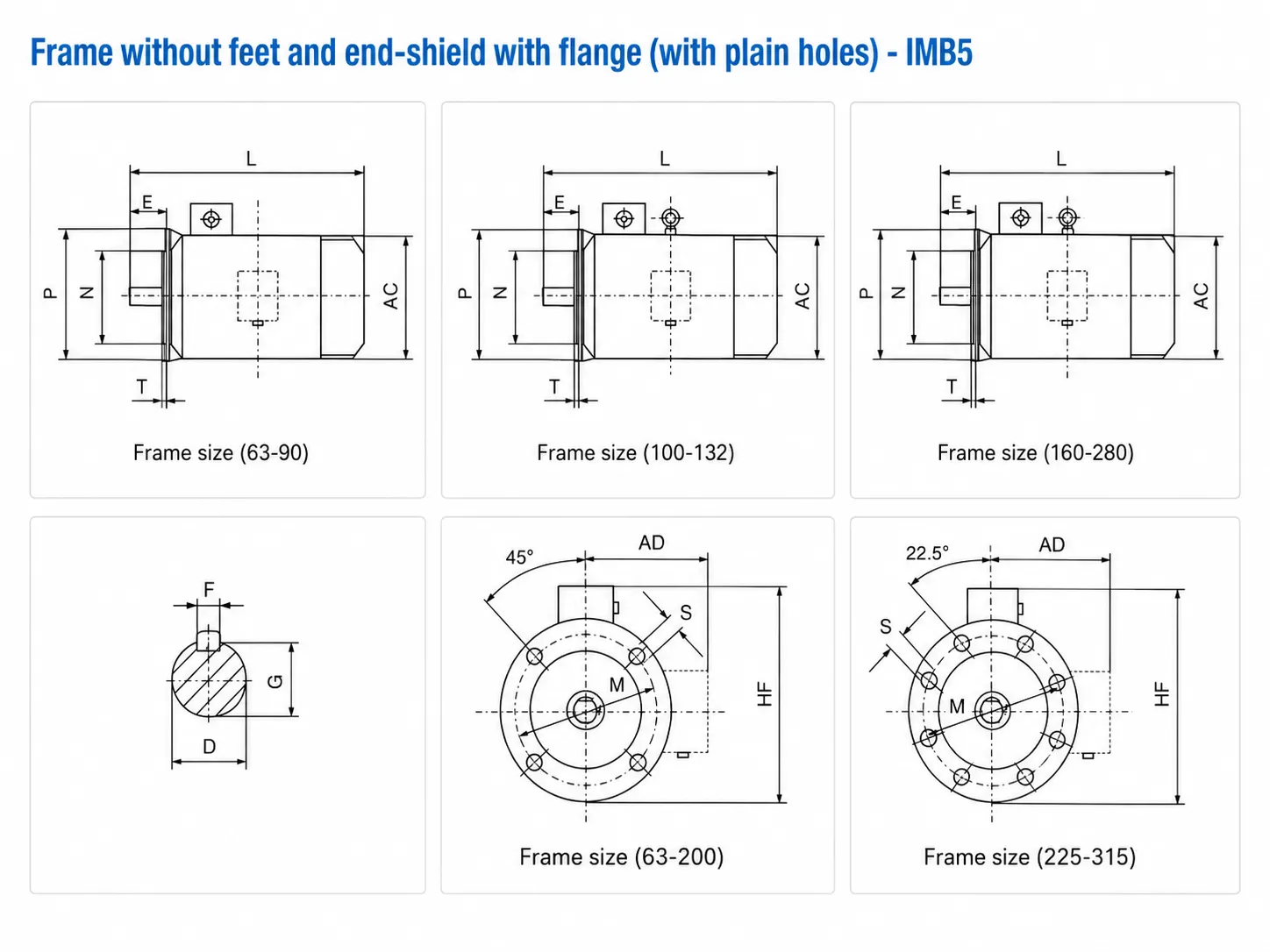
| Montaje | IMB3 / IMB5 / IMB35 |
| Liberación manual del freno | Palanca (opcional) |
Normas y certificaciones
| Diseño de motores | IEC 60034 |
| Estándar de freno | IEC 60947-4 |
| Dimensiones del marco | IEC 72-1 |
| Índice de protección | IEC 60529 |
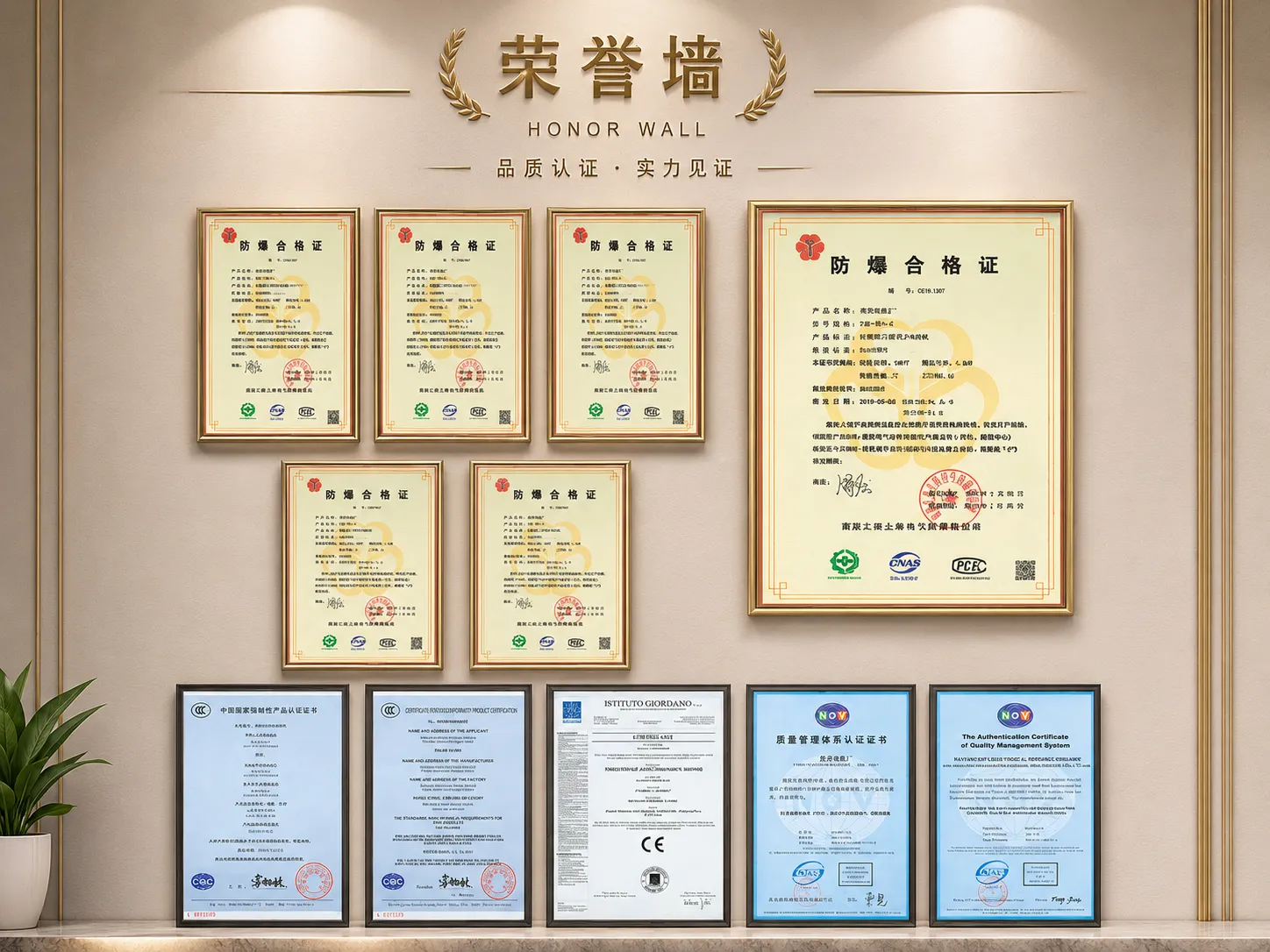
| Gestión de la calidad | ISO 9001 |
| Calificación | CE |
| Polos | 8 polos |
| Ciclo de trabajo | S1 / S3 (cíclico) |
Aplicaciones típicas de los motores de freno Y2EJ de 8 polos
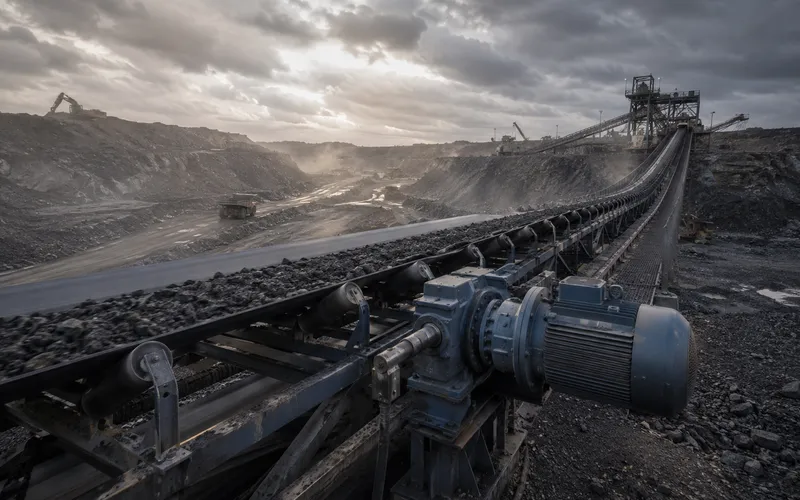
Transportadores alimentadores de placas
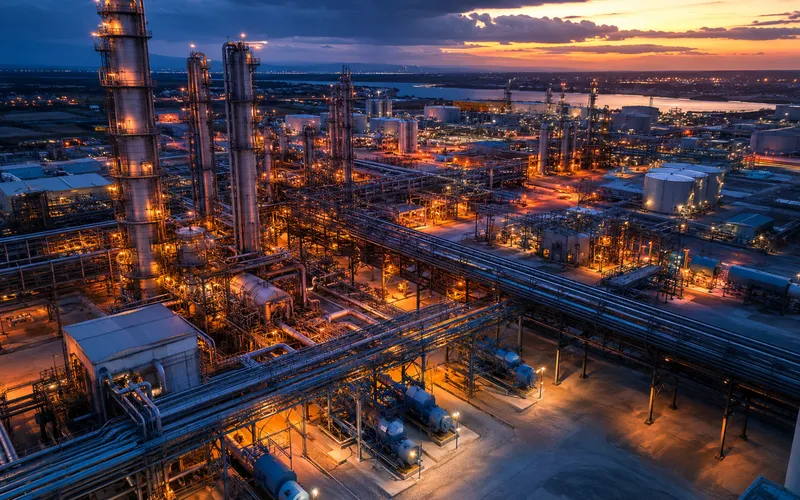
Los alimentadores de placas pesadas situados bajo las trituradoras de roca y las compuertas de la tolva primaria utilizan el motor de freno de 8 polos por su par de arranque máximo bajo carga estática completa, combinado con el freno de seguridad que mantiene la placa cargada inmóvil cuando el motor se desenergiza entre los ciclos de alimentación.
|
Agitadores viscosos pesados
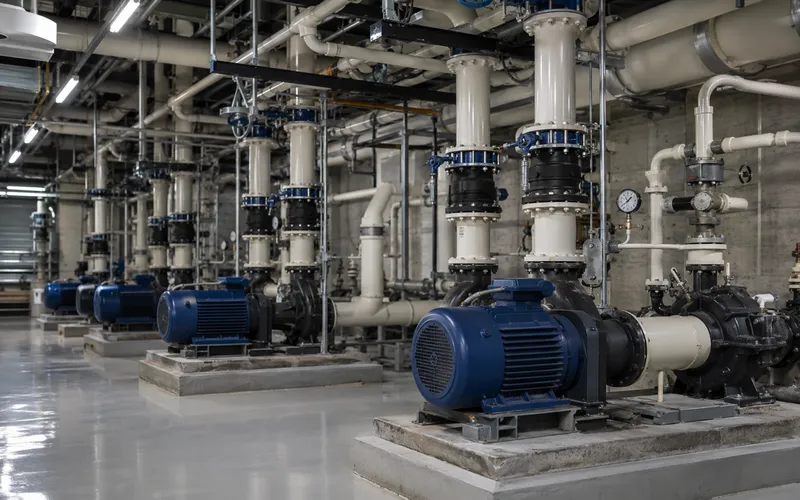
Los grandes agitadores de polímeros, adhesivos y lodos que arrancan bajo carga viscosa completa utilizan el motor de 8 polos por su máxima relación par-corriente al arrancar, minimizando el pico de corriente de alimentación a la vez que proporcionan el par de arranque necesario para superar la resistencia viscosa estática del material frío o sedimentado.
|
Compuertas y vertederos
Los accionamientos de las compuertas de control de agua en canales de riego, embalses y plantas de tratamiento utilizan el motor de freno de 8 polos debido a su baja velocidad de funcionamiento y al requisito absoluto de retención de carga: el freno a prueba de fallos debe mantener la posición de la compuerta frente a la presión hidrostática máxima sin alimentación eléctrica.
|
|
🔥
Barras de horno rotatorio
Los accionamientos auxiliares de baja velocidad para hornos de cemento y procesamiento de minerales utilizan un motor de freno de 8 polos para hacer girar la carcasa a una velocidad de 1 a 3 rpm mediante una caja de engranajes de alta relación durante las fases de calentamiento y enfriamiento, evitando así la deformación térmica. El freno mantiene el horno en cualquier posición cuando se detiene el giro.
|
⚓
Cabrestantes de amarre
Los cabrestantes de amarre auxiliares y los accionamientos de cabrestante en embarcaciones pequeñas utilizan el motor de freno de 8 polos porque su baja velocidad y alto par permiten una reducción de una sola etapa de la caja de engranajes a la velocidad del tambor del cabrestante, y el freno integrado proporciona la sujeción de carga obligatoria para las líneas de amarre bajo las cargas de movimiento de la embarcación.
|
🏃
Barreras en instalaciones deportivas
Los paneles publicitarios retráctiles, las barreras laterales del terreno de juego y las porterías motorizadas en las instalaciones deportivas utilizan motores de freno de 8 polos para un movimiento lento y controlado y una posición fija en los topes finales, ambos aspectos importantes para la seguridad de los espectadores durante eventos con gran afluencia de público.
|
Comparación del motor de freno de 8 polos en toda la gama de polos Y2EJ.
Par del eje a igual potencia
Con una potencia nominal de 4 kW: un motor de 2 polos a 2880 rpm proporciona 13,3 N·m; uno de 4 polos a 1440 rpm proporciona 26,5 N·m; uno de 6 polos a 960 rpm proporciona 39,8 N·m; y uno de 8 polos a 720 rpm proporciona 53,1 N·m. El motor de 8 polos produce cuatro veces el par del eje de un motor de 2 polos con la misma potencia nominal, lo que permite una relación de transmisión de la caja de engranajes una cuarta parte menor para el mismo par de salida del eje, la diferencia entre una caja de engranajes helicoidales de una etapa con relación 10:1 y un conjunto de dos etapas con relación 40:1.
Vida útil de las pastillas de freno de disco
El desgaste del forro por parada es proporcional a la energía cinética disipada. Un rotor que gira a 720 rpm almacena (720/2880)² = 6,25% de la energía cinética del rotor de la misma inercia que gira a 2880 rpm. Esto significa que, a la misma frecuencia de frenado, el forro del disco de freno de 8 polos dura aproximadamente 16 veces más que el de 2 polos y aproximadamente 4 veces más que el de 4 polos. Para una máquina de embalaje que realiza 60 paradas por hora, 8 horas al día, esto se traduce en un reemplazo mensual del forro (2 polos) a un reemplazo anual o menos (8 polos) para el mismo tamaño de disco de freno.
Factor de potencia y corriente de arranque
El motor de 8 polos presenta el factor de potencia más bajo (0,60 a 0,70) y el menor multiplicador de corriente de arranque (Ist/In de aproximadamente 4,5 a 5,5) en la gama Y2EJ. El bajo Ist/In representa una ventaja práctica en instalaciones con capacidad de suministro limitada: un motor de 8 polos y 4 kW consume aproximadamente 55 A al arrancar, en comparación con los aproximadamente 80 A de un motor de 4 polos de la misma potencia, lo que permite utilizar un fusible y un cable de alimentación de menor tamaño. Se recomienda el uso de condensadores de corrección del factor de potencia en instalaciones donde se aplican penalizaciones por potencia reactiva.
Preguntas frecuentes — Motor de freno de 8 polos serie Y2EJ
Solicite un presupuesto para motores de freno Y2EJ de 8 polos.
Especifique la potencia (kW), el par de frenado requerido, el ciclo de trabajo, el tipo de montaje y el acoplamiento de la caja de engranajes. Conozca más sobre nuestra fabricación en el Sobre nosotros página.
Información adicional
| Editor | Cxm |
|---|